Marathon County Judge Jacobson Takes Over Radford Homicide Case
Judge Jacobson inherits a homicide case rooted in a 2016 death first deemed a suicide, with a phone conference set for April 9 to chart next steps.
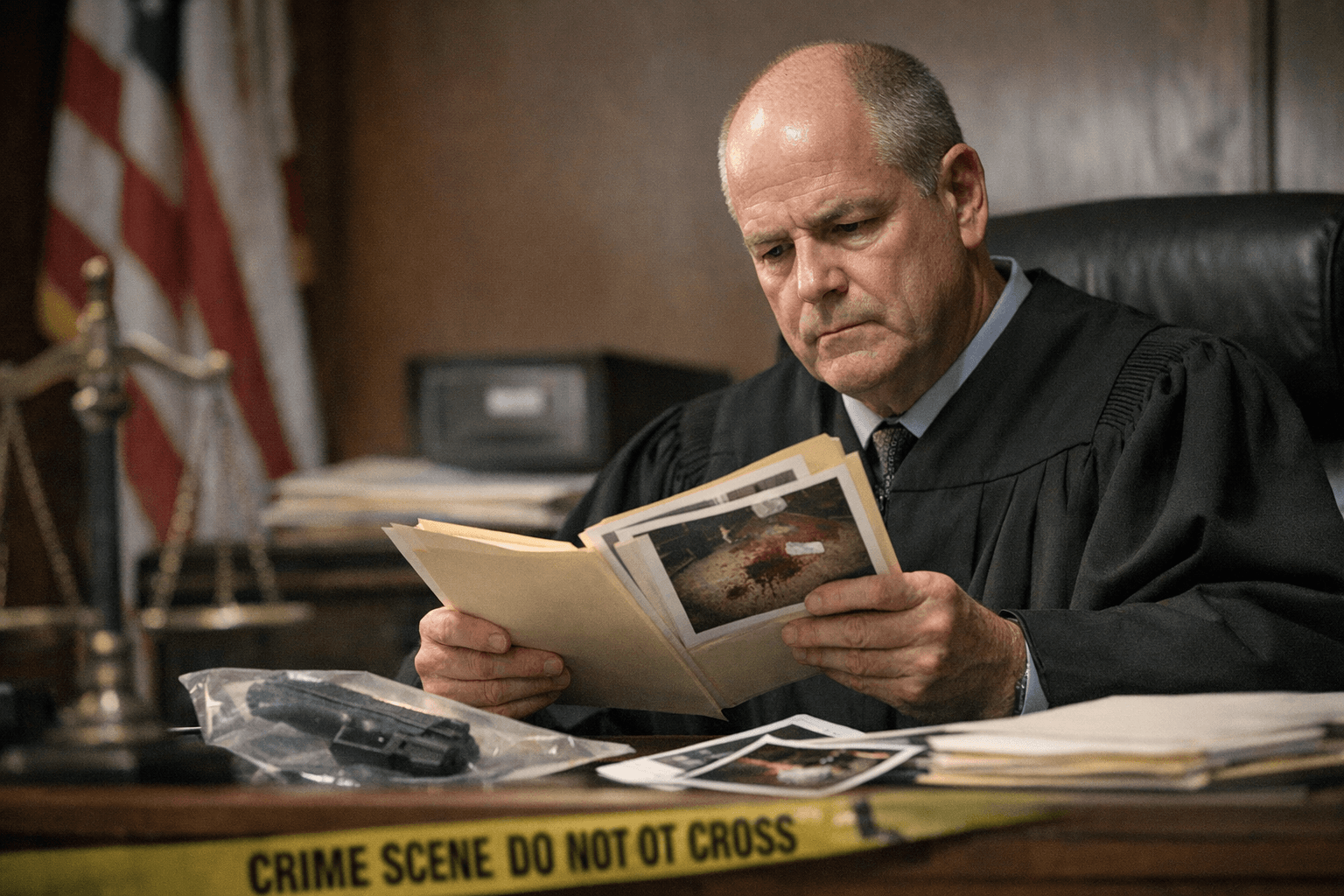
A defense motion to reassign the judge presiding over James Radford's first-degree homicide case succeeded Wednesday, pulling Shawano-Menominee County Circuit Court Judge William Kussel Jr. from the case and handing oversight to Marathon County Circuit Court Judge Lamont Jacobson.
Jacobson, a Marathon County circuit judge since 2013 and a former assistant district attorney and family court commissioner, moved quickly to assert control of the schedule. He has called a phone conference for April 9 to, in his words, "figure out where the case will go."
The charge traces back to April 11, 2016, when deputies responded to a call on County Road J in the Town of Fairbanks. The caller, later identified as James Radford, reported that his wife, Sabrina Radford, had sustained a gunshot wound and had shot herself. Investigators initially treated the death as a probable suicide.
That determination did not hold. Over the following years, detectives reexamined evidence, conducted additional interviews, and applied advanced forensic methods to the inquiry. "Over the course of nine years, investigators dedicated significant time and effort to this case," investigators noted, work that led prosecutors to conclude Sabrina Radford's death was not self-inflicted. Radford was taken into custody in Waukesha County in 2025 and transported to Shawano County for booking. He has remained in custody on an $800,000 cash bond.
Jacobson's appointment puts a fresh set of eyes on nearly a decade of filings, prior rulings, and a forensic record assembled across multiple investigative phases. The April 9 conference is expected to yield a formal timeline for pretrial proceedings, including motions likely to address the original suicide classification, chain-of-custody questions, and any forensic reanalysis conducted since 2016. Defense attorneys may also challenge how the investigation moved from a suicide finding to a first-degree homicide charge over nine years.
The case has maintained a persistent hold on regional attention precisely because of that elapsed time. A death initially called in as self-inflicted on County Road J in 2016 resurfaced as a first-degree murder prosecution nearly a decade later, driven by investigators who never fully closed the file. The road ahead comes into focus April 9, when Jacobson convenes his first conference on the case.
This article was produced by Prism’s automated news system from verified source data, official records, and press releases, then run through automated quality and moderation checks before publishing. The system is built and supervised by the people who set the standards it runs under. Read our full AI policy.
Did this article answer your question?