Wisconsin DNR Kicks Off Spring Prescribed Burns Across Forested Regions
Wisconsin DNR launched spring prescribed burns covering up to 3,000 acres per unit statewide, with direct implications for Menominee County's fire preparedness and timber corridor management.
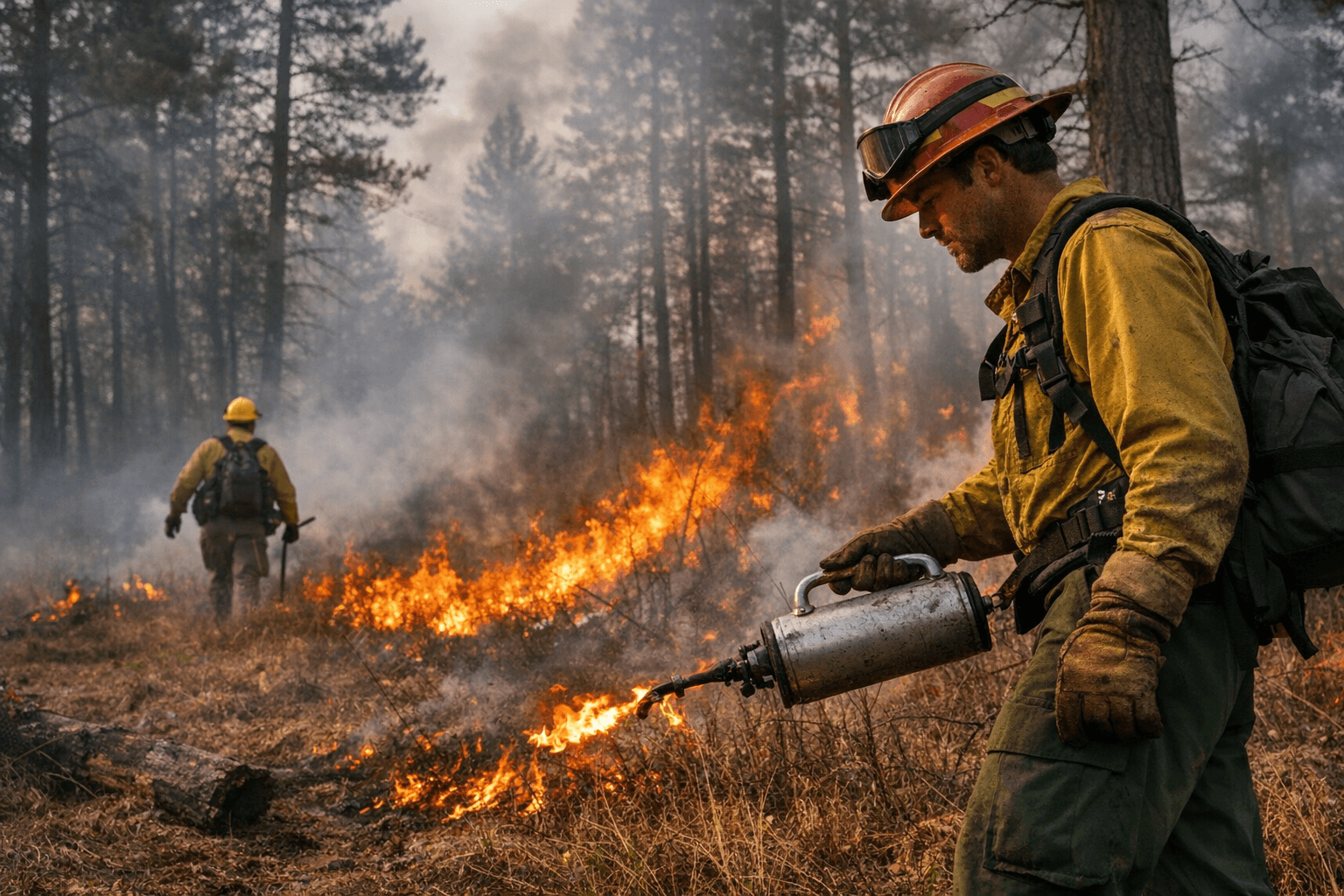
The Wisconsin Department of Natural Resources launched its spring prescribed-burn season Thursday, sending trained fire crews across forested regions statewide in an annual effort that covers between 25,000 and 30,000 acres each year and carries direct consequences for Menominee County's dense timber landscape.
Individual burn units range from less than an acre to nearly 3,000 acres, depending on terrain, fuel load, and target habitat conditions. Each operation is led by a fire boss supported by holding crews and public-safety liaisons, who work within narrow windows of acceptable humidity and wind speed to keep fire within control lines and limit smoke drift into nearby communities.
Local burn supervisors noted that "prescribed burns have a minimal impact on wildlife," explaining that animals typically move ahead of the flames. The fire functions more as a forest cleanup: it removes ladder fuels that could carry ground fire into the crown, opens the understory to sunlight, and spurs regeneration of young trees and native plant communities that struggle under accumulated debris and dense shade.
For Menominee County, that ecological dynamic carries considerable weight. The county holds one of the most contiguous stretches of managed forest in the Upper Midwest. The Menominee Indian Tribe of Wisconsin manages the bulk of that land through a long-established single-tree selection system, but prescribed burns conducted on adjacent state and federal parcels affect the entire regional fuel mosaic. When fine fuels accumulate across property boundaries, drought and wind can turn a localized management challenge into a cross-boundary wildfire. Coordination between tribal foresters, county emergency management, and DNR crews reduces the chance that an adjacent burn escapes containment or that unchecked fuel loads threaten timber infrastructure, rural homes, or culturally significant sites.
The burn program also feeds the local stewardship economy. Seasonal crews, fire technicians, and equipment suppliers draw work from prescribed-burn operations each spring, connecting fire management directly to the forestry sector that anchors year-round employment in the county.
In the near term, residents close to active units can expect intermittent smoke and possible road restrictions. The DNR asks anyone planning outdoor activities to check current burn notices through the department's regional office or Menominee County emergency management before heading out. Over the longer arc, the low-intensity fire delivers an ecological reset that supports healthier timber stands, improved wildlife habitat, and the continued viability of traditional gathering areas that are central to both the tribal community and the broader county economy.
This article was produced by Prism’s automated news system from verified source data, official records, and press releases, then run through automated quality and moderation checks before publishing. The system is built and supervised by the people who set the standards it runs under. Read our full AI policy.
Did this article answer your question?