Menominee fishing rules tie Keshena Falls closures to sturgeon spawning
Keshena Falls can close whenever sturgeon are spawning, and reservation fishing follows tribal rules, not state law. Anglers 16 and older also need a tribal license.
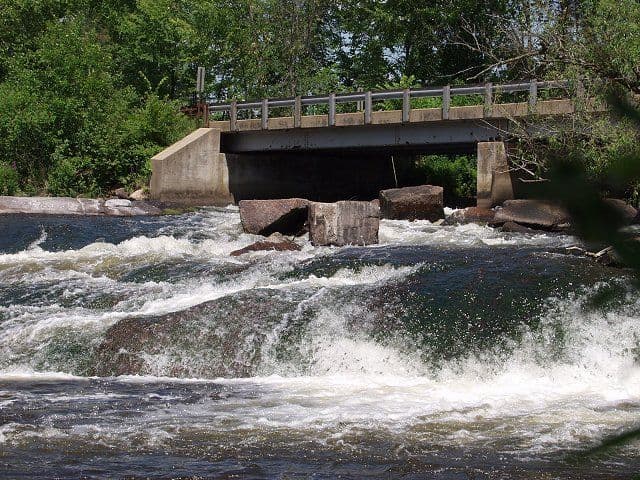
The biggest mistake anglers make on Menominee land is assuming the rules work like they do off-reservation. Near Keshena Falls, water can close when lake sturgeon are spawning, and that closure is driven by conservation timing, not by a fixed calendar. Anyone heading out on the Menominee Indian Reservation needs to know that tribal law, licensing, and seasonal protections control the trip.
What the Menominee rules change
The current Menominee fishing regulations were approved by the Menominee Conservation Commission on December 2, 2024, and by the Menominee Tribal Legislature on January 16, 2025. That recent policy timeline matters because it shows the rules are locally adopted and actively enforced, not just legacy language sitting on a shelf.
The clearest jurisdictional point is this: state fishing laws do not apply within the exterior boundaries of the Menominee Indian Reservation or on land owned by the Menominee Indian Tribe of Wisconsin. On those waters and lands, the tribe’s rules and laws govern permittees instead. For anyone used to Wisconsin defaults, that is the first thing to get right before a rod ever touches the water.
Before you fish, check these basics
The regulations set out a few practical requirements that can stop a trip cold if you overlook them. Among the most important:
- Anyone 16 or older must have a fishing license.
- Licenses are available through the Menominee Tribal Licensing and Permits Department.
- Tribal members may fish for game fish year-round, except for trout and lake sturgeon.
- Fishing for lake sturgeon is prohibited under the Menominee fishing regulations.
Those are not minor details. They determine who can fish, what species can be targeted, and where the tribe draws the line to protect fish populations that matter both ecologically and culturally.
Why Keshena Falls can close without warning
The Menominee Conservation Department, not a generic calendar, determines when water near Keshena Falls should be closed to fishing during lake sturgeon spawning periods. That means a spot that looks open one day can be restricted the next if spawning conditions call for it. For anglers around Keshena, Neopit, and nearby reservation communities, that makes pre-trip checks essential.
The closure is more than an access rule. It is tied directly to the life cycle of lake sturgeon, a species the tribe is working to protect and restore in waters connected to Keshena Falls. The point is to keep fishing activity from interfering with spawning at a site where the fish historically gathered in large numbers.
This is not just a paper rule, either. A Menominee Tribal Conservation Department Facebook post dated May 10, 2023 said fishing was still temporarily closed at Keshena Falls to allow sturgeon to spawn, and that a warden had responded to a reported fishing incident there. The message is clear: if the department closes the water, the closure is being watched and enforced.
The cultural weight behind the water
Keshena Falls is not simply a fishing location. In Menominee cultural history, it is Nama’o skiwamit, “the place where sturgeon come home.” The Fox-Wolf Watershed Alliance account says the Menominee sturgeon feast and celebration dates back centuries before Europeans arrived, which places today’s fishing protections inside a much older cultural practice.
That history helps explain why sturgeon management carries such significance. The same cultural account says sturgeon were harvested in spring to replenish food supplies after winter, and the fish also played a role in ceremonies, songs, tobacco offerings, and the Menominee fish dance. In other words, this is a conservation story and a cultural continuity story at the same time.
What the restoration projects are trying to change
The access restrictions around Keshena Falls also sit alongside bigger restoration plans. A U.S. Fish and Wildlife Service project says removing the abandoned powerhouse and small dam north of the river would restore river flow, attract lake sturgeon, and give tribal members access to view spawning. It also envisions a one-mile walking path and a place for learning and gathering.
A separate Bodwé project summary takes that vision further, describing the Menominee Sturgeon Coming Home Place as a 37-acre park in Keshena with an estimated $10 million cost. The planned features include a mile-long trail, a pavilion, restrooms, a playground, interpretive signage, and five clan markers. The summary also says sturgeon historically traveled 135 miles from Keshena Falls down the Wolf River to Lake Winnebago before dams changed the river system.
That background matters because it shows why the tribe’s rules are not just about limiting access. They are also about rebuilding a fishery and a place that once functioned as a natural travel route for sturgeon across the Wolf River system.
Why the park and the fishery matter beyond recreation
The stakes around Keshena Falls extend beyond anglers. A University of Wisconsin Extension report says Menominee County and Nation residents are disproportionately affected by obesity and have limited access to places to be physically active. The report puts that in stark terms: 4 in 10 Menominee County and Nation residents live with obesity, and only about 1 in 15 have access to places to be physically active.
That makes the Keshena Falls and park planning relevant to community health as well as conservation. A restored river corridor, a trail, and public gathering space would add one more place where families can walk, learn, and spend time outdoors in a county where access to physical activity is already limited.
For anglers, the immediate takeaway is simpler: check before you cast. If you are fishing on the Menominee Indian Reservation, tribal law controls, a license is required at age 16 and up, lake sturgeon are off-limits, and Keshena Falls may close whenever sturgeon are spawning. The safest assumption is that the rules are built around protecting the fish first, and the trip second.
This article was produced by Prism’s automated news system from verified source data, official records, and press releases, then run through automated quality and moderation checks before publishing. The system is built and supervised by the people who set the standards it runs under. Read our full AI policy.
Did this article answer your question?