St. Joseph of the Lake Church marks Menominee Reservation history
St. Joseph of the Lake was South Branch’s church, school, burial ground, and gathering place. Its history shows how Menominee families built community around one site.
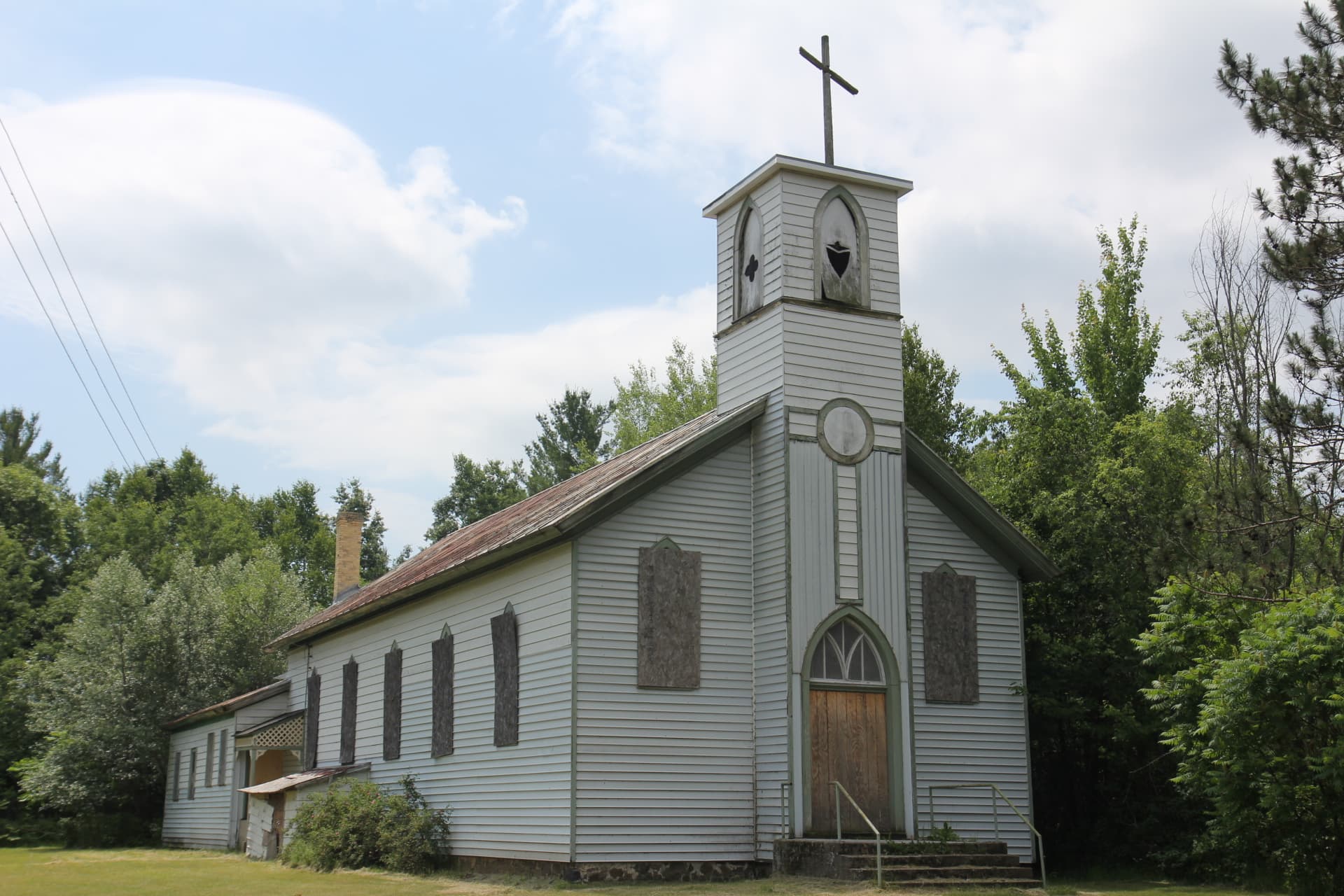
St. Joseph of the Lake Church sits in Menominee County as more than a preserved building. On the Menominee Reservation, it functioned for years as the community center for South Branch, a place where faith, mourning, ceremony, and everyday life all shared the same ground.
That layered role is what gives the site its power now. The National Register of Historic Places added Saint Joseph of the Lake Church and Cemetery in 2000, and the listing ties its significance to social history and Native American cultural affiliation. Its historic functions include cemetery, graves and burials, meeting hall, and religious structure, a combination that captures how the place served the South Branch community across generations. The property is privately owned, and its period of significance stretches from 1875 to 1949.
A place built by the people who used it
The story begins in 1876, when a Catholic mission with a farm church and a five-acre cemetery stood on the shore of St. Joseph Lake under Father Masschelein’s direction. By 1880, the Franciscan Order had taken charge and was visiting on the first and third Sundays of each month, bringing regular ministry to a community that was already shaping the site into something larger than a mission stop.
By 1891, the original church had deteriorated, and Father Blase Krake began work on a replacement. The South Branch Menominee supplied all of the lumber and raised most of the $3,000 needed to build the new church, a direct investment of labor and cash from local families who understood that the building would anchor more than worship. Rt. Rev. S.G. Messmer, Bishop of Green Bay, dedicated the church on June 17, 1893.
That construction history matters because it shows South Branch not as a passive mission field, but as a community that financed and shaped its own central place. The church was built through local effort, and it stayed rooted in that effort long after the dedication day passed.
Schoolhouse, ceremony ground, and social center
The church’s role extended well beyond Sunday services. In the late 1880s, the mission school taught about 20 children before they were sent to school in Keshena, showing how St. Joseph of the Lake also sat inside the reservation’s education history. Another historical account says the mission served 80 Menominee families and 12 European-American families from nearby towns by 1888, which reflects how far the site’s influence reached.
The tribal history adds a crucial social and political layer. The Menominee Reservation superintendent lived in Keshena and prohibited the Menominee language and traditional ceremonies there. Because South Branch sat about 16 miles away, St. Joseph’s may have offered a more workable refuge for ceremony, language, and community ritual. That distance is not a footnote. It helps explain why South Branch became such an important gathering place within the reservation landscape.
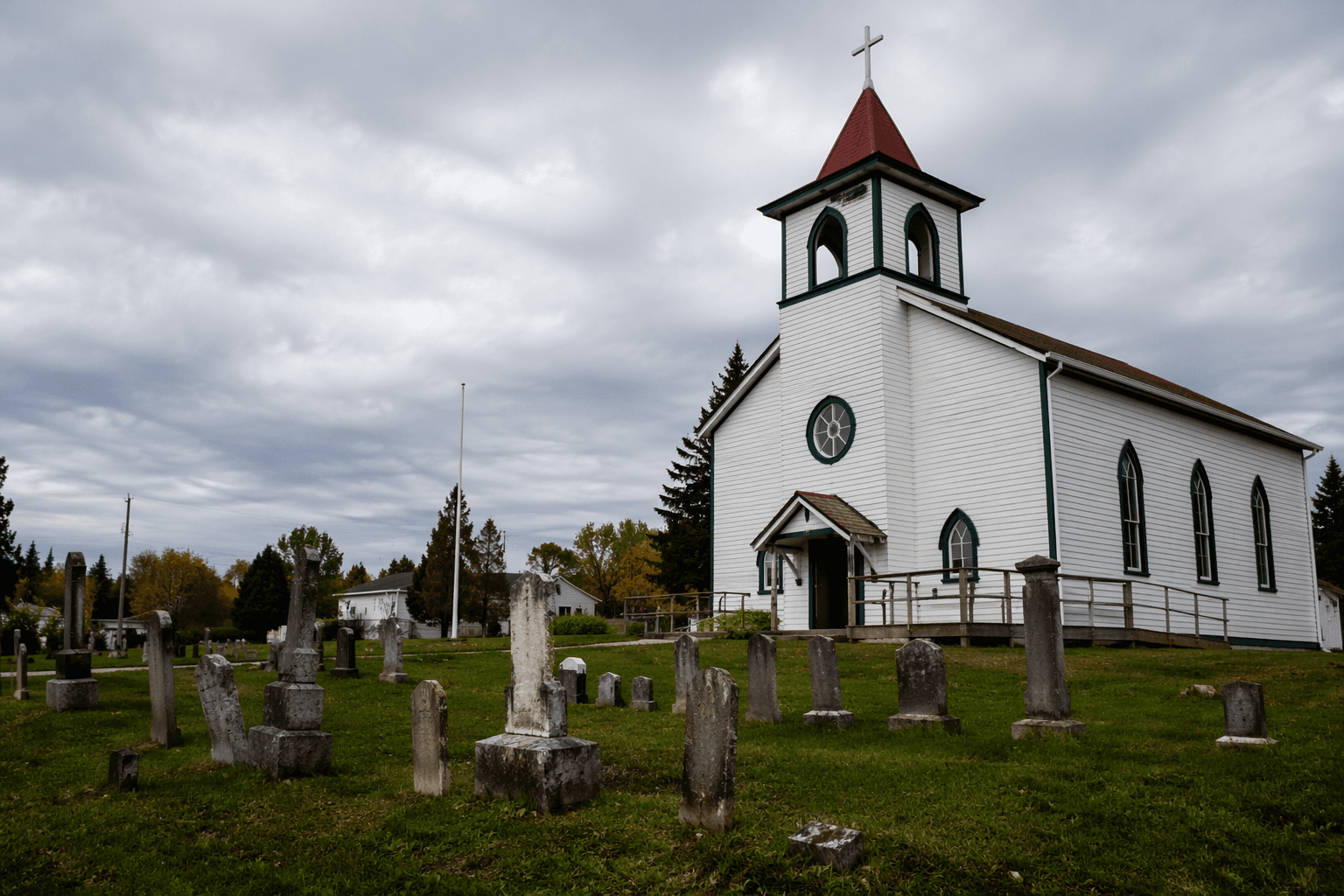
On the church grounds or inside the building, the community held ghost suppers, bean feasts, pow-wows, dances to heal the sick and dying, wakes, and funeral suppers. Those are not separate stories. They are the same story of a place where public life, spiritual life, and grief were shared in one setting. For South Branch families, the church was not only a house of prayer. It was where people gathered to feed one another, mourn one another, and carry cultural practice forward.
What the archives preserve
The site’s history also survives because it was documented in more than one archive. Marquette University Raynor Library Archives, through its Bureau of Catholic Indian Missions materials, preserves historical notes that help reconstruct the lives of Native Catholic missions, schools, and related institutions. Those records include chronologies of when organizations opened and closed, along with the major disasters and transitions that affected the continuity and survival of the records themselves.
That archival detail matters for Menominee County because so much local history lives in institutions that no longer function in the same way they once did. When a church served as school, hall, cemetery, and ceremonial space, the paper trail can be fragmentary. The archives help show how those pieces fit together, and why St. Joseph of the Lake stands out as a place where social history and Native cultural continuity overlap in one landscape.
The Menominee Indian Tribe of Wisconsin also places St. Joseph’s within its broader interactive history, alongside references to the Cultural Museum, Tribal Offices Building, the 50th Anniversary, and the Menominee Restoration Act. That framing places the church not as an isolated relic, but as part of a larger story of survival, change, and institutional memory.
Why South Branch still needs this place in memory
If St. Joseph of the Lake faded from public memory, Menominee County would lose one of its clearest examples of how a local institution held a community together. The site documents more than church attendance. It shows where families learned, buried their dead, held feasts, protected ceremony, and made room for language and cultural continuity under pressure.
That is why the National Register listing is only part of the story. The deeper meaning lives in the South Branch community’s decision to build the church, finance it, and use it as a shared center across decades. In Menominee County, St. Joseph of the Lake remains a record of how place can carry identity, and how a single building can hold the memory of a community that refused to disappear.
This article was produced by Prism’s automated news system from verified source data, official records, and press releases, then run through automated quality and moderation checks before publishing. The system is built and supervised by the people who set the standards it runs under. Read our full AI policy.
Did this article answer your question?