Coral Gables woman pleads guilty to posing as ICE official
Ana Caridad Linares admitted posing as an ICE legal administrative specialist and filing fake immigration motions. She faces up to three years in federal prison.
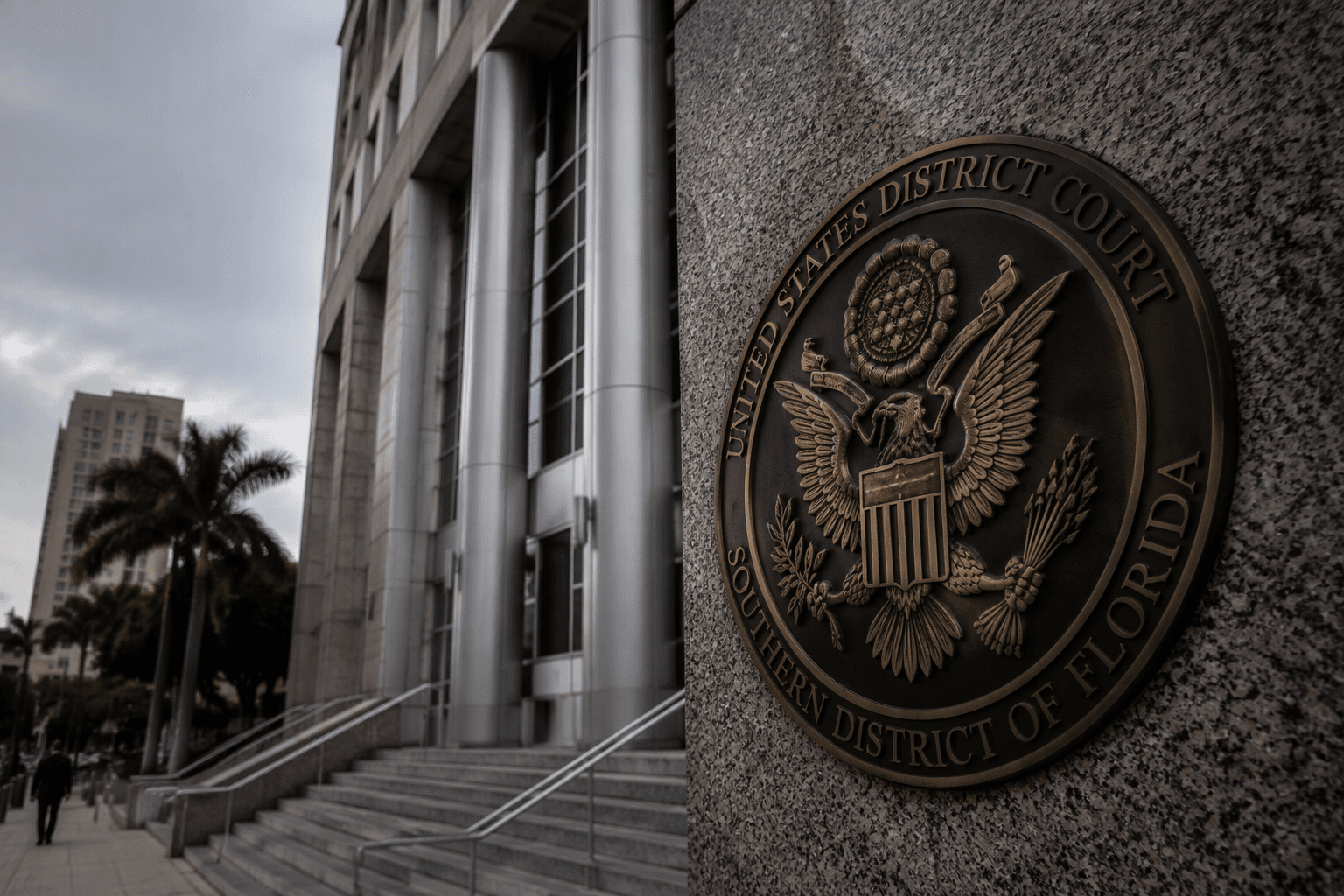
Ana Caridad Linares, a 45-year-old Coral Gables woman, pleaded guilty to false impersonation of a federal officer after prosecutors said she held herself out as a U.S. Immigration and Customs Enforcement legal administrative specialist. Federal prosecutors said the false identity was used to file fraudulent motions seeking dismissal of removal cases in immigration court.
The plea moves the case from allegation to accountability, and Linares now faces a maximum sentence of three years in federal prison. It also puts a sharp public-trust issue in the center of the case: someone claiming federal immigration authority can borrow the credibility of ICE and the Department of Homeland Security to pressure people who are already worried about detention, paperwork and their legal status.
In Miami-Dade County, that kind of impersonation can have outsized effects because immigrant communities depend on attorneys, advocates, document preparers and public agencies to navigate a system that is often confusing even when everyone involved is legitimate. A person who presents as a federal immigration specialist can mislead residents into sharing sensitive information, trusting false advice or believing that a removal case can be handled through private access instead of the court process.
Prosecutors said Linares repeatedly held herself out as an employee of DHS and used that false identity in immigration court. That detail matters because it shows the alleged fraud was not limited to a verbal claim or a casual encounter. It reached into formal filings tied to removal cases, where a fake claim of authority could affect people facing the loss of their ability to remain in the country.
For Miami-Dade residents, the warning signs are straightforward: no private person should be accepted as having special ICE power without clear identification and a verifiable government role, and anyone promising unusual access to immigration outcomes should be treated with caution. The case underscores how easily fear of enforcement can be exploited in South Florida, where a false badge of authority can deepen mistrust far beyond Coral Gables.
This article was produced by Prism’s automated news system from verified source data, official records, and press releases, then run through automated quality and moderation checks before publishing. The system is built and supervised by the people who set the standards it runs under. Read our full AI policy.
Did this article answer your question?