Curry Hammock State Park offers wild Keys escape in Marathon
Curry Hammock is Marathon’s wildest easy escape, with paddling, birding, camping, and wind sports in one of the Keys’ last big open stretches.

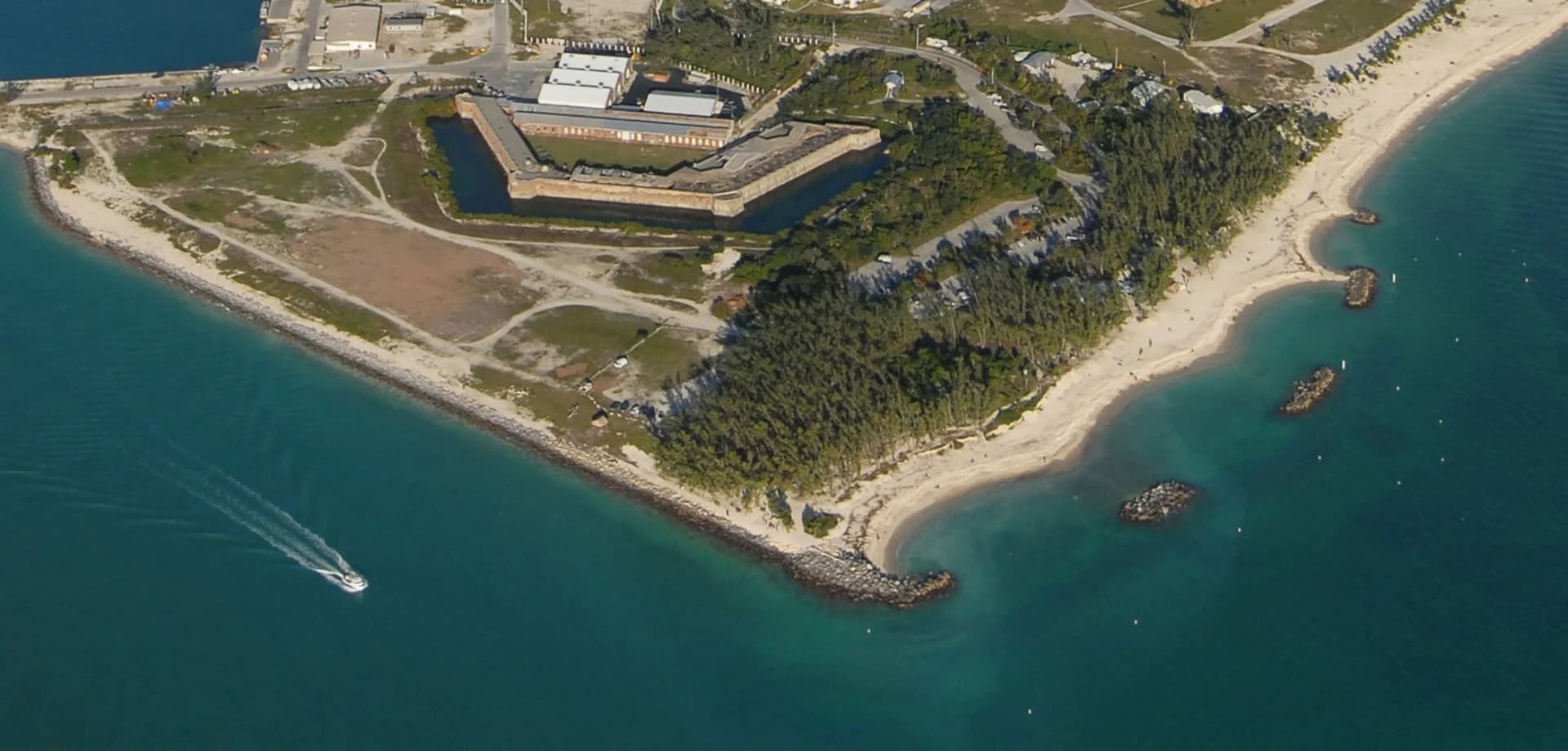
Curry Hammock State Park gives Marathon something rare in the Middle Keys: a large public landscape that still feels open, windy, and close to the water. Florida State Parks describes the 1,000-acre park as the largest undeveloped parcel of land between Key Largo and Big Pine Key, and that claim is obvious the moment you reach 56200 Overseas Highway at mile marker 56.2. For Monroe County readers who want the Keys without the resort polish, this is the place where mangroves, flats, and Atlantic shoreline still set the tone.
A last big stretch of open Keys land
What sets Curry Hammock apart is not just size, but what fills that size. The park is built around mangrove swamp, rockland hammock, seagrass, wetlands, and ocean and beach habitats, the layered ecology that still defines the Keys when development backs off. Florida State Parks also gives it a 1,200-foot sandy Atlantic beach, a small but memorable strip of shoreline that makes the park feel more like a natural edge than a built-out stop.
That matters in Marathon because the rest of the city, like much of Monroe County, is dense with roads, vacation housing, and waterfront construction. Curry Hammock is one of the clearest public reminders that the Middle Keys were once, and in places still are, a chain of habitat first and destination second.
How the land became public
Curry Hammock became a state park in 1991, and it is named for Lamar Louise Curry. The family sold about 1,112.5 acres to the state, turning a private tract into a public preserve that now serves as one of the county’s most useful open spaces. That backstory gives the park a preservation angle that goes beyond scenery: it is a piece of land that did not disappear into the private market during the build-out years.
The park’s trail system also carries the Keys’ transportation history in plain view. Two miles of the Florida Keys Overseas Heritage Trail pass through Curry Hammock, following the route of the Overseas Railroad and giving foot and bicycle access to Marathon. The larger trail is a 90-mile, multiuse, paved path stretching from Key Largo to Key West, and Curry Hammock is one of the better places to see how that old rail corridor now serves walkers and riders.
Who it is best for
Curry Hammock works especially well for three kinds of visitors:
- Paddlers, who want protected water, mangrove routes, and an easy launch into the park’s saltwater edges.
- Wind-sport users, who know that a calm day can feel like a quiet cove and a windy day can turn the shoreline into a kiteboarding scene.
- Wildlife seekers, who come for birds, open water, and the chance to see the Keys without constant traffic and storefronts.
The park’s paddling options make that mix easy to understand. Florida State Parks describes two kayak adventures there, including a 1.5-mile circumnavigation of Little Crawl Key that takes about an hour. The route moves through a mangrove tunnel, a deep-water lagoon, grassy flats, sandbars, and open ocean, which is a lot of terrain for a short paddle and one reason the park fits both beginners with steady conditions and more experienced kayakers looking for variety.
Birds, wind, and the beach
Birding is one of the park’s strongest calling cards. Curry Hammock sits on the Great Florida Birding and Wildlife Trail and hosts the Florida Keys Hawkwatch, which monitors raptor migration from the park at mile marker 56.2. Florida State Parks says the park sees record numbers of peregrine falcons every fall, and hawkwatch volunteers interpret migration there from roughly mid-September through early November.

That makes Curry Hammock a practical stop for anyone who wants to understand how the Keys function as a flyway, not just a beach corridor. Diurnal birds of prey are the focus, but the larger experience is visual and immediate: birds moving along the coast, wind over the flats, and a public shoreline that still feels like part of the migration route itself.
The weather also changes what the park becomes. On calm days, paddlers get quiet water. When the wind fills in, kiteboarders show up in numbers that can make the beach feel like an organized event. That contrast is part of the park’s appeal, since the same place can serve a slow kayak outing, a birding visit, or a high-wind session without changing its basic character.
Trails, campsites, and what to expect on the ground
The land rewards walking as much as paddling. Curry Hammock’s 1.5-mile nature trail sits on an outlying parcel and ends at an overlook of Florida Bay. The trail passes through uneven terrain and cap rock, which gives it a rougher, more natural feel than a polished boardwalk path. For a short walk, it does an efficient job of showing the park’s range, from inland scrub and rock to open bay views.
Overnight visitors have a limited but memorable option: 28 oceanfront campsites. That number keeps the campground small enough to feel distinct, and the setting puts campers close to the water rather than deep in a crowded resort zone. For a lot of Marathon visitors, that is the point of the park in one sentence: the Keys without the compression.
The scale of use shows the same thing. Florida State Parks Foundation fact sheets list visitation at 122,809 in 2024 and 104,186 in 2025, with economic impact at $17,717,559 in 2024 and $15,527,458 in 2025. Those figures show Curry Hammock is not a hidden backwater. It is a well-used public asset that still manages to hold onto space, silence, and the kind of shoreline Monroe County is steadily losing elsewhere.
In a county where build-out leaves fewer places that still feel wild, Curry Hammock matters because it keeps several versions of the Keys in one place: paddling water, bird habitat, rail-trail history, wind sports, and a real Atlantic edge. That combination is what makes it Marathon’s strongest counterweight to the resort version of the islands.
This article was produced by Prism’s automated news system from verified source data, official records, and press releases, then run through automated quality and moderation checks before publishing. The system is built and supervised by the people who set the standards it runs under. Read our full AI policy.
Did this article answer your question?