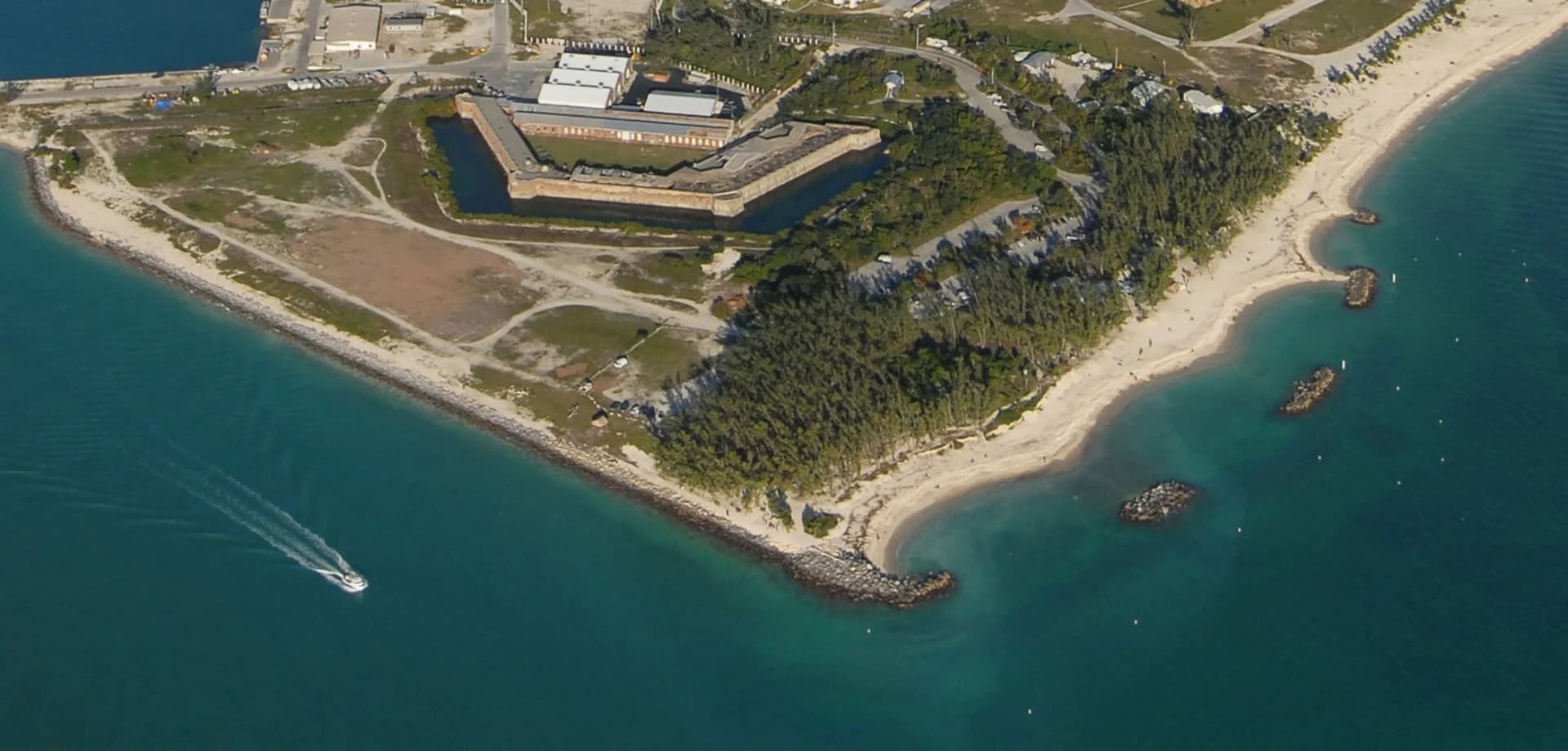
Key West refuge marks Roosevelt’s early conservation legacy
Key West National Wildlife Refuge is Monroe County’s boat-only old Keys escape, where Roosevelt’s 1908 conservation legacy still protects mangroves, seabirds and sea turtles.
Boat only, almost all water, and still shaped by Theodore Roosevelt’s 1908 conservation push, Key West National Wildlife Refuge is Monroe County’s clearest remaining version of the old Keys. The refuge west of Key West is not built for casual shoreline wandering: it is a 208,308-acre preserve of mangroves, low islands and open water where no freshwater exists and native terrestrial mammals are absent.
Roosevelt’s refuge, born from the plume trade
The U.S. Fish & Wildlife Service says Roosevelt created Key West National Wildlife Refuge in 1908 as a preserve and breeding ground for colonial nesting birds and other wildlife, at a time when plume hunters were devastating bird populations across Florida. That puts Monroe County at the center of one of the earliest federal conservation responses in the country, before the modern refuge system fully took shape.
Roosevelt’s record gives that decision broader weight. The Fish & Wildlife Service says he established about 230 million acres of public lands between 1901 and 1909, including the first 55 federal bird reservations and game preserves. Key West NWR belongs to that early conservation era, when protecting birds was becoming a national public duty instead of a private afterthought.
What the refuge actually looks like offshore
The refuge is built around the Marquesas Keys and 13 other islands spread across 375 square miles of open water. Most of the islands are dominated by mangroves, which helps explain why the landscape feels so remote once you leave the city side of Key West behind. The exceptions are small but important: hardwood hammock in the Marquesas, and beaches and dunes on Marquesas, Boca Grande Key and Woman Key.
Those physical limits shape everything about the trip. There is no freshwater on the islands, which is one reason development never took hold here. The refuge also lacks native terrestrial mammals, so the wildlife mix is defined far more by birds, marine life and the shallow-water ecosystem than by the land animals people expect on a normal park visit.
How to make the trip without ruining it
The refuge waters are open 24 hours a day, 365 days a year for boating, fishing, wildlife viewing, photography, snorkeling and diving, but access is only by boat. That makes it a place for people who plan ahead, know their vessel, and understand that the reward comes from low-impact use rather than convenience.

A visit goes wrong fast when people treat it like a beach they can improvise on the way out. The biggest mistakes are simple:
- Arriving without enough drinking water, shade and fuel planning, then discovering there is no freshwater on the islands.
- Expecting camping, aircraft landings or a day-use setup that does not exist.
- Bringing personal watercraft or assuming they are allowed, when they are not.
- Getting too close to wildlife, feeding animals or disturbing nesting and roosting areas.
- Assuming the mangrove islands are a place to land casually, when the refuge is designed to stay lightly touched.
The Fish & Wildlife Service prohibits personal watercraft, camping on islands, aircraft landings, hunting, feeding or harassing wildlife, and removal of antiquities. State and sanctuary rules add more specific restrictions in the Key West and Great White Heron refuge management areas, including bans on airboats, hovercraft, water skiing and recreational aircraft landings. Those limits are not decorative. They are the line between a functioning refuge and another overused stretch of water.
Why the wildlife payoff is different here
This is not just a scenic backcountry run. The lower Florida Keys refuges provide habitat for many bird species, including some unique to the Florida Keys and south Florida, and the open water within the boundaries of Key West and Great White Heron refuges covers about 400,000 acres. That is a major protected marine landscape, not a small pocket preserve.
The Marquesas region carries especially high value. NOAA says it holds the densest population of sea turtles in all of the Florida Keys and is one of the only known foraging grounds for adult green sea turtles in the continental United States. That is the kind of detail that changes how the refuge should be read: as a working habitat, not just a postcard view.
Bird protection is part of the same story. The Fish & Wildlife Service says the refuge exists to shelter colonial nesting birds, and the broader lower Keys refuge system still reflects the old plume-trade crisis that pushed great white herons and other birds toward extinction. The wildlife payoff here is tied to that history, because the habitat survived precisely where the islands stayed hard to reach.
How it fits into the Lower Keys system
Key West National Wildlife Refuge is part of the larger Lower Florida Keys refuges complex, managed alongside Great White Heron National Wildlife Refuge. Great White Heron was established in 1938 as a haven for great white herons and other wildlife after feather demand decimated heron populations, so the two refuges form a direct conservation chain across Monroe County.
That system is not managed in a vacuum. Fish & Wildlife Service planning guidance says refuge plans are developed with public participation, local communities, volunteers and Friends groups, and the 2009 Lower Florida Keys Comprehensive Conservation Plan is one concrete example of that process. In other words, the refuge is protected through long-term governance, not just posted boundaries.
For anyone trying to orient before heading offshore, the Nature Center for Key West NWR is at the National Key Deer Refuge visitor complex on Big Pine Key. It gives the refuge a land-based starting point even though the islands themselves remain boat-only, which is exactly the balance Monroe County has to preserve here: public access without flattening the wild character that Roosevelt’s original decision was meant to protect.
For boaters, birders, snorkelers and photographers who want the Keys without the traffic, the refuge delivers the oldest version of the county’s backcountry promise. It is still remote because it was protected early, and it still feels untouched because the rules keep it that way.
This article was produced by Prism’s automated news system from verified source data, official records, and press releases, then run through automated quality and moderation checks before publishing. The system is built and supervised by the people who set the standards it runs under. Read our full AI policy.
Did this article answer your question?