Fort Zachary Taylor blends Civil War history with Key West beach life
Fort Zachary Taylor gives Key West visitors Civil War guns, daily tours, and a beach day in the same stop on Monroe County’s southern edge.
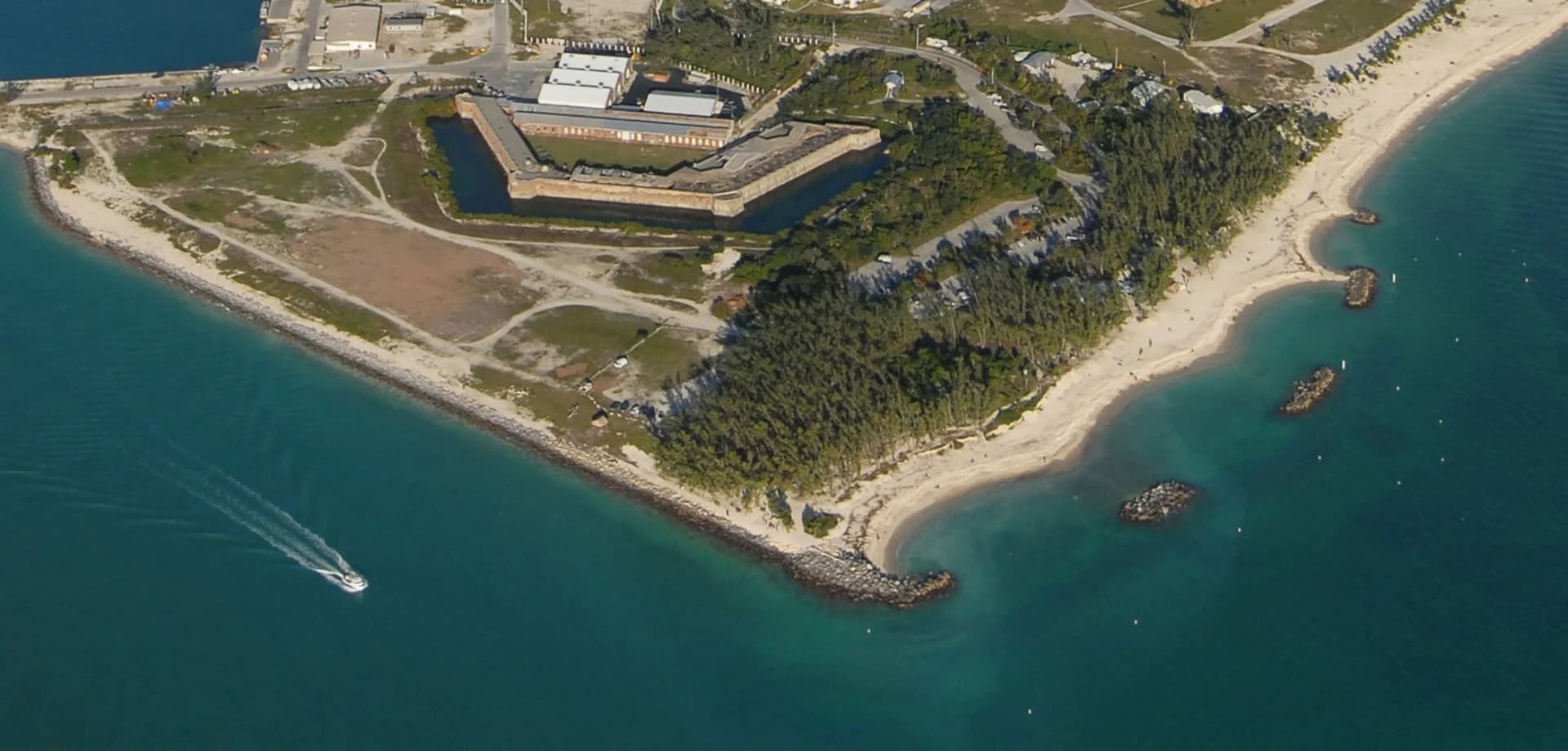
Fort Zachary Taylor is the rare Monroe County stop that works as both a serious Civil War site and an easy beach outing. On the southern edge of Key West, the state park pairs red-brick military corridors and cannon ports with swimming, snorkeling, paddling, fishing, and a stretch of shoreline that locals use like any other favorite park beach.
A fort built to guard Key West
Construction on Fort Zachary Taylor began in 1845, when the U.S. Army started building the fort named for President Zachary Taylor. It took 21 years to complete, and the finished structure stood ready in 1866 after labor and supplies were brought in from as far away as Germany. Florida State Parks says the fort was designed as a first line of defense for Florida’s southern coast and that, when the Civil War began in 1861, Fort Taylor stayed under federal control, one of only three fortresses in Florida to do so.
The fort’s wartime record stretches far beyond the Civil War. During that conflict, it served as headquarters for the Navy’s East Gulf Coast Blockading Squadron. Florida State Parks also places it in the Spanish-American War, World War I, World War II, and the Cuban Missile Crisis, which gives the site a timeline that runs from antebellum construction through the Cold War. In 1898, Army engineers stripped away the top two tiers of the three-story fortress and built two Endicott-period coast artillery batteries over the Civil War-era casemates, a visible reminder that military technology kept changing even as the site stayed strategically important.
What the fort holds now
The best reason to start with history is that Fort Zachary Taylor still contains history at scale. Florida State Parks calls it a National Historic Monument and says it houses the largest cache of Civil War armament in the world, along with the largest collection of Civil War-era cannons in the United States. That claim is anchored in a 1968 discovery, when Navy engineer Howard S. England investigated what had been an overgrown dumpsite and uncovered buried military stores, including cannons, thousands of cannonballs and projectiles, and a Civil War-era desalinization plant.

That discovery helps explain why the site feels like both a battlefield relic and an artifact field. The Army Corps of Engineers puts the former defense site at 51.32 acres, while other park materials describe it as 54 acres, so the footprint is small enough to walk but large enough to hold distinct layers of history. The fort remained on active duty until 1947, the property was deeded to the State of Florida in 1979, and Fort Zachary Taylor Historic State Park opened to the public in 1985.
Florida State Parks also gives the park a geographic distinction that is hard to ignore: it is the southernmost state park in the continental United States. That detail matters in Key West, where visitors often look for a location that feels specific to the island rather than interchangeable with any coastal park. Here, the military history is tied directly to the harbor, the shoreline, and the southern edge of Monroe County.
How people use the park today
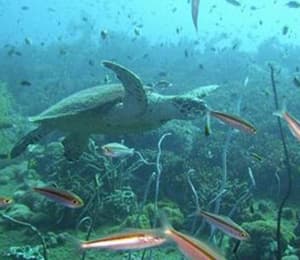
The beach is not an add-on here; it is part of the point. The park offers picnicking, swimming, snorkeling, paddling, and fishing, and the City of Key West also highlights a short nature trail and bicycling within the park. That mix makes the stop work for a family, a history-minded visitor, or anyone who wants to trade a standard beach day for one that comes with stone walls, artillery history, and offshore coral reefs.
The daily interpretation is part of the experience too. Florida State Parks says daily tours run at 11 a.m., and interpretive panels help frame what visitors are seeing as they move through the fort. Historic reenactments are held on the third weekend of each month, and park materials describe ranger-narrated tours as part of the public-facing experience. The park is listed as open daily from 8 a.m. to 5 p.m. on one Florida State Parks page, while another park message says 8 a.m. to sunset, so the safest planning move is to arrive early and expect the day to be spent outdoors.

The site’s layout reinforces the dual-purpose appeal. Visitors can walk the red-brick corridors, look out through cannon and gun ports, and then step back into a beach scene that includes coral reef views offshore. The park’s setting at the edge of Key West means the transition from museum-like interior spaces to open water takes only a few steps. That is what makes Fort Zachary Taylor different from a stand-alone historic landmark: the same visit can cover military engineering, birding, shoreline recreation, and a place to sit with lunch in the shade.
Why it remains a Monroe County staple
Fort Zachary Taylor endures because it is built around layered use, not single-purpose tourism. The City of Key West treats it as a recreation space as much as a heritage site, with beach access, snorkeling, fishing, picnicking, bicycling, and a café folded into the experience. Florida State Parks, for its part, keeps the focus on the fort’s origin as a harbor defense, its long military service, and the remains of the arsenal that surfaced in 1968.
That combination gives Monroe County a rare asset: a place where the public can spend the morning inside one of the Keys’ most important military landmarks and still finish the day in the water. Fort Zachary Taylor is not just where Key West remembers its strategic past. It is also where the city still lives at the shoreline.
This article was produced by Prism’s automated news system from verified source data, official records, and press releases, then run through automated quality and moderation checks before publishing. The system is built and supervised by the people who set the standards it runs under. Read our full AI policy.
Did this article answer your question?