Jacksonville Public Library special collections help Morgan County history research
Jacksonville Public Library’s Special Collections Room gives Morgan County residents a hands-on way to trace family roots, houses and school records from directories, maps and microfilm.
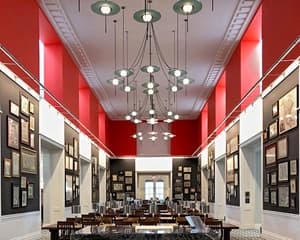
The Special Collections Room on the Fourth Floor of Jacksonville Public Library’s Main Library in downtown Jacksonville holds material on the history and people of Jacksonville and Morgan County. It is one of the most practical places in Morgan County to answer a local-history question that starts with a name, an address or an old newspaper clipping. The collection is built for research, not browsing. Its materials do not circulate, so the work happens there, with the records at hand.
What is in the room
The Special Collections Room includes rare and unique books, Local History Vertical Files, city directories, books, maps, microfilm, and online indexes and databases. The library’s usage policy gives the room a twofold mission: to preserve historical and genealogical material and to make it available to the public. The policy also extends the collection to material related to Illinois and other Illinois counties, which broadens the room beyond city limits while keeping Jacksonville and Morgan County at its center.
The most useful items for local researchers are often the most ordinary-looking. Jacksonville City Directories can track who lived where and what they did for a living. Morgan County atlas and plat books can show how parcels were laid out before roads, subdivisions and property lines changed. Local History Vertical Files can hold the kinds of scraps that rarely make it into a formal history, including newspaper clippings, event programs, photographs and assorted materials on people, places, events and topics.
Microfilm adds another layer. A newspaper issue can preserve an obituary, a school notice, a church announcement, a business ad or a public controversy in the way it was originally reported. Online indexes and databases help narrow the search before a researcher even pulls a reel or opens a folder.
How a first visit works
Special Collections is open to the public during library hours, and the main library is at 201 West College Avenue, Jacksonville, IL 62650-1814. A first visit goes best when you come with a few starting points in mind: a family surname, a house address, a school name, a church, a business or an approximate date. Those details let staff steer you toward the right format quickly, whether that means a directory, a map, a microfilm reel or a vertical file.
If you are tracing family roots, city directories and obituary searches are often the fastest entry point. If you are researching a house, plat books and maps can help show when the property first appeared and how the surrounding block changed over time. If you are trying to confirm a school connection, Local History Vertical Files and newspaper microfilm can be especially useful because they may preserve notices, programs and clippings that never survived in a family attic.
Staff can help match the question to the resource. A search for a person may begin in the directories, then move to vertical files and newspaper holdings. A property question may start with the atlas and plat books, then shift to maps and local histories. A school or obituary question can often move from the index to microfilm, where old reporting and community notices may fill in the missing pieces.
What to expect from the records
The value of Special Collections is in how the pieces work together. A city directory may show that a family lived on one street in one year and a different street the next. A plat book may show the lot before the house or neighborhood took its current shape. A newspaper obituary may identify relatives, a church, a burial place or a former employer. A clipping in a vertical file may preserve a school event, a business opening or a neighborhood issue that is hard to find anywhere else.
It helps residents reconstruct the story of a house, a school district, a church congregation, a downtown block or an old business corridor. The records can also help answer broader questions about how Morgan County changed.
The collection does not circulate. If you need to study an item, you do that in the room itself, which protects fragile local material and keeps it available for the next researcher.
A documented newspaper and history access site
Jacksonville Public Library’s role in local research is also visible in the Illinois Newspaper Project. In the participant record, Jacksonville Public Library is listed at 201 West College Avenue, and the library’s holdings display 39 items.
The Morgan County Historical Society is a nonprofit organization promoting the history of Morgan County, Illinois and the surrounding area. The Jacksonville Area Genealogical and Historical Society donated its regional history collection to Jacksonville Public Library, where it was ready for visitors after the transition.
This article was produced by Prism’s automated news system from verified source data, official records, and press releases, then run through automated quality and moderation checks before publishing. The system is built and supervised by the people who set the standards it runs under. Read our full AI policy.
Did this article answer your question?