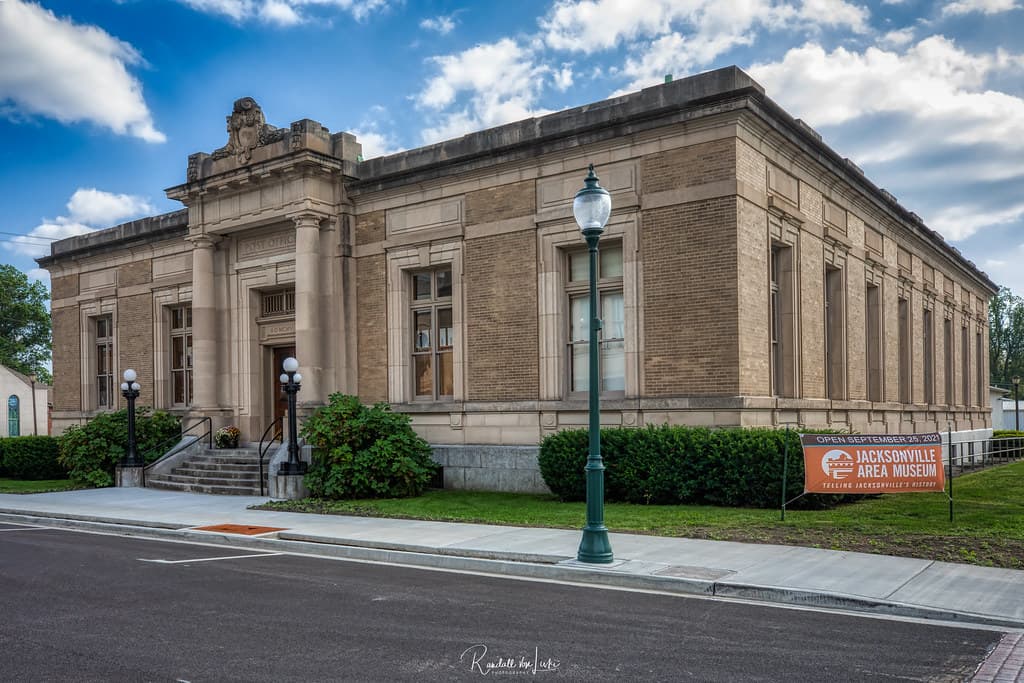
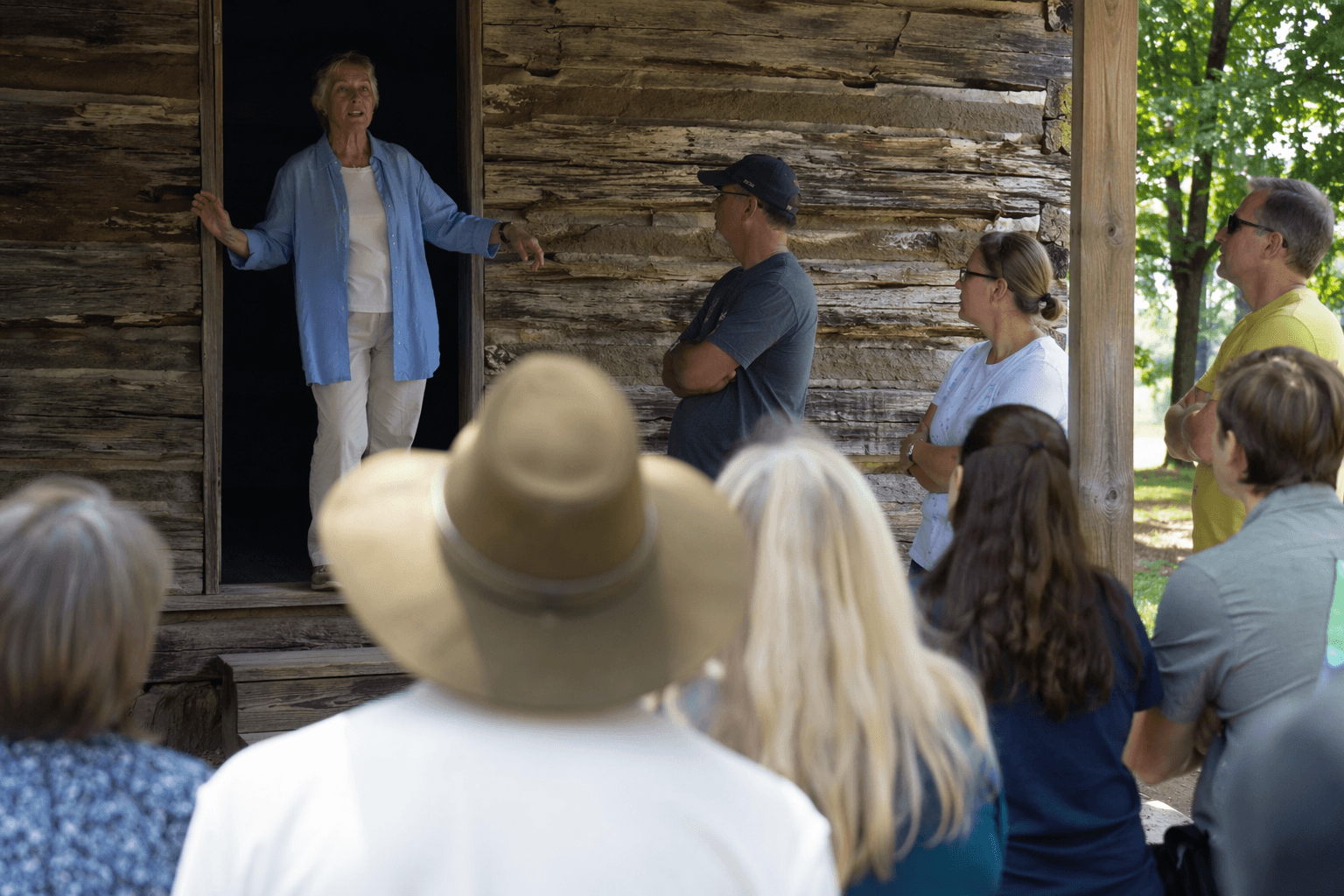
Morgan County Historical Society offers local history research toolkit
Maps, biographies, timelines and books on the Morgan County Historical Society site give you a fast way to trace a house, ancestor or landmark without leaving home.
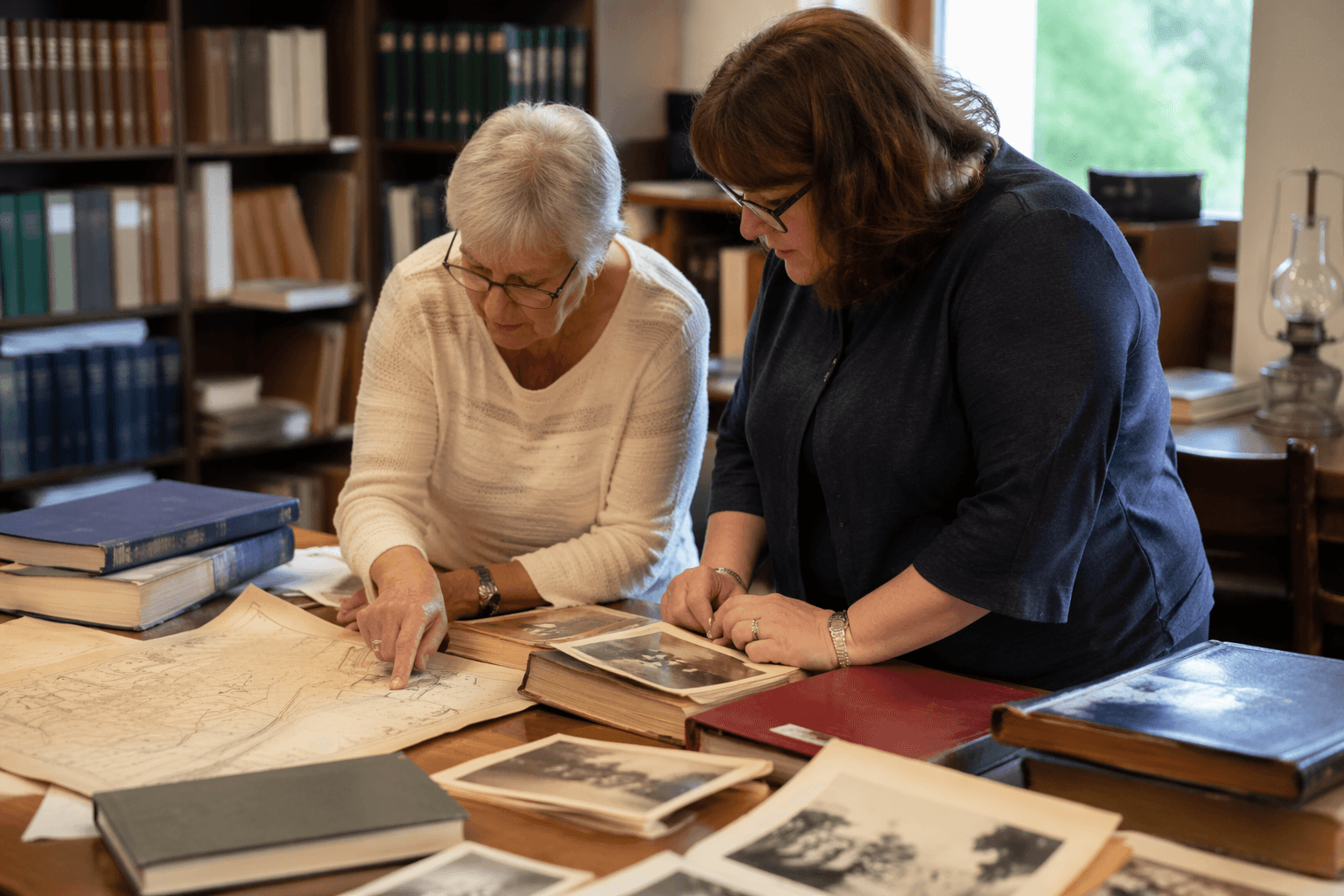
A house on a familiar street, a family surname in an old scrapbook, or a school project on Jacksonville can all start in one place: the Morgan County Historical Society’s website. The society was formed on November 18, 1904, at the Jacksonville Public Library to collect, maintain and share information about the people, places and events of Morgan County, and its site now works like a ready-made research toolkit for anyone who wants local history with real practical use.
Start at the home page
The home page does not leave you guessing. It points straight to Today in Morgan County History, Morgan County History, Who’s Who in History, Photo Gallery, Historical Maps, Publications, Events Calendar and Prairieland Chautauqua, so you can move from a broad search to a more focused one in a few clicks.
That structure matters because the society’s own lineage reaches back before 1904. Its forerunners were the Old Settlers of the County of Morgan, active from 1867 to 1895, and the Jacksonville Historical Society, active from 1884 to 1889. The longer timeline helps explain why the site feels less like a simple archive and more like a civic memory bank for Morgan County, Illinois.
Use the maps to place a house, block or landmark
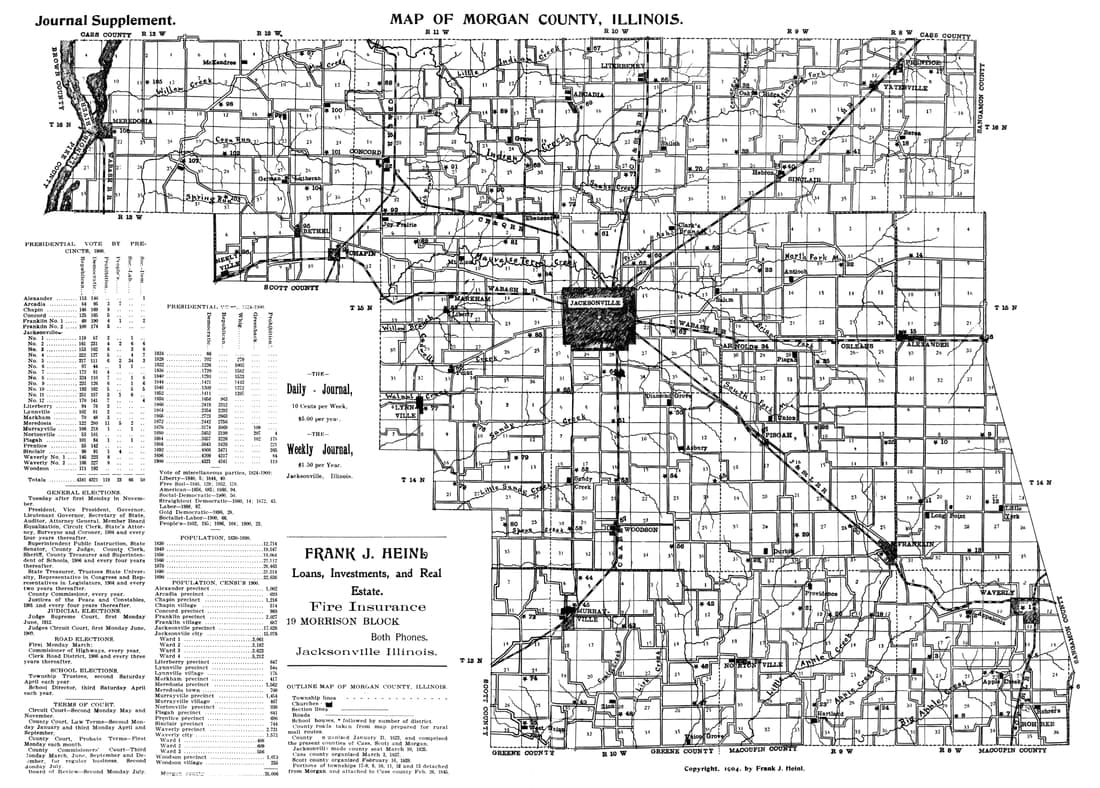
If you are trying to identify an old home, a corner lot or a neighborhood landmark, start with Historical Maps and work outward from a specific address or street. The best way to use the maps is to compare what you see now with the county seat’s earliest layout, especially the five-acre public square laid out on March 10, 1825 by county surveyor Johnston Shelton in what became Jacksonville’s Central Park area.
That square grew out of a county seat decision made earlier, on January 6, 1825, when John Howard, Abraham Pickett and John C. Lusk were appointed to locate a permanent seat for Morgan County. Jacksonville history sources add another layer: the tract was sold to Isaac Dial and Thomas Arnett for $1.25 an acre under authority of the Ordinance of 1785, and they deeded forty acres to Morgan County. When you know that basic geography, a map is no longer just a picture, but a guide to how the town took shape.
For a home-history search, use the maps in this order: 1. Find the street or block you recognize today. 2. Compare it with older layouts around Central Park and the original county-seat tract. 3. Move to the Photo Gallery if you want to match a building footprint or landmark with an image. 4. Use Publications if the property appears in a house-history title or architectural study.
That approach is especially useful for anyone tracing a long-owned family house or trying to place an historic building in a wider town pattern.
Trace a surname through biographies and the county timeline
Who’s Who in History is the clearest starting point when a name keeps appearing in a deed, obituary, church list or cemetery record. Use it as a bridge between a person and the institutions that shaped Morgan County, whether that means law, medicine, education or the churches and civic groups that appear throughout the county’s early history.
The daily timeline on Today in Morgan County History adds the date-specific details that make family or classroom research feel alive. It includes entries such as the first Illinois College classes in Beecher Hall in 1830 and the creation of The Juveniles band in 1882, which gives you clean, usable milestones for a timeline, caption, sidebar or lesson plan.
That page is especially handy when you need one exact date rather than a broad era. A student can use it to anchor a report, a descendant can use it to connect a family name to a real event, and a neighborhood historian can use it to tie a street or institution to a documented moment in county life.
Use the history pages to understand why Jacksonville looks the way it does
The Morgan County History page opens with the county-seat decision and then moves through the early courthouse years, the growth of law and medicine, the founding of Illinois College and the later arrival of major state institutions such as the School for the Deaf, the Central Hospital for the Insane and the School for the Blind. That sequence shows how Jacksonville became more than a county seat, becoming instead a center for education, public service and institutional life.
Beecher Hall gives that story a physical anchor. The Library of Congress identifies the Illinois College building as dating to 1830 and as the oldest building on the Illinois College campus, which makes it a useful reference point whether you are studying college history, early architecture or the town’s development around the campus.
Turn to publications and library holdings for deeper work
When the website prompts more questions than it answers, Publications is the next stop. The society lists titles with direct local value, including A Window on the Past: Residences of Jacksonville, Illinois: Their History and Design, 1833-1925 and Antonio de Mattos and the Protestant Portuguese Community in Antebellum Illinois.
A bibliographic record confirms that A Window on the Past was published by the Morgan County Historical Society in 1990 and had a revised edition in 2012. That makes it the kind of title worth checking if you are tracking a specific house, an architecturally significant block or a family home with a long paper trail.
The Jacksonville Public Library strengthens the research path. Its local history guide says the library offers books, maps, microfilm, online indexes and databases for local people, places and events, and its Special Collections Room holds rare and unique books on Jacksonville and Morgan County. In practice, that means you can move from online browsing to print sources without changing the subject or losing momentum.
Keep the county, not just the city, in view
Morgan County was established in 1823 and named for Revolutionary War hero Gen. Daniel Morgan, so the story reaches beyond Jacksonville’s city limits. That broader frame matters if you are tracing a farm family, an outlying school, a township road or a name that shows up far from the square.
The historical society is also described in an external museum directory as a member of the Illinois State Historical Society, which helps place its work in a wider preservation network. For Morgan County readers, that means the local toolkit is not isolated or ceremonial. It is part of a living system of records, books, maps and memory that can help you reconstruct a place, a person or a neighborhood from home.
This article was produced by Prism’s automated news system from verified source data, official records, and press releases, then run through automated quality and moderation checks before publishing. The system is built and supervised by the people who set the standards it runs under. Read our full AI policy.
Did this article answer your question?