Morgan County telecommunicator Taijia Neff finds purpose helping callers every shift
Taijia Neff's steady voice helps launch help across Morgan County, where one well-handled call can change a crash, fire or medical emergency.
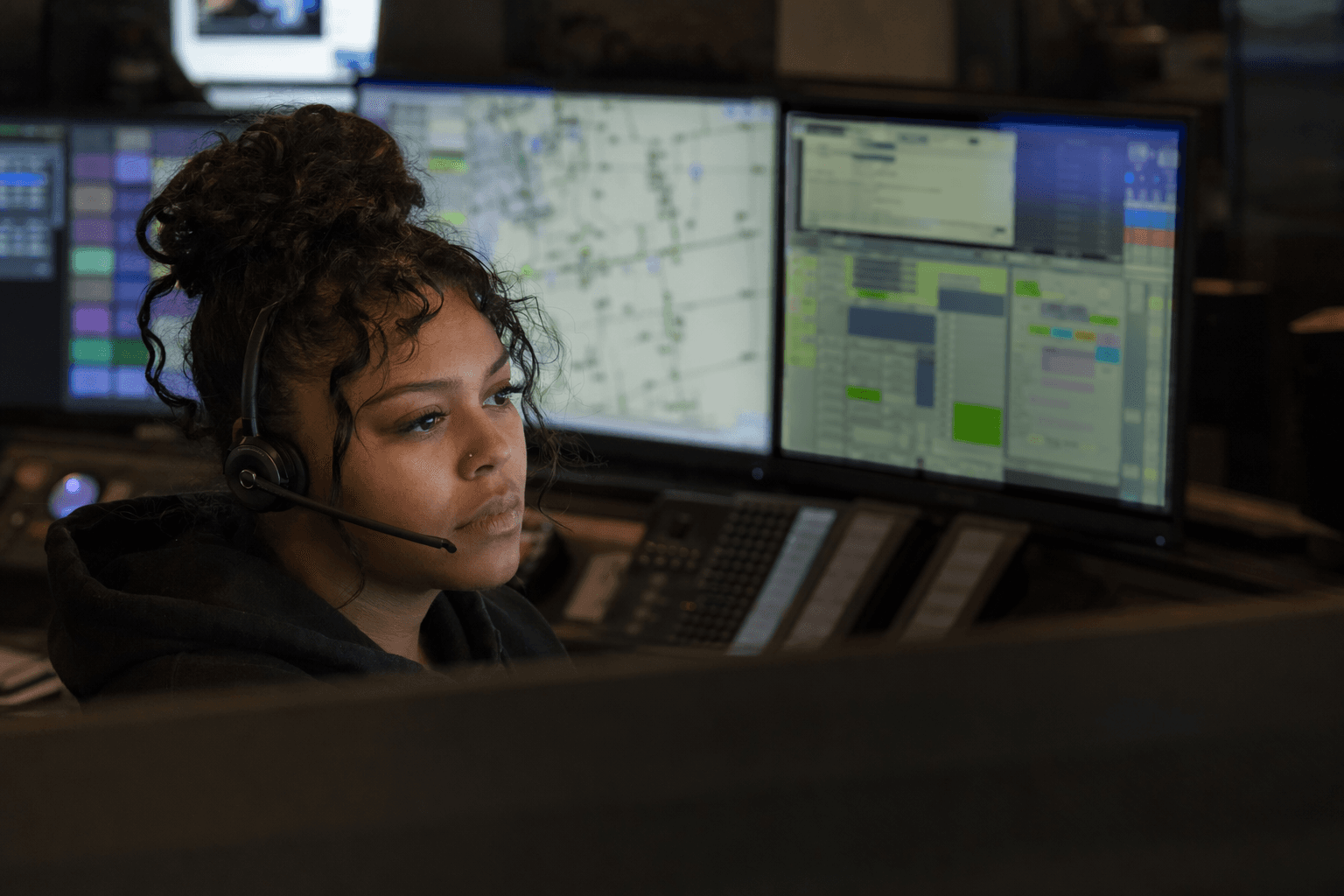
Every emergency in Morgan County starts with a voice on the line, and Taijia Neff is one of the people making sure that voice is heard, understood and acted on.
As a telecommunicator with the West Central Joint ETSB, Neff works inside the system that serves Morgan, Calhoun and Greene counties. That means the job is not just about answering phones. It is about catching the first fragments of a crisis, sorting out what is happening, and getting the right help moving before a caller’s panic turns into a delay that costs time, safety or even a life.
The first minutes matter most
The public usually sees emergency response at the street level, with a squad car in a driveway, an ambulance at the curb or firefighters stepping into smoke. Neff’s work happens before that, in the seconds when a dispatcher has to turn confusion into a usable response. A telecommunicator gathers the location, identifies the problem, calms the caller and routes police, fire or EMS to the right place.
That invisible work matters in Morgan County because emergencies do not wait for ideal conditions. A medical call in rural territory can depend on how clearly the caller can explain where they are. A fire on the edge of Jacksonville can require quick coordination so the first crews do not waste time chasing the wrong address. A crash, a disturbance or a welfare check can all hinge on the same thing: whether the person on the line can remain steady long enough for dispatch to turn information into action.
Illinois State Police defines a telecommunicator call taker specialist as the employee responsible for receiving and routing calls for service or deploying appropriate resources for handling 9-1-1 emergency calls. That definition sounds technical, but the daily reality is human. The voice on the other end of the line may be frightened, injured, angry or unable to speak clearly, and the telecommunicator has to work through that pressure while keeping responders informed.
A county system that reaches beyond one office
Neff’s work sits inside a larger regional structure, not a single-county operation. The West Central Joint ETSB’s emergency services program serves Morgan, Calhoun and Greene counties, which makes the dispatch function a shared public-safety asset across the region. In practical terms, that means the person answering a 911 call in one community may be coordinating with units and systems that stretch well beyond one town line.
That multi-county structure is one reason dispatchers deserve closer public attention. Their decisions affect how fast help arrives, which agency gets the call first and whether a caller gets the right instructions while waiting for responders. In a county like Morgan, where people move between Jacksonville, surrounding rural areas and neighboring counties every day, that coordination can shape outcomes long before an officer, firefighter or medic reaches the scene.
The Illinois State Police Division of Statewide 9-1-1 now oversees the broader system behind those calls. It administers the Emergency Telephone Systems Act and oversees the technical and operational standards for 9-1-1 systems, while also approving modifications and consolidations. That means local dispatch work is tied to statewide rules, infrastructure and funding decisions that affect how reliably the system functions when someone dials for help.
Training, standards and the pressure to stay current
Dispatch is a skilled public-safety job, and Illinois law now treats it that way. Public Act 102-0009 requires training, testing and certification for public safety telecommunicators and telecommunicator supervisors. Illinois State Police has said that requirement applies to an estimated 4,000 telecommunicators statewide.
That shift matters because the job demands more than good phone manners. Telecommunicators have to understand emergency dispatch procedures, keep up with evolving technology and make split-second judgments that can affect police, fire and EMS deployment. The state has also said it is developing comprehensive training guidelines and continuing education standards, which underscores how much depends on consistent performance across a network that serves every part of Illinois.
Illinois’ oversight history shows how far the system has come. The state first passed legislation on September 25, 1975, giving oversight authority for 911 systems to the Illinois Commerce Commission. Effective January 1, 2016, that oversight moved to the Illinois State Police. The transfer reflects how emergency communications have become a law-enforcement, fire and medical coordination issue as much as a telecommunications one.
Modernization is changing the job as fast as the calls
The technology behind 911 is also changing. Illinois reported that 49 public safety answering points, or PSAPs, transitioned to the statewide NG9-1-1 network in 2024, with 11 more transitioned or scheduled to transition in 2025. The state said 167 PSAPs were receiving 9-1-1 calls by means of NG9-1-1 networks.
That modernization matters to callers in Morgan County because faster, more resilient networks can improve how quickly information reaches dispatchers and responders. It can also change how the system handles location data, call routing and coordination across jurisdictions. For a telecommunicator like Neff, the work becomes even more precise as the technical backbone gets more complex.
The Illinois State Police also said NG9-1-1 legislative grant funding was scheduled to expire in June 2025, leaving long-term funding for infrastructure under review. That makes the state’s modernization push more than a technical upgrade. It is a policy question about whether Illinois can keep emergency communications reliable, interoperable and funded well enough to match the demands placed on it every day.
Why Taijia Neff’s role reaches beyond the headset
The Journal-Courier’s Behind the Badge series uses Neff’s story to put a face on a job most people only notice in a crisis. That is the real public value of this profile: it reminds Morgan County residents that the first person to help may never leave the dispatch center.
When someone calls from a kitchen where a parent has collapsed, a roadside turnout after a wreck, or a farmhouse where smoke is spreading faster than anyone expected, the telecommunicator’s tone, judgment and speed help decide how the next few minutes unfold. That is why Neff’s shift matters, and why dispatch deserves to be seen as part of the county’s frontline public safety system, not the background behind it.
Know something we missed? Have a correction or additional information?
Submit a Tip