Morgan County warns of black-legged and Lone Star ticks spreading locally
Black-legged and Lone Star ticks have reached Morgan County, with one found on the health administrator’s family farm and a meat allergy risk now in play.
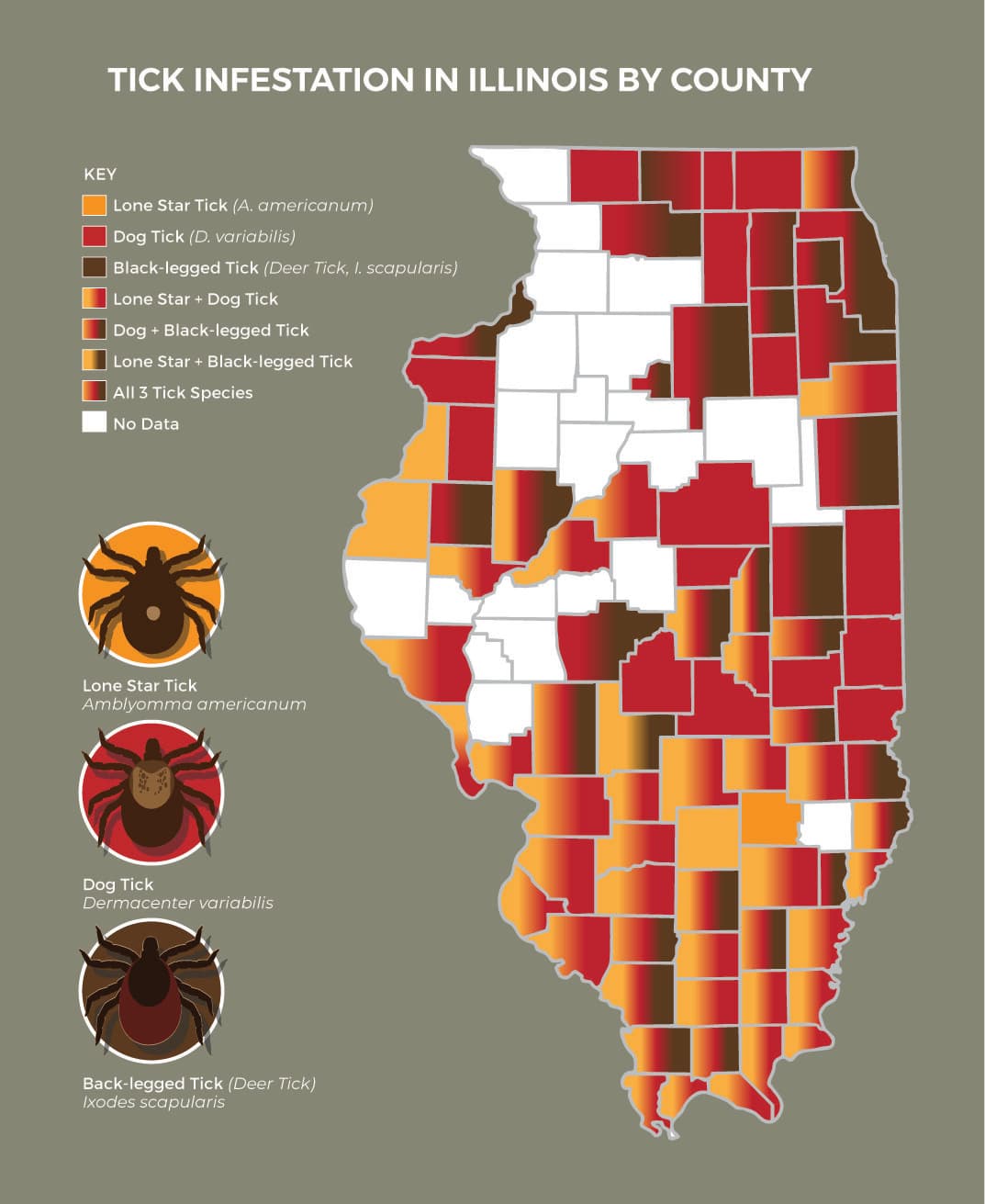
Ticks that can spread Lyme disease and trigger a serious meat allergy are now part of the Morgan County picture, and the county health department says one has already turned up on Dale Bainter’s family farm. Bainter, the Morgan County Health Department administrator, says black-legged ticks and Lone Star ticks are the main concern as residents spend more time in brushy yards, fields, and wooded edges around Jacksonville and the county’s rural areas.
The Illinois Department of Public Health says blacklegged ticks are most common in northern Illinois and around river corridors, while Lone Star ticks are more common in the southern half of the state. University of Illinois Urbana-Champaign researchers and the Illinois Natural History Survey have said Lone Star ticks are most prevalent in southern Illinois, while black-legged ticks are more common in northern and central Illinois. In Illinois, black-legged ticks can carry Lyme disease. Lone Star ticks can spread tularemia and other illnesses.

The bigger warning with the Lone Star tick is alpha-gal syndrome, a serious, potentially life-threatening allergy that can develop after a tick bite. The Centers for Disease Control and Prevention says the condition is primarily linked to Lone Star tick bites in the United States, though rare cases have also followed blacklegged tick bites. CDC estimates alpha-gal syndrome may affect as many as 450,000 people in the country, with more than 110,000 suspected cases identified between 2010 and 2022.
That allergy matters because it can make people react after eating red meat or coming into contact with other mammal-derived products. CDC says there are no vaccines to prevent alpha-gal syndrome, and treatment centers on avoiding foods and products that contain alpha-gal, preventing future tick bites, and getting urgent care when needed. Bainter said the condition can fade over time in some people, but not in others.
Illinois public health officials note that ticks are arachnids, not insects, and are among the most efficient carriers of disease because they attach firmly, feed slowly, and may go unnoticed for a considerable time. Lone Star ticks in Illinois can bite humans from April through fall, while black-legged ticks can be present year-round. For families, outdoor workers, hunters, gardeners, and anyone mowing or walking through tall grass, the warning is immediate: check for ticks now, watch for rash, fever, fatigue, or an unusual reaction after eating meat, and treat every bite as a possible health problem.
This article was produced by Prism’s automated news system from verified source data, official records, and press releases, then run through automated quality and moderation checks before publishing. The system is built and supervised by the people who set the standards it runs under. Read our full AI policy.
Did this article answer your question?