Native plants bring red, white and blue to summer gardens
Native red, white and blue blooms can keep Morgan County yards colorful through summer while cutting upkeep and feeding pollinators.
In Morgan County, a red, white and blue garden planted with natives can keep color going through the summer heat, handle local soils better than many ornamentals, and give butterflies, hummingbirds and bees food long after store-bought annuals fade. Native plants are often better adapted to local soil and climate, and once established they usually need less water, fertilizer and other maintenance.
Why natives fit the job better
Pollinators are under pressure. They sustain plant communities, and Illinois Extension estimates that 99% of pollinators in North America are insects, most of them bees. Pollinators are in decline, and thoughtful garden design can help support them.
Native plants provide food and shelter for wildlife, increase biodiversity in home landscapes, and often hold up better through the weather swings that come with central Illinois summers.
Red plants that solve real yard problems
Cardinal flower, or *Lobelia cardinalis*, is the strongest red choice for a moist corner or rain garden. It produces brilliant summer spikes of red flowers about 2 feet long, draws butterflies and hummingbirds, prefers moist soil, and can tolerate brief flooding. It is often short-lived, but it reseeds readily, which helps it return without constant replanting.
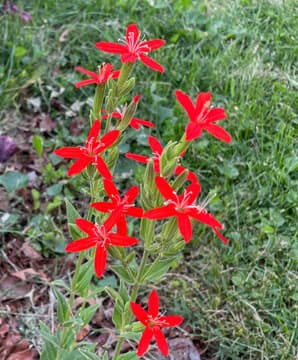
Royal catchfly, or *Silene regia*, fills a different need. It grows 3 to 4 feet tall, blooms with 2-inch red flowers in summer, and prefers full to part sun with medium to dry, well-drained soil. Illinois lists it as an endangered species, so planting it in a home landscape can also help keep a native species visible in local gardens.
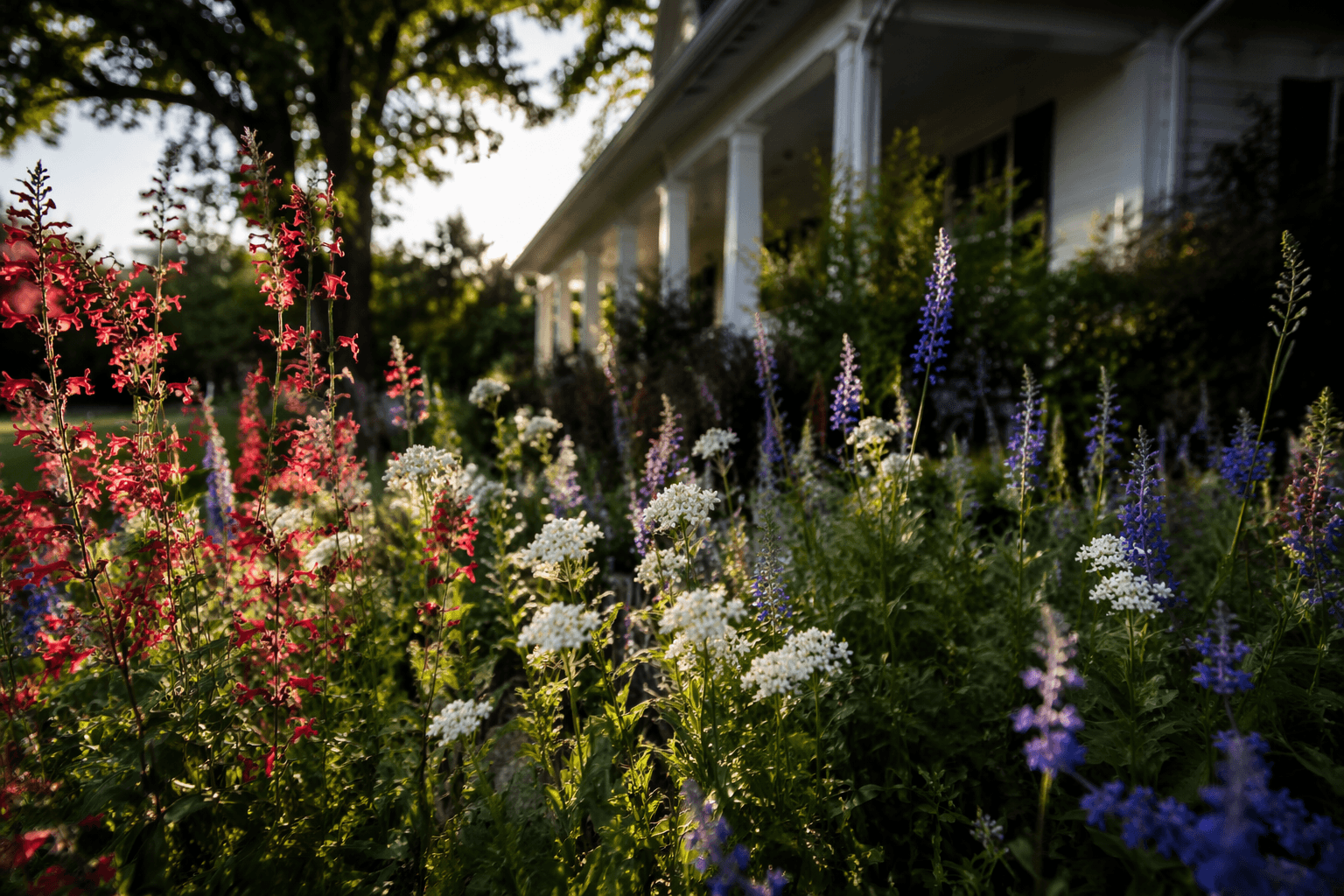
Scarlet bee balm, or *Monarda didyma*, gives the red palette a taller, looser look. It grows 2 to 4 feet tall, produces tubular bright red flowers, and works in full sun to part shade with medium to wet soils. It will spread and can develop powdery mildew, so it is best where you want a vigorous clump rather than a neat, low-maintenance edging plant.
Together, those three plants cover three different summer problems: a wet spot, a dry sunny bed, and a more flexible border where hummingbirds can find nectar. Red columbine, trumpet honeysuckle, bee balm, prairie blazing star and foxglove beardtongue also work in hummingbird plantings, so a red-themed garden can stretch well beyond a single flower type.
White bloomers keep the bed bright after July 4
American boneset is one of the most useful white summer natives for that job: it blooms from July through September and attracts bees, flies, wasps, beetles and butterflies. It also works in moist conditions and can withstand some flooding, which makes it useful in low spots that hold water after heavy rain.
If a border needs a taller, more structural white plant, rattlesnake master adds an almost sculptural look with bluish-green foliage and tight flower heads. It grows 2 to 5 feet tall, so it can anchor a mixed bed instead of disappearing behind shorter flowers.
Blue plants finish the theme and extend the pollinator season
Great blue lobelia, blue vervain and lead plant are native blue options, and great blue lobelia is also a good pollinator plant. Great blue lobelia is a useful choice for a moist site, while other blue-flowering natives help fill out the summer display where red and white blooms have already peaked.
Cardinal flower, red columbine, trumpet honeysuckle, bee balm, prairie blazing star and foxglove beardtongue all provide the kind of nectar-rich structure hummingbirds use. Planting several species with different bloom times keeps the garden useful from spring into fall.
Where Morgan County gardeners can look
For local help, the Morgan County Extension office is at 104 N. Westgate Ave. in Jacksonville, and Extension offers a Virtual Horticulture Helpline for garden, lawn and tree questions at no cost. Illinois Native Plant Society also maintains a native-plant sale directory that can help find sales near you, though some listings may include cultivars or non-native plants, so it pays to check the details before buying.
The society’s nursery list also includes Illinois growers such as Auburn Acres in Roanoke and Pizzo Native Plant Nursery near Leland, but some nurseries are wholesale-only or do not operate as public retail sites.
This article was produced by Prism’s automated news system from verified source data, official records, and press releases, then run through automated quality and moderation checks before publishing. The system is built and supervised by the people who set the standards it runs under. Read our full AI policy.
Did this article answer your question?