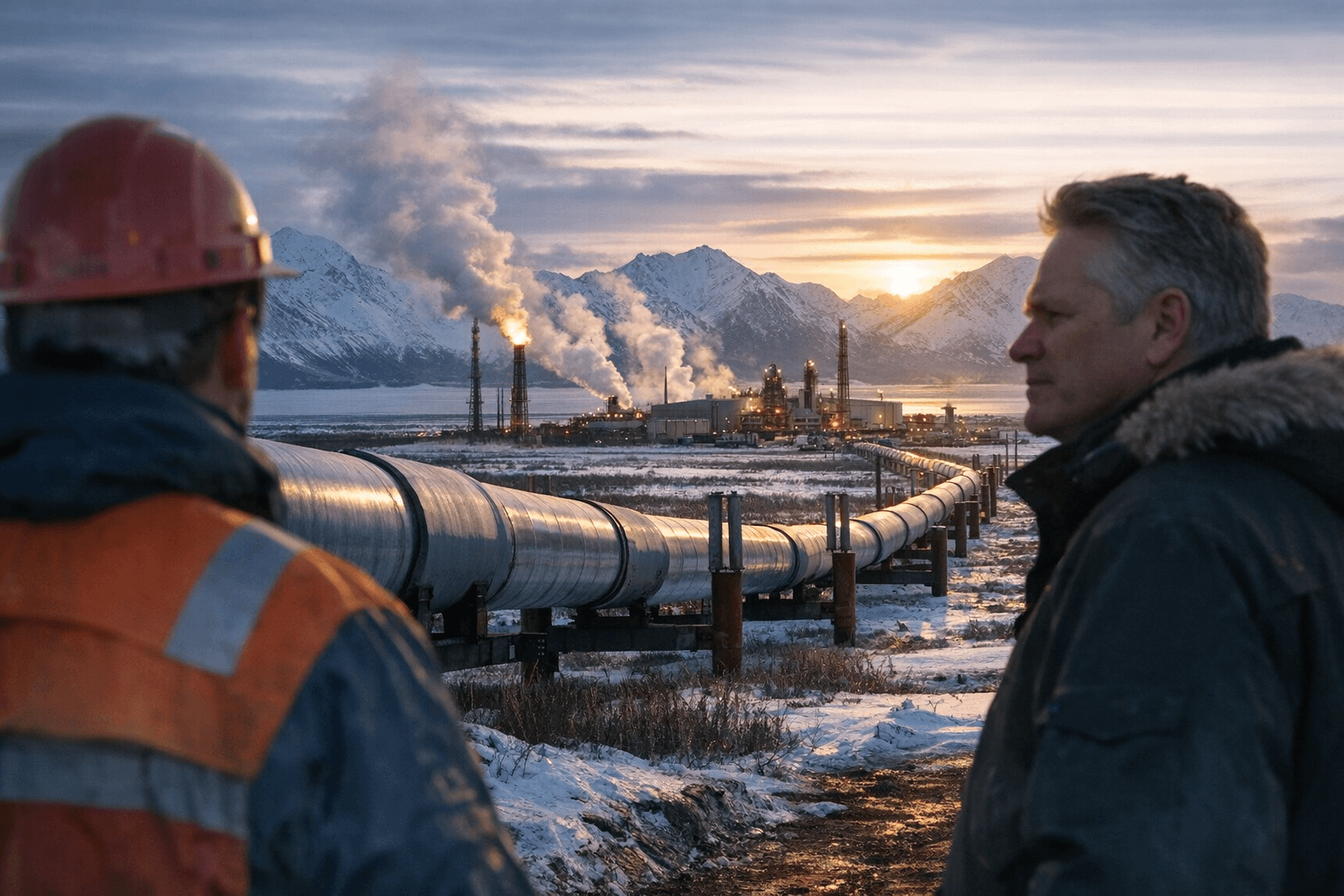
Alaska Senate Adds Corporate Tax Change to Oil Royalty Bill, Targeting $100 Million Annually
Alaska senators tacked a corporate income tax amendment onto a routine oil royalty bill Wednesday, targeting S-corporations like Hilcorp that currently pay zero state income tax.
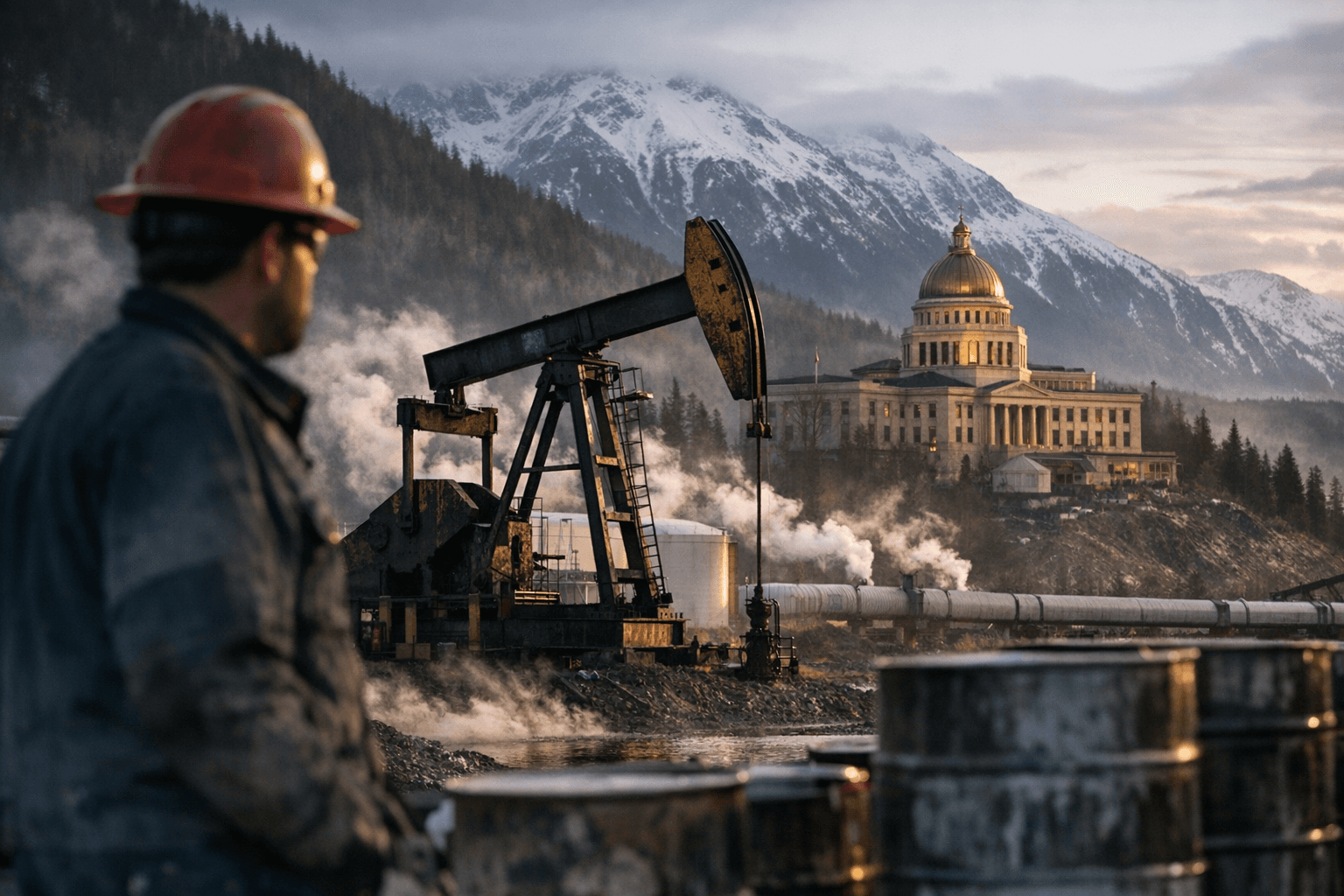
Sen. Forrest Dunbar, D-Anchorage, proposed the amendment on the Senate floor Wednesday to a bill involving a different subject: the sale of Alaska's royalty oil and gas to Marathon Petroleum, which operates the refinery in Kenai that processes Alaska crude oil. What had been a procedural renewal became, in a single floor move, one of the more consequential tax votes in the Legislature this session.
The Alaska Senate voted to apply the state's corporate income tax to oil and gas companies that currently pay no such tax, including Hilcorp, the operator of the Prudhoe Bay oil field and an S corporation that currently does not pay the income tax. Estimates have said the change could raise more than $100 million per year.
For North Slope communities, Hilcorp is not an abstract corporate entity. Hilcorp, which operates the Prudhoe Bay oil field, does not pay corporate income tax as an S-corporation — a legal structure that has shielded the company from a tax obligation its publicly traded competitors cannot avoid. Supporters of the amendment said it would end an unfair advantage that some of Hilcorp's counterparts, such as oil producer ConocoPhillips, do not enjoy because they're C corporations subject to the state's income tax.
The amendment would apply to multiple oil and gas corporations "producing or transporting oil or gas" in Alaska, setting a tiered tax rate that rises with taxable income. For those corporations with more than $5 million in taxable income, they would pay the state's top income tax rate of 9.4%.
The benefits have gone to a "billionaire in Texas who initially did not even ask for it," Dunbar said, referring to Hilcorp Energy founder Jeffery Hildebrand. Dunbar said that oil prices are high and oil companies are doing well, making now the right time to change the system. "You fix the roof when the sun is shining," he said.
The amendment drew opposition from within the Senate. Sen. Jesse Bjorkman, R-Nikiski, suggested that the measure could affect Hilcorp's ability to produce natural gas from Cook Inlet near Anchorage, a critical energy source that continues to wane. He said the idea warrants further study but hasn't gone through the proper channels for review. "We need a plan that works for Alaska's working families so that we have producers in this state who are going to provide the natural gas we need to heat our homes and businesses, keep the lights on, and make sure that we have an active exploration and production economy," he said.
The Alaska Oil and Gas Association, a trade association representing several oil and gas companies including Hilcorp, said in a statement that it "strongly" opposes the measure as a "new tax on privately held oil and gas operators." The association's statement said the amendment "represents a major policy shift that has not been adequately vetted or modeled," though some lawmakers challenged that characterization Wednesday, saying it has been thoroughly studied. "It targets a narrow group of producers with a discriminatory tax, reversing long-standing policy and creating uncertainty for investment at a time when Alaska should be encouraging development — especially in areas like Cook Inlet where reliable energy supply is critical," the association said.
Senate Majority Leader Cathy Giessel, R-Anchorage, said on the floor that the proposed measure has been modeled multiple times in the Legislature, including this year in the Senate Resources Committee she chairs.
The debate did not arise in isolation. Hilcorp, which operates the Prudhoe Bay oil field, does not pay corporate income tax as an S-corporation, and the measure is estimated to raise over $100 million per year through the end of the decade. The Senate Resources Committee had previously heard Senate Bill 92, which would impose corporate income taxes on Hilcorp Alaska — similar to those paid by publicly owned oil companies. Wednesday's floor amendment represented an attempt to accomplish the same policy goal through a different legislative vehicle.
The bill now heads to the House, where the oil and gas industry has historically found more receptive ground.
Sources:
Know something we missed? Have a correction or additional information?
Submit a Tip