Communications Vulnerabilities Threaten Essential Services Across North Slope Borough
Recurrent damage to subsea and terrestrial communications infrastructure leaves North Slope communities at risk of slowdowns and outages, affecting internet access, phone service, and critical systems. For residents this matters because hospitals, schools, utilities and emergency communications can face service interruptions that complicate care, safety and daily transactions.
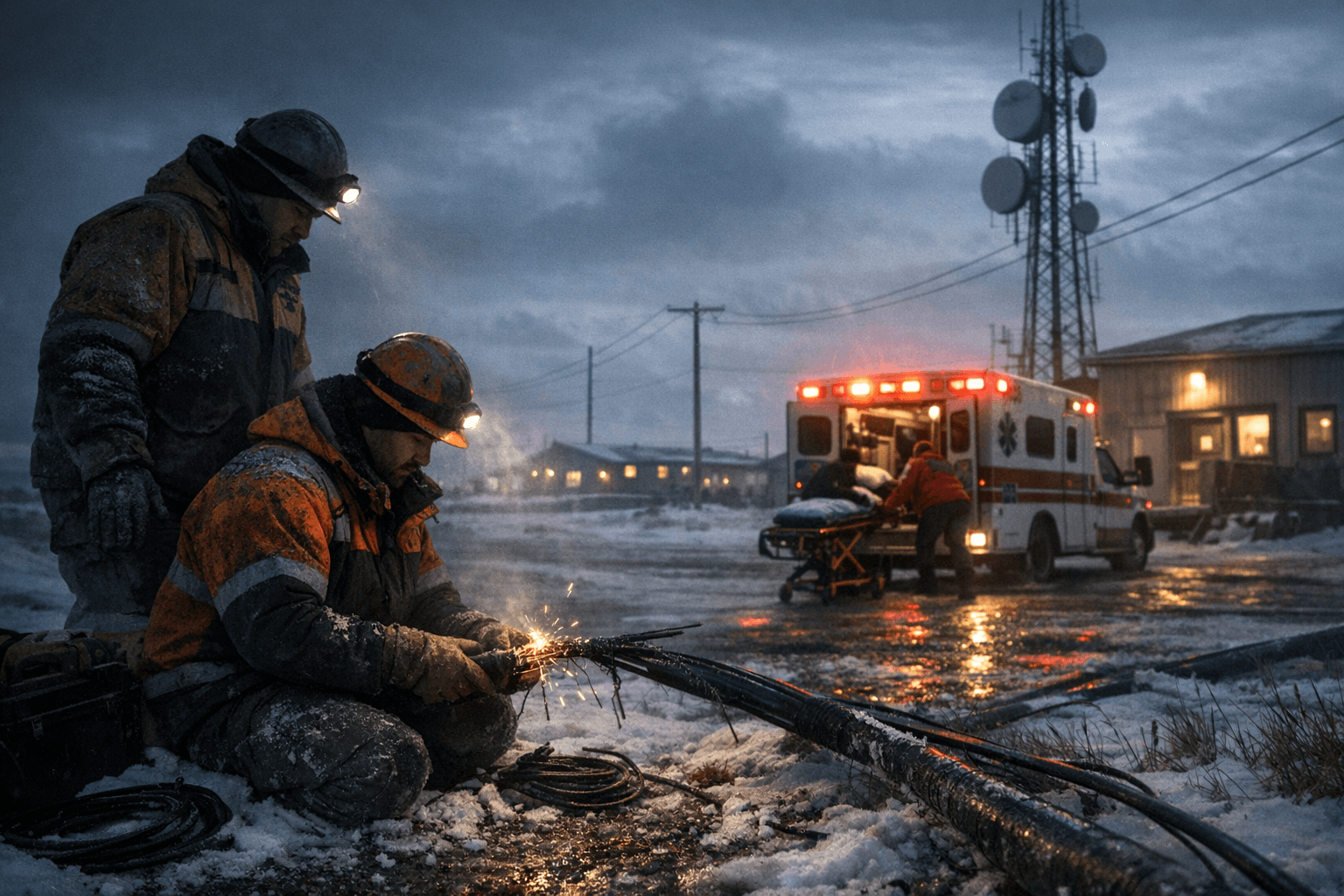
Coastal villages across the North Slope Borough rely on a fragile mix of connectivity that includes terrestrial fiber where available, a subsea fiber route operated by Quintillion, and satellite and microwave backups. When subsea cable faults or terrestrial damage occur, communities such as Utqiaġvik, Wainwright, Point Hope, Atqasuk, Point Lay and Nuiqsut have experienced several days to several months of degraded service. Those disruptions reduce internet speeds, affect some phone services, and can interrupt critical infrastructure including hospital data systems, school testing platforms, utilities and certain municipal functions.
Internet service providers commonly reroute traffic to satellite or microwave networks during outages. Those backup links have much lower capacity and higher latency than fiber, which can disrupt credit and transaction processing and interfere with online services that local governments and businesses depend on. Emergency systems are also affected. Local 911 centers and telehealth programs often depend on redundant links, and clinics and emergency planners maintain satellite redundancies to preserve life saving communications when primary networks fail.
Communities and local government offices have adapted by installing satellite terminals such as Starlink or OneWeb as temporary backups. Schools, clinics and city offices frequently become hubs for urgent connectivity, and some businesses revert to cash or queued offline processes until full service returns. These stopgap responses protect essential functions but also highlight inequities. Households without access to alternate communications devices or cash reserves face greater hardship during outages.
Residents can reduce risk by developing a communications backup plan, specifying who will have satellite terminals, how to reach emergency contacts and where to go for urgent connectivity. Maintain multiple channels for public safety notices including radio, phone trees and community bulletin boards so messages reach everyone even when web based alerts fail. Households should consider keeping a small amount of cash on hand and an alternate communications device if feasible.
Longer term resiliency options under discussion include overland terrestrial redundancy that would route fiber between Utqiaġvik and Deadhorse and Prudhoe Bay, expanded microwave links, additional subsea routing and greater satellite ground station capacity. Federal, state, tribal and local coordination and targeted grants will be needed to harden critical nodes such as hospital connectivity, airport weather reporting and 911 facilities so all communities on the North Slope can rely on consistent, equitable access to communications.
Know something we missed? Have a correction or additional information?
Submit a Tip
