New Arctic Study Enhances Forecasts for Utqiaġvik Ice Fog
The ARM North Slope of Alaska observatory ran the FATIMA IF campaign from 15 November 2025 through 7 December 2025 to study ice fog formation, cloud microphysics and turbulence around Utqiaġvik. The high resolution measurements aim to improve forecasts that affect aviation, road safety and community services across the North Slope Borough.
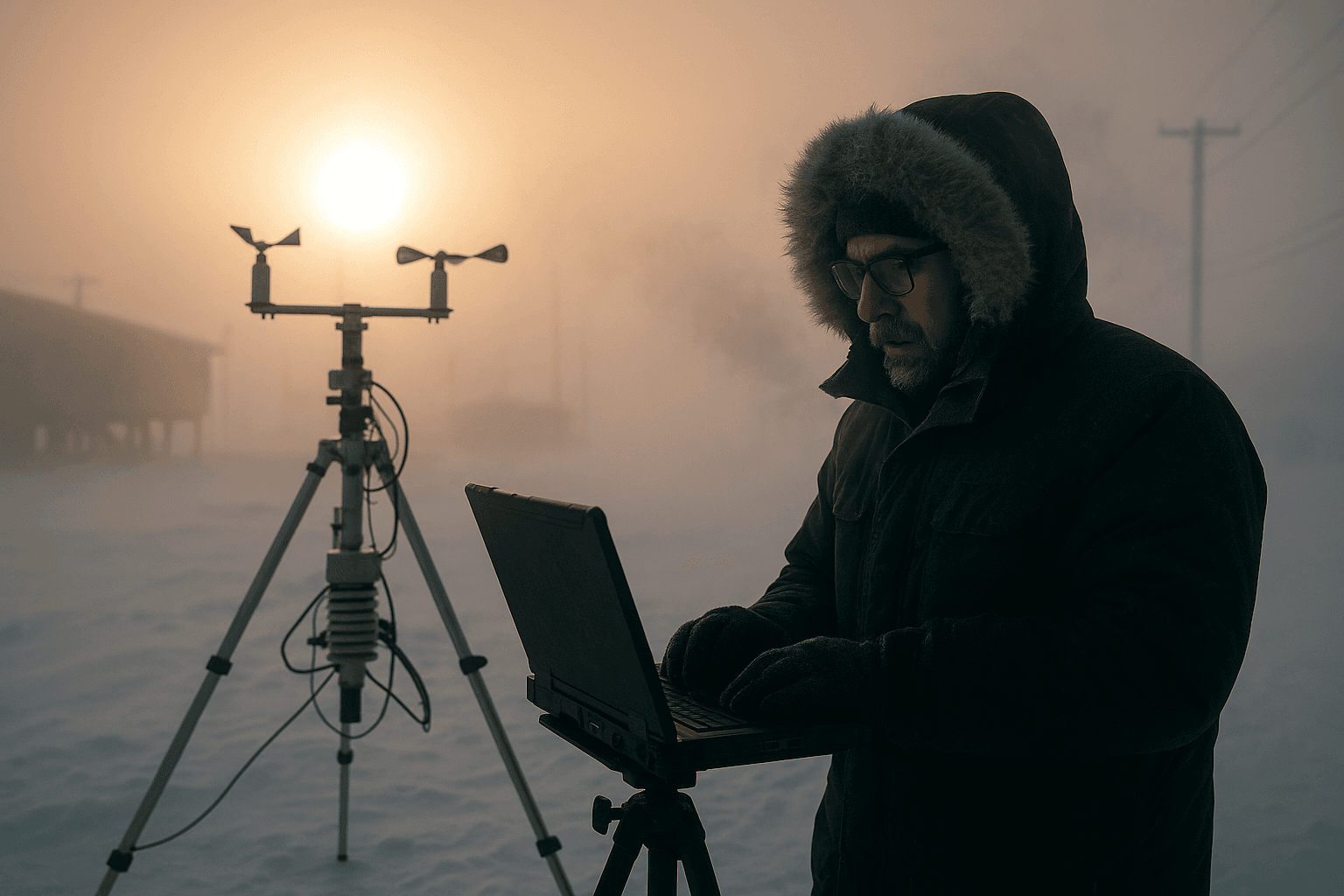
Federal researchers concluded a monthlong field campaign in Utqiaġvik to probe the processes that produce persistent winter ice fog on the Arctic coastal plain. The FATIMA IF campaign operated from 15 November 2025 through 7 December 2025 and combined in situ and remote sensing measurements to characterize ice nuclei, fog particle size distributions and the turbulent mixing that sustains low visibility episodes in extremely cold, low humidity conditions.
Scientists collected routine high resolution data with the observatory's instrumentation to quantify particle populations and small scale turbulence that are poorly represented in current weather and climate models. Those datasets are intended to be assimilated into forecasting systems and atmospheric models, reducing uncertainty in short term visibility forecasts and in longer term simulations of Arctic cloud behavior. For local operators, more accurate forecasts can translate into fewer unexpected flight delays, improved scheduling for supply barges and safer road and marine operations during winter months when ice fog is most frequent.
The campaign has direct operational relevance for airports, emergency services and community logistics across the North Slope Borough. Ice fog episodes routinely reduce visibility to levels that complicate air service to villages and increase the risk of transport accidents. By isolating the microphysical drivers and the role of turbulent mixing, the campaign addresses variables that forecasters and infrastructure planners rely on for guidance during extended cold spells.
From a policy perspective, the new observations feed two longer term trends. First, they provide empirical constraints for model improvements that state and local emergency planners can use to update operational thresholds and contingency plans. Second, they strengthen the evidence base for investments in sensor networks and runway and port resilience that mitigate weather related disruptions. As officials and operators analyze the FATIMA IF data, residents can expect forecasts and advisories that more accurately reflect the localized physics of Arctic ice fog, improving safety and reducing economic costs associated with winter visibility hazards.
Know something we missed? Have a correction or additional information?
Submit a Tip
