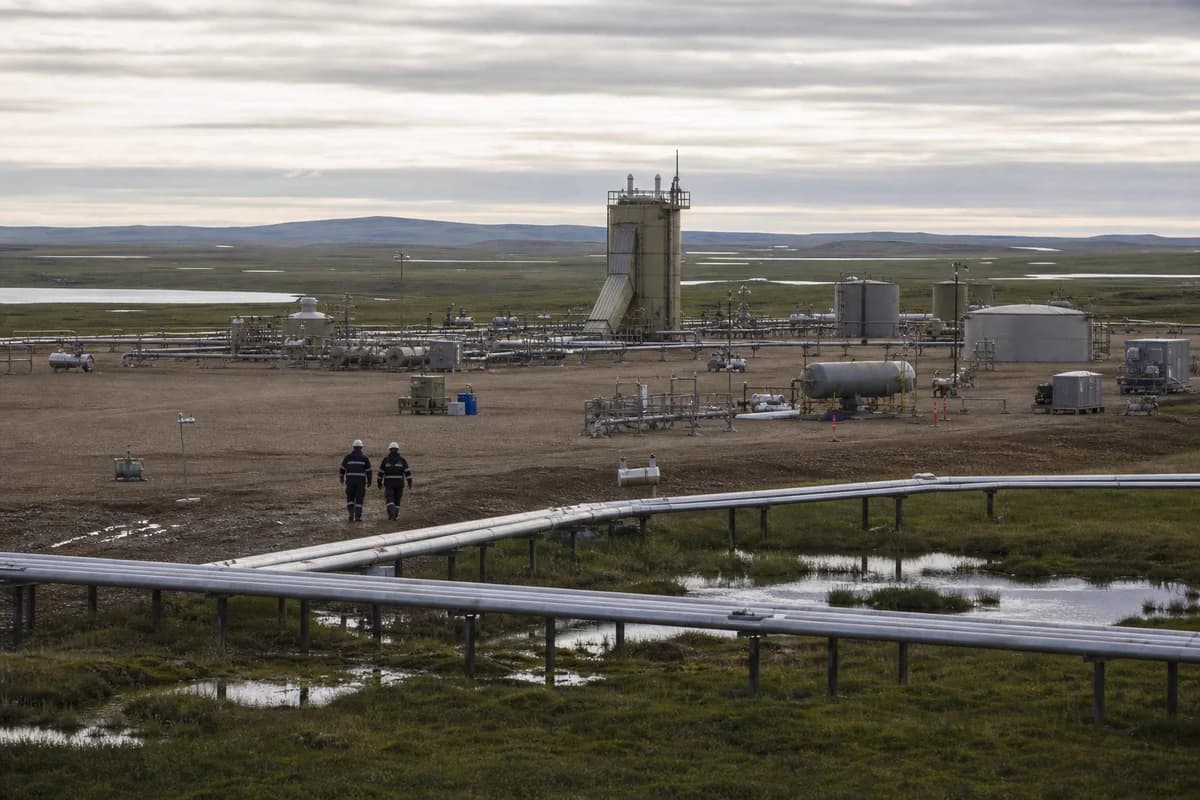
North Slope Borough budget shows $376 million in operating revenues
North Slope Borough’s $376.2 million budget maps when taxes, clinic support, road work and capital projects turn into real service on the North Slope.
The North Slope Borough's 2017-2018 operating budget projected $376,157,285 in revenues and was balanced as required by law. For Utqiaġvik and the eight villages spread across the North Slope, that figure is the starting point for understanding when public safety staffing, road work, utilities, schools and capital projects move from paper into daily life.
What the operating total means
A balanced operating budget is not just an accounting line. It is the legal frame that tells residents the borough is planning to match spending with operating revenue, rather than borrowing its way through the year. The same structure appears again in Ordinance 2020-3 for FY 2020-2021, which projected $413,861,293 in estimated operating revenues and also said the operating budget was balanced as required by law.
That jump from $376.2 million to $413.9 million matters because it shows how much the borough's scale can change from one cycle to the next even when the rule stays the same. On the borough's finance page, budget and financial reports run from FY 2015-2016 through FY 2026-2027, which makes the annual budget process a recurring public system, not a one-time event.
How to read the budget book like a resident
The budget book is built to answer practical questions before they become service problems. In FY 2017-2018, the introductory section included an organizational chart, principal executive officers, a budget calendar, a property tax calendar, and property tax computation and tax cap formulas. That means the book is not only for accountants and administrators; it shows who is responsible, when decisions are made, and how taxes are calculated.
The tax section is especially important on the North Slope because it ties borough revenue to state law. The introductory materials reference Alaska Statute AS 29.45.080 as the law imposing the tax cap formula for oil and gas production and pipeline property. For residents, that is the place to look when they want to understand why a borough revenue estimate changes and how the property tax side of the budget is constrained.
The budget materials also include a Calculation of O & M Budget Tax Cap section, along with assessed-value figures in some years. That is the kind of detail that tells you when a revenue estimate is being held down, stretched, or adjusted before it ever reaches the Assembly floor.
Where the budget shows up in daily services
The borough's expenditure and revenue summary lists a wide set of departments and functions, and that breadth explains why the budget reaches so deeply into everyday life. The list includes administration, finance, law, port authority, planning and community services, health and social services, housing, wildlife management, police, fire, search and rescue, public works, the clerk's office, school board and education-related functions, Iisaġvik College, capital improvement project management, industrial development, housing assistance loan program, power generation and distribution, and real property management.
That lineup is the clearest sign of what residents should watch for when a budget moves. A shift in public works can affect roads and other ground transportation needs. Changes in health and social services can alter support that reaches clinics and families. Power generation and distribution affect utilities, and capital improvement project management shapes when new buildings, upgrades, or major repairs actually get built.
The borough's school-related spending also matters because education is part of the same operating picture. The North Slope Borough School District and education-related functions sit alongside Iisaġvik College in the borough's materials, showing that local government is carrying more than one service system at once. In a region where long distances, weather and logistics make every delivery harder, those line items are not abstractions.
The dates and documents that matter most
If you want to know when cuts, delays or spending changes become real, the budget calendar and the ordinance are the documents to watch. The FY 2025-2026 budget letter is dated March 15, 2025, and the FY 2026-2027 budget letter is dated March 31, 2026. Those spring dates are the borough's public handoff from internal planning to formal presentation.
A resident who follows the process should look for:
- the budget letter, which frames the mayor's spending priorities for the coming year
- the ordinance, which turns the plan into a legally binding operating budget
- the table of contents, which shows how the borough organizes spending by department and function
- the expenditure-revenue summary, which gives the broad picture of where money is going
- the property tax calendar and tax-cap formulas, which show when revenue and payment timing affect the year's cash flow
The FY 2025-2026 budget page also lays out those materials together, making it easier to see how the pieces fit. That structure matters in a borough where residents do not just need to know how much money exists, but when it will be available and what it is supposed to cover.
Why the annual reports matter
The borough's 2017 Comprehensive Annual Financial Report says the purpose of government is "to provide quality service to enhance the safety, livability and prosperity of our North Slope Communities." The same language appears in the borough's 2017 Popular Annual Financial Report, which shows the mission is not limited to one accounting format.
That shorter Popular Annual Financial Report is designed to present revenues, expenditures, assets, liabilities, debt service and major initiatives in plain language. The 2025 report also says it is being submitted for consideration in the Government Finance Officers Association Award for Outstanding Achievement in Popular Annual Financial Reporting Program, which underscores the borough's effort to make its numbers legible to the public.
For residents, the value of those reports is simple: the budget tells you what the borough plans, and the annual reports tell you what happened after the money was spent. Together, they show whether the borough's promises about safety, livability and prosperity are reaching the people in Utqiaġvik and the villages that depend on the same system.
The North Slope Borough's budget cycle is built for a place where geography, climate and distance make service delivery expensive and visible. The operating revenue total, the tax calendar, the ordinance dates and the annual reports are the markers that show when those pressures turn into action.
This article was produced by Prism’s automated news system from verified source data, official records, and press releases, then run through automated quality and moderation checks before publishing. The system is built and supervised by the people who set the standards it runs under. Read our full AI policy.
Did this article answer your question?