North Slope Borough highlights community health services across villages
Village care, prevention work, and public-health nursing sit at the center of North Slope Borough health access, but Point Hope remains outside CHAP.
In the North Slope Borough, community health is not an abstract service line. It is the borough’s own direct and population-based care network, built for villages where distance, weather, staffing, and transportation can turn basic access into a serious barrier. The borough’s health and social services system is meant to reach residents where they live, and that matters in a region where health care is a lifeline, not a convenience.
Village-based care through CHAP
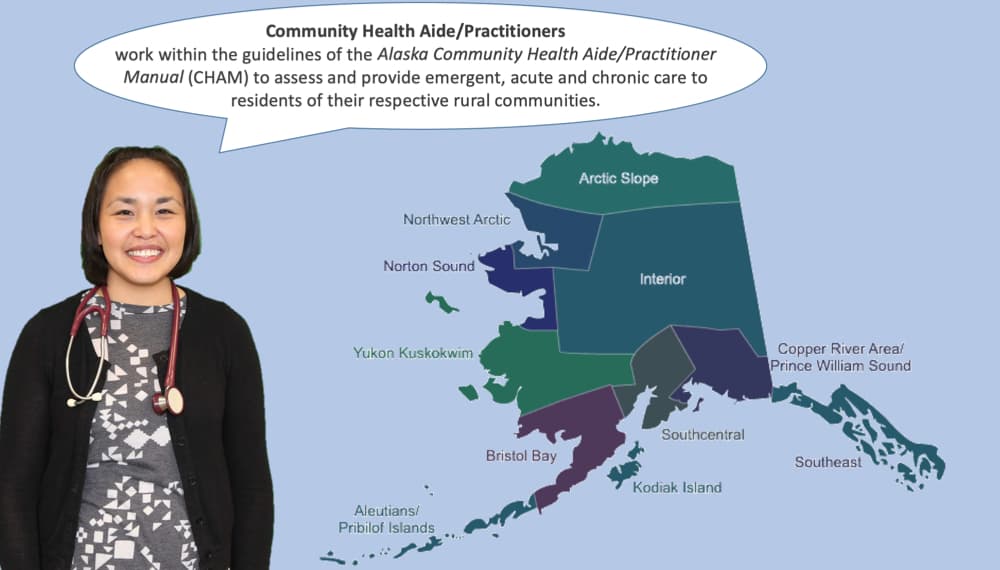
The clearest local access point is the Community Health Aide Program, better known as CHAP. North Slope Borough says CHAP provides health care services to villages of the North Slope, with one important exception: Point Hope is not included in the program. That makes CHAP the borough’s most visible village-level health bridge for many communities, while also showing that coverage is not identical from village to village.
CHAP is not run in isolation. The borough says staff train with the Alaska Native Tribal Health Consortium, Samuel Simmonds Memorial Hospital, Chief Andrew Isaac Health Center, and additional organizations. That training pipeline matters because it ties village-based care to larger regional systems, which is how remote communities often gain access to clinical standards, supervision, and referrals without having a full hospital in every village.
The program also has dedicated management. A North Slope Borough job posting for Program Coordinator-CHAP described the role as planning, organizing, and directing the work of the Community Health Aide Practitioner Program and supervising CHAP staff. That staffing detail signals that the borough is not treating village care as a side project, but as a structured part of its health system.
Public health that reaches the whole community
Alongside CHAP, Public Health Nursing provides another layer of access. The borough describes Public Health Nursing, or PHN, as offering population-based services to North Slope communities. That approach is different from a walk-in clinic model: it focuses on the health of whole populations, which is often the right scale for small, spread-out villages where individual care, family support, and community prevention are tightly linked.
The PHN page points to program areas and materials related to traditional food, overdose prevention, and STI prevention. Those topics show how local health work in the North Slope has to stretch beyond treatment alone. Traditional food is part of health, culture, and nutrition. Overdose prevention and STI prevention are public health priorities that require education, trust, and access that can travel across villages.
For residents, that means the borough’s local health system is trying to meet practical needs that do not always fit neatly inside an exam room. Prevention, outreach, and education become essential when the nearest specialty care may be far away and when community norms, language, and family relationships shape whether services are used at all.
Leadership and mission inside the borough system
The Health & Social Services Department says its mission is to serve North Slope Borough residents with “culturally safe and compassionate care” and a focus on “holistic well-being.” The department’s contacts page lists Lynette Hepa as Director and April Phillip as Deputy Director, Community Health. Those names matter because they show a formal administrative structure behind the services, rather than a loose collection of programs.
That structure fits the borough’s broader civic role. North Slope Borough describes itself as the farthest north municipal government and says it works with tribes, cities, corporations, schools, and businesses to support a strong culture. Health services sit inside that larger responsibility. In a place where community institutions overlap, the borough’s health function is part of how public life stays connected.
Why planning and funding matter in a small, dispersed borough
The borough’s own planning documents show that health access has been studied as a community issue, not just a medical one. The Baseline Community Health Analysis Report was produced by the North Slope Borough Department of Health and Social Services with National Petroleum Reserve-Alaska grant funds made available through the Alaska Department of Commerce, Community and Economic Development. That funding trail shows how borough health planning has relied on formal grant support to understand conditions on the ground.
The baseline report includes Community Health Forum Reports for 8 North Slope communities. That is a strong sign that village input has been part of the planning process, which is essential in a borough where one-size-fits-all policy rarely works. Health services in a place with a small and scattered population have to reflect local realities, not just centralized assumptions.
The North Slope Borough Comprehensive Plan 2019–2039 also includes a health and safety chapter. That places public health alongside long-range borough priorities rather than treating it as an isolated department issue. When health shows up in the borough’s long-term plan, it becomes part of land use, safety, resilience, and community stability.
What residents can access, and where the gaps remain
The borough’s community health structure gives residents several kinds of support: village-based CHAP care in North Slope communities, population-based PHN services, prevention materials, and coordination with regional health partners. For many families, that combination is the difference between having a local point of contact and having to start from scratch with a distant system.
The remaining gap is built into the geography itself. Point Hope is excluded from CHAP, which means the borough’s village health model does not reach every community in the same way. And because the department’s services are designed for population health as well as direct care, residents still depend on the larger network of regional institutions for pieces of care that cannot be delivered everywhere at once.
That is why the borough’s community health work matters now. With a population of about 10,600 to 11,260 people across a vast region, a few trained staff, a village-based aide program, and a public health nursing system can have outsized impact. The challenge is not only to provide services, but to keep them culturally safe, geographically reachable, and coordinated across the villages that depend on them.
This article was produced by Prism’s automated news system from verified source data, official records, and press releases, then run through automated quality and moderation checks before publishing. The system is built and supervised by the people who set the standards it runs under. Read our full AI policy.
Did this article answer your question?