Utqiagvik Offers Visitors Rich Culture, History and Arctic Experiences
The Whale Bone Arch stands at the edge of America's northernmost city, where 4,429 residents keep ancient Iñupiat traditions alive beside pizza restaurants and the Arctic Ocean.
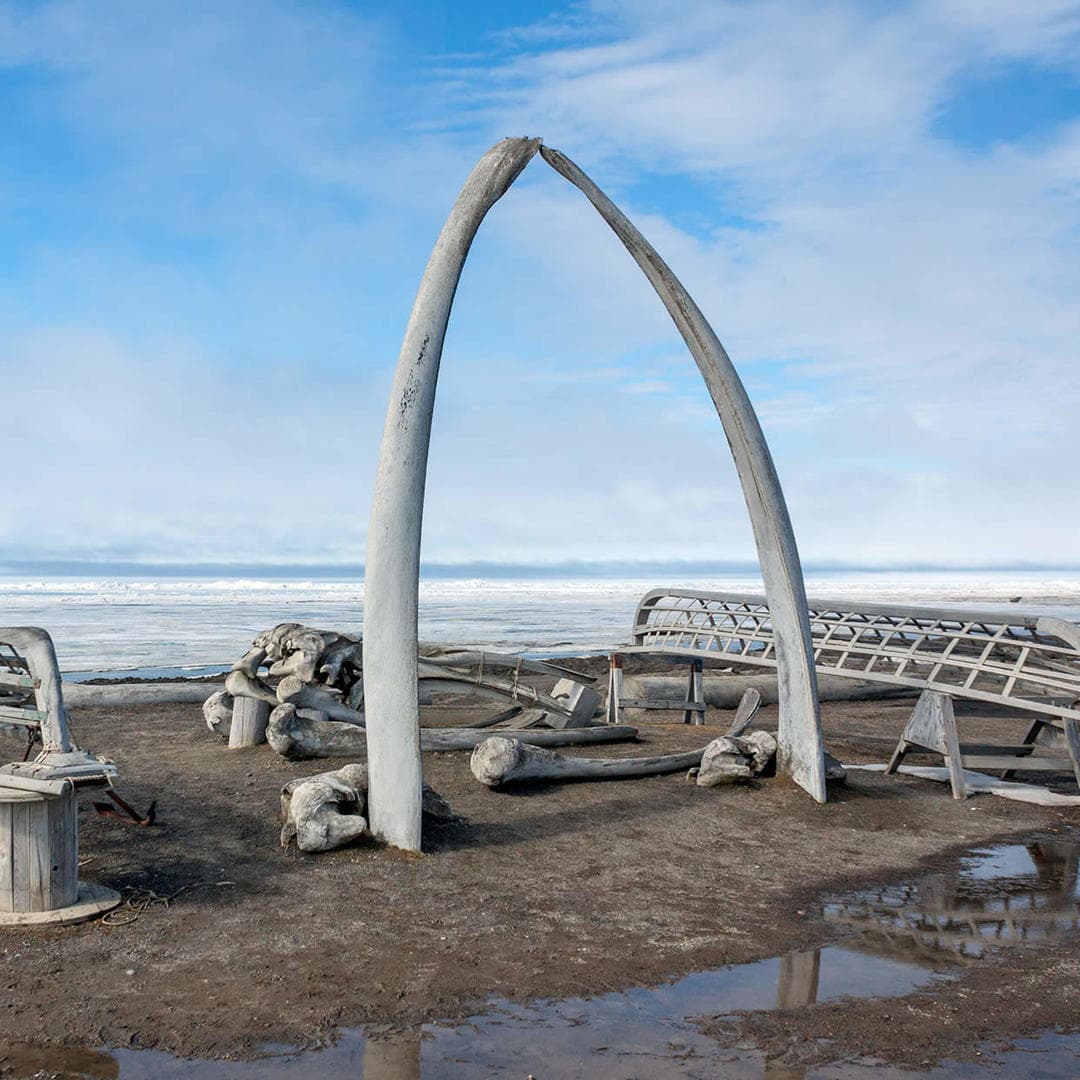
The Whale Bone Arch rises against the Arctic sky at the top of the continent, a structure built from the bones of bowhead whales in a place where hunting them is still a way of life. Utqiagvik, the largest community on Alaska's North Slope and the northernmost incorporated city in the United States, holds more history, culture, and contradiction per square mile than almost anywhere else in the country. Still commonly referred to by its former name, Barrow, this city of 4,429 residents is a place where the ancient and the contemporary exist side by side, and where the land itself is slowly changing beneath everyone's feet.
America's Northernmost City, in Context
Utqiagvik sits at the top of the North Slope Borough, which Statesider describes as "North America's largest municipality by size," measuring a hair under 95,000 square miles, larger than ten actual states. The borough is vast; Utqiagvik is its seat, its hub, and its most recognizable address. The northernmost point of land is technically Point Barrow, a few miles away, though even that distinction is increasingly precarious. As Statesider puts it, "every year, the citizens of Utqiagvik watch our nation shrink as its topmost terminus is shaved away by the rising Arctic Ocean." The shoreline erodes, Point Barrow shifts, and the boundary of the nation quietly retreats.
For visitors arriving for the first time, understanding this geography reframes everything. This is not a remote outpost at the end of a road system, it is a functioning city, the administrative and cultural capital of the entire North Slope, and one of the oldest human settlements anywhere in North America.
Iñupiat Heritage and Subsistence Life
Approximately 61 percent of Utqiagvik's 4,429 residents are Iñupiat Eskimo, and the culture that has sustained communities here for thousands of years remains very much alive. Subsistence hunting, fishing, and whaling are not historical curiosities preserved for tourists; they are still central to the local economy and to how families feed themselves. Many residents who work full- or part-time continue to hunt and fish for much of their food, weaving traditional practices into the rhythms of modern employment.
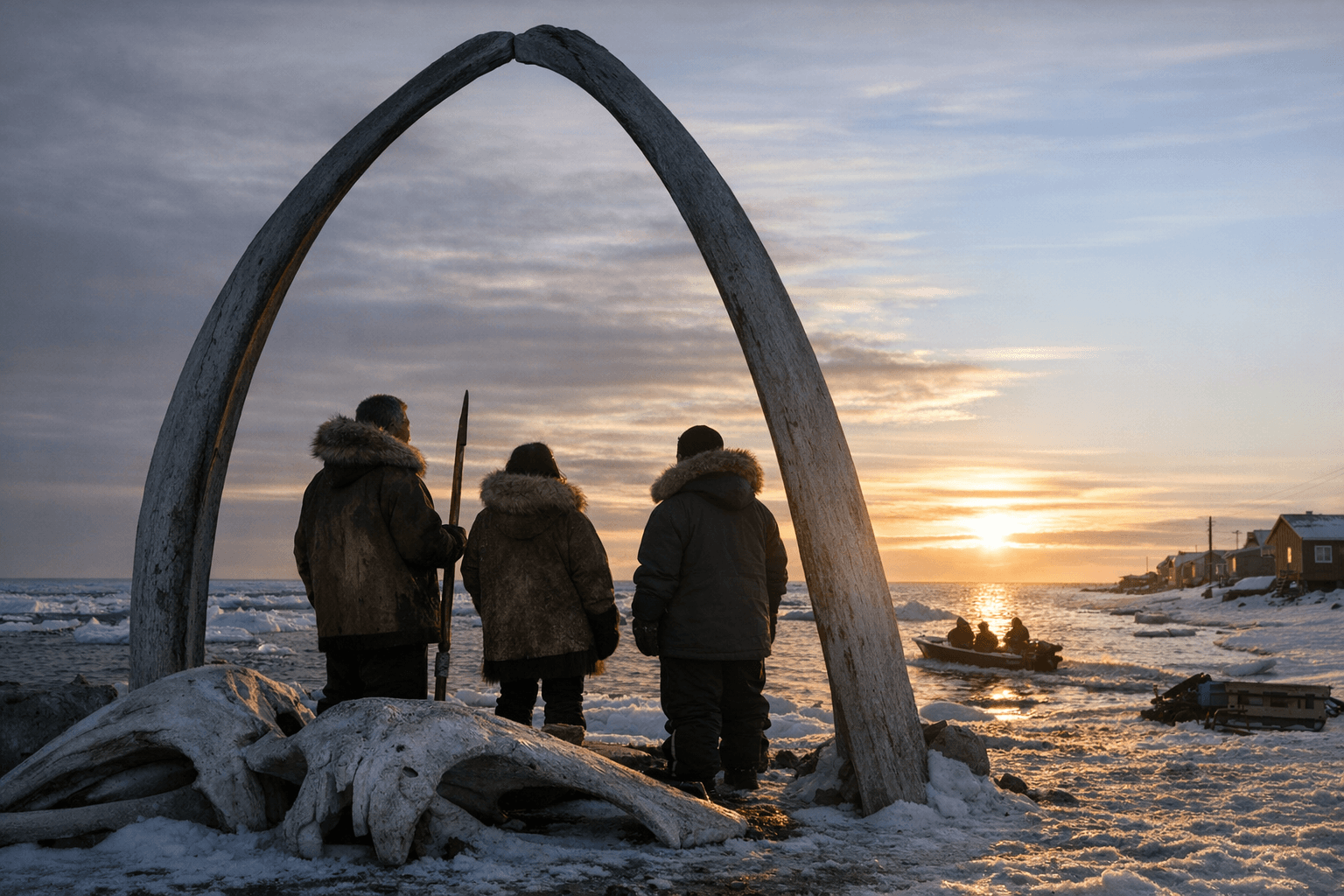
The bowhead whale holds particular significance. Whaling season is one of the most important periods of the year, connecting families across generations through shared labor, ceremony, and celebration. The Whale Bone Arch, Utqiagvik's most photographed landmark, makes that relationship visible and permanent. Constructed from the jawbones of bowhead whales, the arch stands as what the City of Utqiagvik describes as "a powerful symbol of the community's deep cultural heritage and connection to the Arctic environment," representing "tradition, resilience, and pride for local residents." It is the kind of landmark that communicates a community's identity more precisely than any historical plaque could.
A Settlement Older Than Most
The depth of human history here is difficult to overstate. Utqiagvik is considered one of the oldest settlements in North America. According to the Bering Land Bridge theory of human migration, when people first crossed from Siberia into North America, this stretch of Arctic coastline would have been among the first places to offer a foothold. The community that exists today is, in that sense, the latest chapter of a story that stretches back to the earliest human presence on the continent.
That antiquity coexists with the unmistakable texture of a contemporary small city. Statesider captures the tension well: "Utqiagvik is old and connected to its past and traditions, but it is not timeless. It changes, like anywhere else. The beach erodes. The restaurants serve pizza." The pizza line is not throwaway; it is a deliberate reminder that this is a living community, not a museum exhibit, and that the people here participate in the same modern world as everyone else while also maintaining traditions that predate written American history.
Community Infrastructure and Services
As the seat of the North Slope Borough, Utqiagvik functions as the regional center for health and social services across a vast area. The city's public facilities include a hospital, a senior citizen center, a women's shelter, a children and youth services center, a library, and a job training and assistance center. Public safety and fire protection are also provided. For the communities scattered across the North Slope, Utqiagvik is where residents travel for medical care, legal services, and institutional support that simply does not exist closer to home.
This infrastructure matters for visitors to understand as well. Utqiagvik is not a wilderness camp or a staging point for expeditions; it is a community with real civic architecture designed to serve real people across a sprawling region.
What the City Looks Like
Statesider's portrait of Utqiagvik is candid: "Despite its resemblance to a Mad Max town, many buildings are rotted out, people use shipping containers as storage or even living spaces, and the edges of town are piled with junked cars, because there is no place to scrap them." The writer attributes this not to neglect but to geography and logistics. There is nowhere to scrap the cars because the road system does not connect Utqiagvik to the lower 48. Everything arrives by air or by sea, and everything stays.
Yet Statesider is equally emphatic about what that description misses: "Utqiagvik is no work camp. It is a community, of schools and libraries, businesses and friends and families." The visual roughness of some parts of town does not define the place. What defines it is the people who have chosen, generation after generation, to build their lives at the top of the world.
The Arctic Environment
The landscape surrounding Utqiagvik is one of the primary draws for visitors making the journey north. Arctic tundra stretches in every direction, the Chukchi and Beaufort Seas frame the city on two sides, and the sky in summer never fully darkens. In winter, the sun disappears entirely for weeks. These extremes are not inconveniences to be managed; they are the defining features of life here, shaping everything from the architecture to the subsistence calendar to the way the community marks time.
The Arctic Ocean is both provider and threat. It supports the marine mammals that Iñupiat hunters have pursued for millennia, and it is also actively reclaiming the coastline. That duality, abundance and erosion, tradition and change, is the animating tension of Utqiagvik's story.
Before You Visit
Utqiagvik is accessible by air, and the city's hospital, library, and public services mean that basic needs can be met once you arrive. Visitors should confirm current service hours and availability for specific facilities directly with local providers before traveling. The Whale Bone Arch is the landmark most associated with the city and a natural starting point for any visit.
The community's Iñupiat identity is not a backdrop; it is the story. Approaching Utqiagvik with genuine curiosity about its history, its people, and its relationship to the land is both the practical and respectful way to experience a place that has been continuously inhabited longer than almost anywhere else on the continent.
Know something we missed? Have a correction or additional information?
Submit a Tip
