Ash Meadows refuge offers rare desert oasis and endemic species
Boardwalks let you see Ash Meadows’ clear springs and rare pupfish without damaging the habitat. It is an easy half-day stop in Nye County, but only if you stay on the paths.
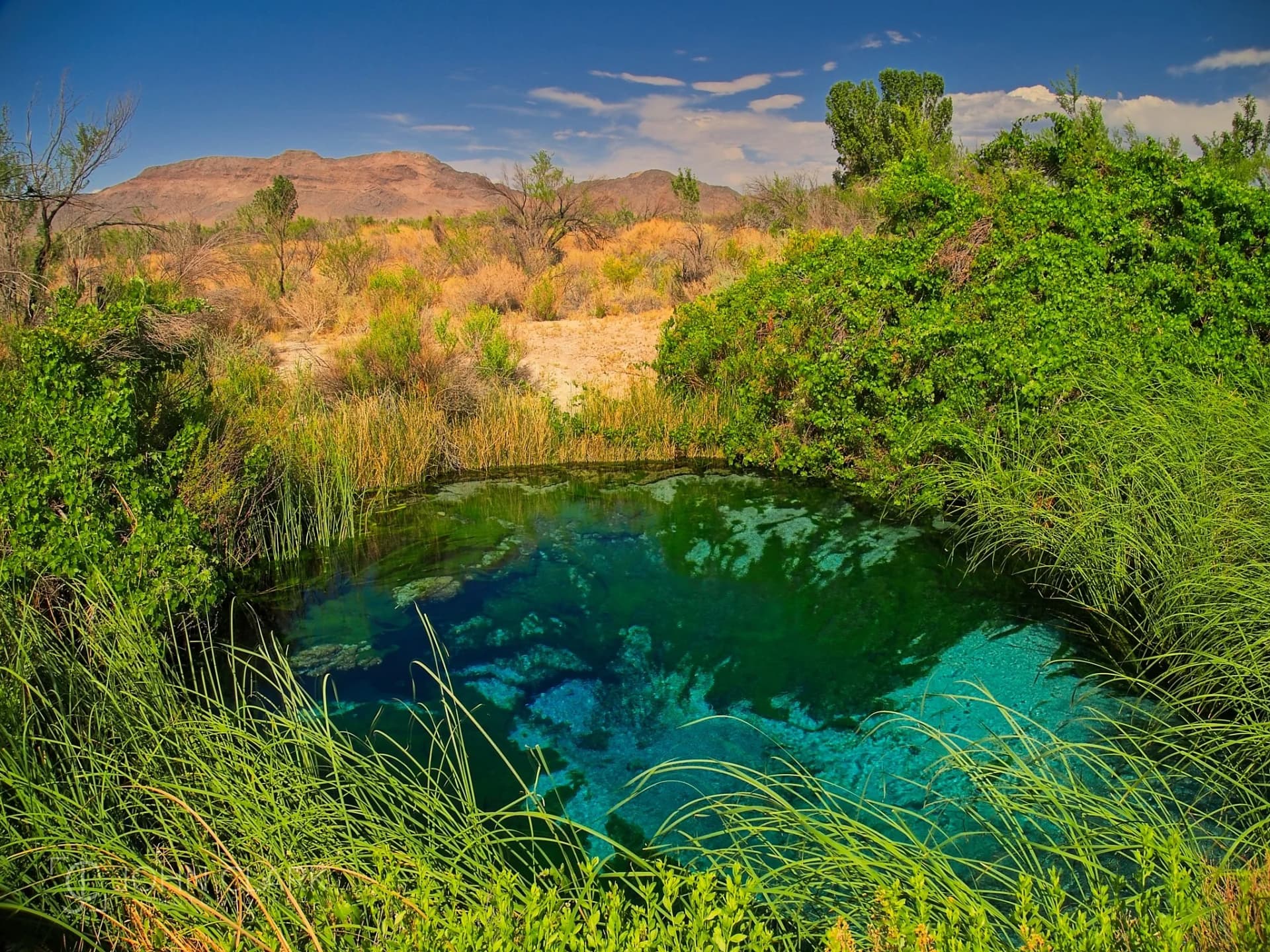
Boardwalks carry you above clear spring runs, not across open sand, at Ash Meadows National Wildlife Refuge in southern Nye County. You can see one of the Mojave Desert’s rarest landscapes in a half-day without crushing the habitat that keeps it alive.
A desert oasis built around water
Ash Meadows sits in Amargosa Valley, about 90 miles northwest of Las Vegas, and covers about 23,000 acres. Established in June 1984 with help from The Nature Conservancy and the Bureau of Land Management, it protects a spring-fed system with at least fifty seeps and springs. It is the largest oasis in the Mojave Desert and a place with the greatest concentration of endemic life in the United States and the second greatest in North America.
Endemic species are plants and animals found nowhere else on Earth, and Ash Meadows is home to species such as the Devils Hole pupfish, Amargosa pupfish, Amargosa niterwort and Ash Meadows speckled dace. The refuge is known as the "Galápagos of the Desert," a phrase that fits the way groundwater, isolation and desert ecology combine here into a living system that exists nowhere else in the region.
The landscape is stark until the water appears. Then the refuge turns into marsh plants, shaded spring runs, mesquite edges and bright, shallow pools where birds, lizards and rare fish can all be seen without much walking.
How to spend a half-day there
Ash Meadows is best approached as a series of short, designated stops rather than one long hike. Three boardwalks are wheelchair accessible, and public trail maps commonly point visitors to the Crystal Boardwalk loop, the Point of Rocks Boardwalk loop, the Longstreet Spring Boardwalk and the Devil’s Hole overlook. Those routes are short enough for families, older visitors and casual travelers who want a low-gear outing with a high payoff.
A practical half-day visit can look like this:
- Start at Crystal Springs Boardwalk, a 0.9-mile loop that gives the clearest look at the refuge’s signature spring system.
- Stop at Point of Rocks, where the 0.5-mile boardwalk loop offers another close view of water threading through desert ground.
- Continue to Longstreet Spring and Longstreet Cabin, where the Longstreet Spring Boardwalk stretches 525 feet and the nearby Longstreet Cabin Trail adds a short, easy walk.
- Finish at the Devil’s Hole overlook, where the refuge’s most famous conservation symbol is the Devils Hole pupfish.
Crystal Spring is one of the most memorable sights on the route. It is a 15-foot-deep spring producing 2,800 gallons of water per minute and holding steady at about 87 degrees. That constant flow supports the algae, spring pools and specialized wildlife that make the refuge different from a typical desert pullout.
What makes the boardwalks unique
The boardwalks are not a convenience feature; they are part of the conservation design. They let visitors see the springs up close while keeping foot traffic off the fragile edges where plants, fish and wetland soils are most vulnerable.
The short routes also make the refuge unusually accessible in rural southern Nevada. You do not need a strenuous hike or expensive gear to experience it, just enough time to move slowly from one spring to the next. The trail network gives the county a family-friendly outdoor destination that works for birders, photographers and travelers who want a real natural experience without leaving the highway all day.
When to go and what to expect
Ash Meadows is open seven days a week from dawn to dusk, and the trails, boardwalks and outdoor spaces are accessible during those hours. Visitor center hours vary seasonally, so the Death Valley Natural History Association advises calling ahead at (775) 372-5435 for the current schedule before you drive out.
It is a protected habitat first, and the most useful visitor habit is to plan the visit around the refuge’s rules and timing rather than assuming the site works like a regular park. If you are only making one stop, the boardwalks still give you the essential experience: clear water and rare species.
Why conservation pressure is part of the visit
Ash Meadows was among the first wetlands in the United States designated as a Ramsar site, which means it has international significance as a wetland.
It also helps explain why mining proposals near the refuge have drawn sharp attention. Local opposition emerged in 2024 to a proposed lithium mine near Ash Meadows, and Defenders of Wildlife said in 2025 that a mining company signaled intent to leave the area. The debate centers on how much pressure a rare groundwater system can absorb before the springs, species and visitor experience start to change.
This article was produced by Prism’s automated news system from verified source data, official records, and press releases, then run through automated quality and moderation checks before publishing. The system is built and supervised by the people who set the standards it runs under. Read our full AI policy.
Did this article answer your question?