Goldwell Open Air Museum blends desert art and Beatty history
Goldwell turns Beatty’s roadside traffic into a real stop, pairing seven desert sculptures with Rhyolite history just off Highway 374.
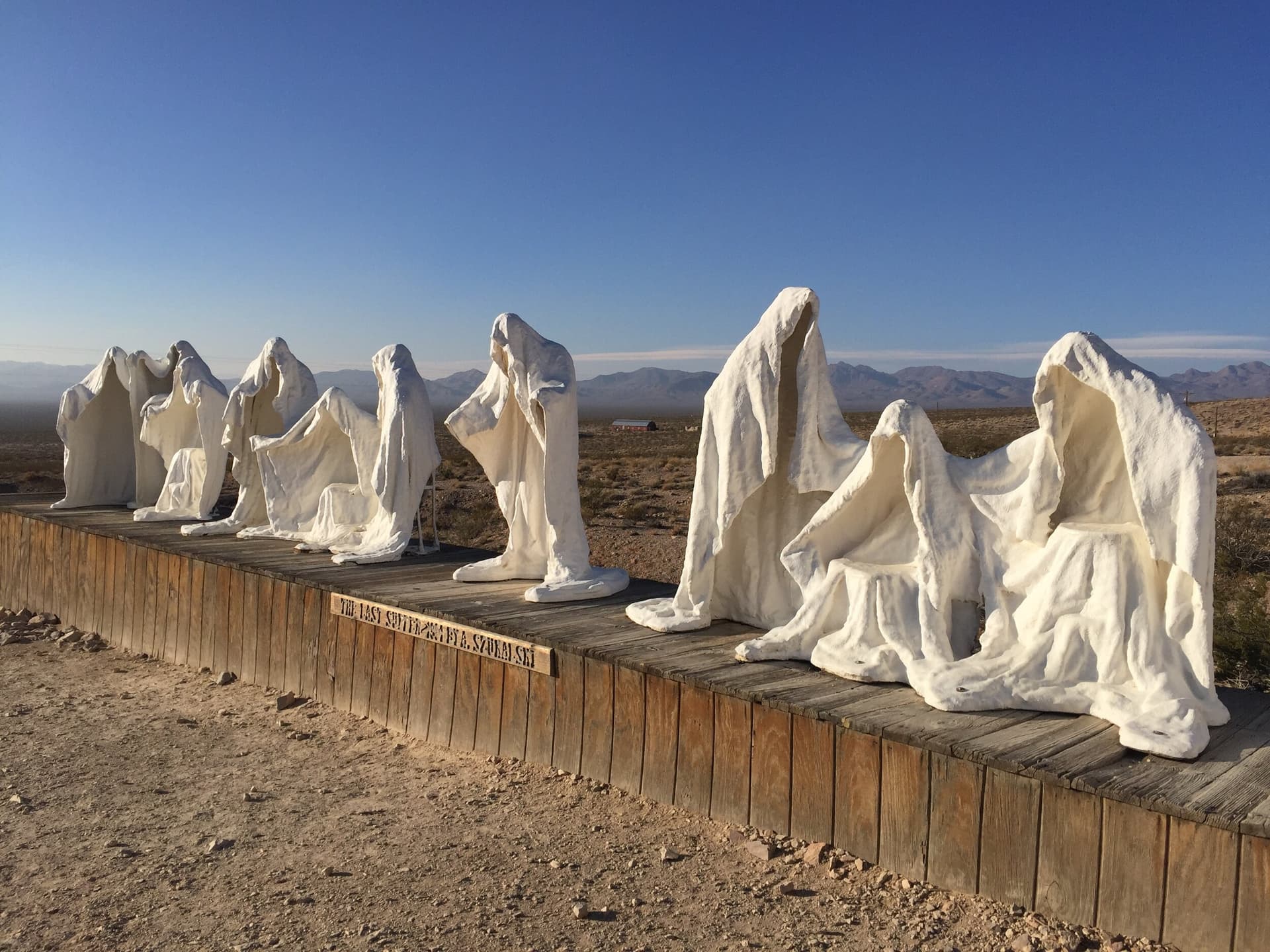
The Goldwell Open Air Museum is not a quick roadside curiosity. It is a 15-acre outdoor sculpture park near Rhyolite that pulls travelers off State Highway 374 and into a landscape where art, mining history and desert silence sit side by side.
A desert gallery built into the landscape
Goldwell’s official visitor information places the museum about 5 miles west of Beatty, on the road that leads toward Death Valley, California. Travel sources also place it about 120 miles northwest of Las Vegas, which helps explain why it works as both a local landmark and a destination for people already crossing some of the emptiest country in Nevada.
The museum’s own framing matters: this is not a conventional indoor gallery. The work is installed in the open desert, where the setting becomes part of the experience and the sculptures are seen in the same light and isolation that define much of Nye County. That combination gives Goldwell a role Beatty can use well, because it gives motorists a reason to leave the highway, spend time in town, and continue west with one more stop on the itinerary.
The sculptures that define Goldwell
Goldwell’s permanent collection is built around a small number of large, memorable works rather than a sprawling campus. TripAdvisor describes the museum as a permanent outdoor installation with seven striking pieces of sculpture, and the best-known among them have become part of the site’s identity.
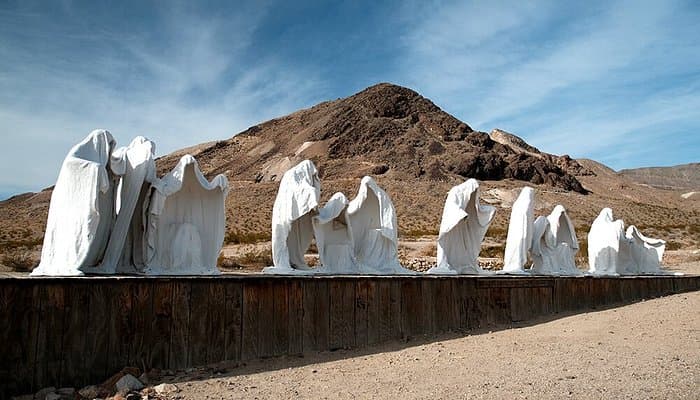
Those pieces include The Last Supper in Rhyolite, the ghostly, life-size interpretation of Leonardo da Vinci’s famous scene that started the museum in 1984. Other featured works include a 25-foot pink woman made of cinder blocks, a 24-foot steel prospector accompanied by a penguin, a blossoming tangle of chrome car parts, and a winged woman perched on a wooden pillar. The museum’s official pages also highlight artists beyond the founding work, including Dr. Hugo Heyrman and Emily Budd, which broadens Goldwell from a single famous sculpture into a place with multiple creative signatures.
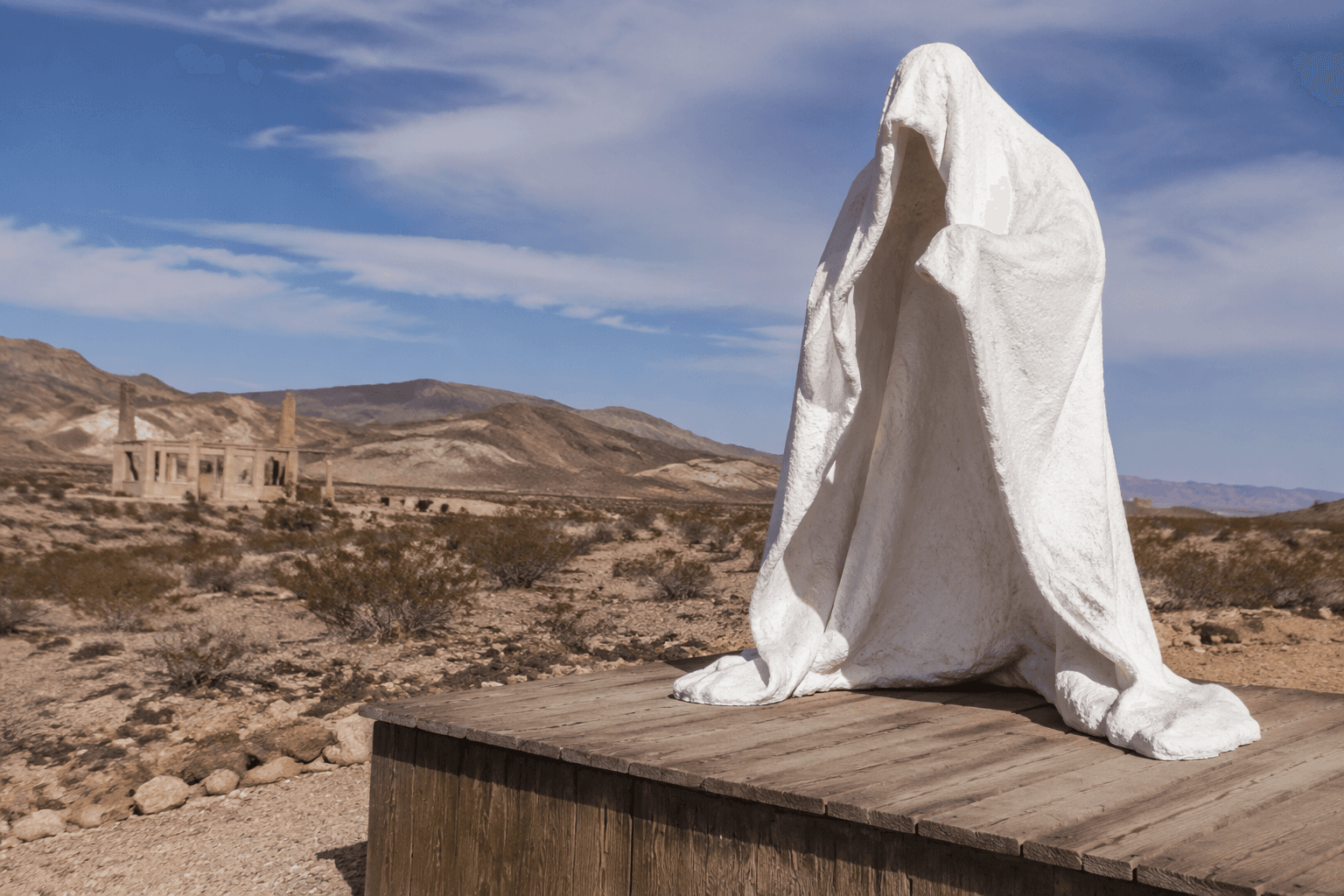
That mix is why the park lands so strongly with visitors passing through Beatty. The pieces are large enough to be seen against the desert from a distance, but they also reward the slower stop, where each sculpture reads differently once a traveler is on foot rather than behind a windshield.
From one work in 1984 to a lasting institution
Goldwell traces its beginning to 1984, when Belgian artist Albert Szukalski created The Last Supper in Rhyolite. The museum’s history pages treat that moment as the start of a long-running cultural project rather than a one-off art placement, and the site’s 40th anniversary plans reinforced that continuity.
The museum scheduled its 40th anniversary celebration for the weekend of October 18-20, 2024, marking four decades of art in the Nevada landscape. That milestone matters because it shows Goldwell has moved beyond novelty and into institution status, with enough staying power to build memory, repeat visits and a recognizable place in the county’s cultural map.
The museum also said it would resume its residency program in 2025 and pointed visitors to the documentary Shiny Things - Goldwell After Alber Szukalski, using archive footage from past residency artists. That detail shows the site is still active as a living arts project, not just a preserved relic from the museum’s first years.
Why the site matters beyond the art itself
Goldwell’s location near Rhyolite gives it a second identity as a historical stop. Local attraction materials place Rhyolite’s origins in 1905, after gold was found in the Bullfrog Hills, and the town later faded into ghost-town status. Put next to Goldwell, that history gives visitors two linked stories in one short drive: the boom-and-bust arc of mining Nevada and the way contemporary artists have reused that landscape.
For Beatty, the practical value is straightforward. A museum 5 miles west of town on the road to Death Valley gives travelers a reason to pause instead of passing through, and that pause is what helps a small highway community stay visible. Goldwell does not just decorate the route; it creates a destination where visitors can connect a Beatty stop with the ghost town at Rhyolite and the larger flow of traffic headed to Death Valley.
That matters for Nye County identity too. In a county built on distance, extraction and travel corridors, Goldwell turns a stretch of desert into a place people remember by name. It links art to the geography that shaped Beatty in the first place, and it gives the town a cultural asset that can outlast the season, the passing crowd and the road dust on Highway 374.
Planning a stop
Goldwell works best as part of a larger Beatty-Rhyolite loop rather than as an isolated photo stop. The museum sits close enough to town to fit into a half-day outing, and its position on the route toward Death Valley makes it easy to pair with other nearby landmarks.
- Use Beatty as the base if you want the simplest access from State Highway 374.
- Build in time for Rhyolite, since the ghost town and the sculpture park are closely tied in the area’s story.
- Expect an open-air desert site, where light, weather and distance are part of the visit rather than distractions from it.
Goldwell’s strength is that it gives Nye County something rare: a landmark that is at once local, unmistakable and useful to the region’s travel economy. It keeps Beatty on the map for people heading west, and it does so by turning a pass-through road into a reason to stop.
This article was produced by Prism’s automated news system from verified source data, official records, and press releases, then run through automated quality and moderation checks before publishing. The system is built and supervised by the people who set the standards it runs under. Read our full AI policy.
Did this article answer your question?