Burtis pulls Onondaga County protest buffer bill after state law signed
Burtis dropped a county protest-buffer bill minutes after Hochul signed a 50-foot state worship-zone law, shifting the line between protest and blocking access outside houses of worship.

A county proposal to fence off protests outside houses of worship disappeared within minutes once Albany moved first, leaving Onondaga County residents under a statewide 50-foot worship perimeter instead of a narrower local rule. For churches, synagogues, mosques and temples across the county, the practical question is now simpler: peaceful protest can still happen, but blocking access, crowding the entrance or making worshippers fear for their safety can bring police action and criminal charges.
Republican legislator Timothy Burtis had introduced the measure after, he said, his “own personal history” with protesters at churches he attended and news reports of similar confrontations around the country. The county bill would have barred demonstrations within 10 feet of someone entering or leaving a place of worship and within 35 feet of an entrance during the hour before or after a ceremony. It also would have reached broadly beyond Sunday services, covering churches, synagogues, mosques, temples and similar spaces, as well as congregational events and some secular community meetings. A violation would have been a misdemeanor punishable by up to a $250 fine, up to a year in jail, or both.
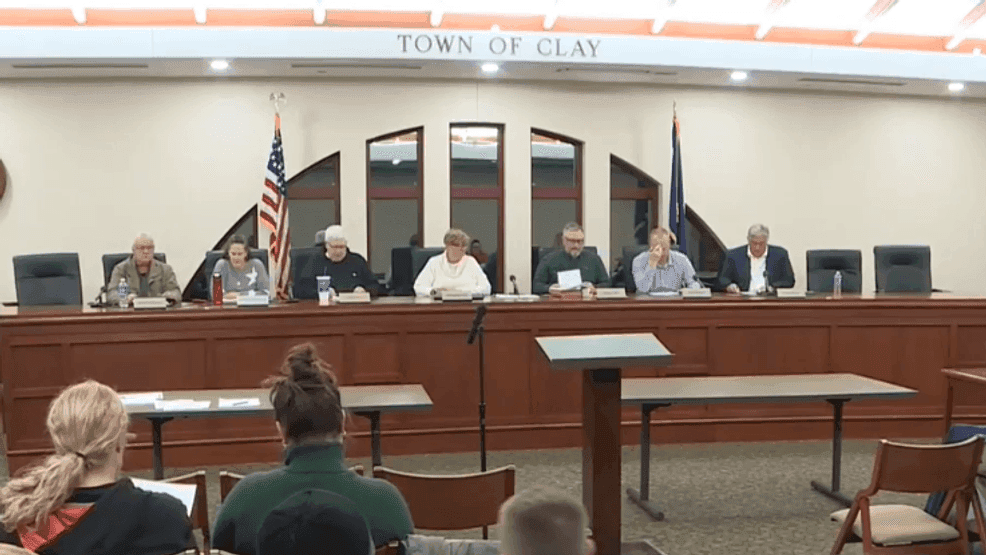
Burtis had the proposal in the Onondaga County Legislature Ways and Means Committee on May 26, with a committee vote and full Legislature vote expected on June 2. But by the time he brought it back, Gov. Kathy Hochul had already signed a statewide law on May 27 creating a 50-foot security perimeter around houses of worship. Burtis said there was no reason to move the county bill forward once the state had acted, and he pulled it.
The state law changes the ground rules more forcefully than the county bill would have. It allows police to establish 50-foot security perimeters outside houses of worship where protests are not allowed, and it makes interfering with access to a house of worship a class B misdemeanor. In practice, that means officers can push back demonstrators who block doors, stand too close to worshippers or turn an entryway into a flashpoint, while people who remain outside the protected zone still retain the ability to protest.
The clash over the county bill reflected a larger fight over speech, safety and constitutional limits. The New York Civil Liberties Union has argued that buffer-zone laws are unconstitutional and unnecessary because state and federal law already protect access to worship sites. Critics say the zones can chill nonviolent protest and expand policing of disfavored speech, while supporters point to recent protests outside New York City synagogues, including chants, harassment and Hezbollah flags. The broader debate sits under a 2014 Supreme Court ruling that struck down a 35-foot protest-free zone outside abortion clinics, a precedent likely to shadow any future challenge in New York.
This article was produced by Prism’s automated news system from verified source data, official records, and press releases, then run through automated quality and moderation checks before publishing. The system is built and supervised by the people who set the standards it runs under. Read our full AI policy.
Did this article answer your question?