DNR Warns of Dangerous Ice in Otter Tail County After Drownings
Minnesota DNR warned Otter Tail County residents after recent drownings, one victim, Barillas Mejia, was recovered in about 8 feet of water as warm days topped 50°F for five straight days.
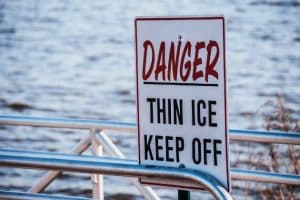
State natural‑resources officials have issued a statewide advisory that includes Otter Tail County after at least two people drowned in the Twin Cities area this mid‑February period, and officials say rapidly warming conditions are degrading ice on lakes and rivers. The Minnesota Department of Natural Resources warned that “Warm, sunny days can degrade the ice quickly, especially near shore and around emergent vegetation, logs, rocks and lake‑access sites,” citing a string of high temperatures that “topped 50 degrees for five straight days” in the Twin Cities as a driver of instability.
The advisory points back to specific drownings used to illustrate the risk: Hennepin County Water Patrol recovered the body of Barillas Mejia in about 8 feet of water at Bass Pond in Bloomington near the Old Cedar Avenue bridge trailhead after a Saturday afternoon plunge, and Bloomington firefighters rescued a second man who fell into the same pond. The Hennepin County Medical Examiner identified Mejia, the DNR statement and local incident reports show.
The DNR reiterated its ice‑thickness guidance and gear recommendations for anyone on frozen water. Officials restated thresholds of at least 4 inches of ice to walk on, 5 to 7 inches to support a snowmobile, 9 to 12 inches for a car, and more than a foot before driving a truck onto ice. The agency also urged people to “Every time you go on the ice, be sure to carry the gear that could save your life,” and warned, “Never assume ice is safe because someone else was out before you.” Recommended equipment listed in DNR and reporting includes flotation devices or a float‑coat, ice picks, a chisel or drill to measure thickness, cleats, a whistle, and a cellphone or personal locator beacon.
Nearby county agencies are reporting rapidly changing ice around structures. The Douglas County Sheriff’s Office posted a Facebook advisory after receiving multiple reports of open water forming around icehouses and “large holes have developed beneath and around ice shelters,” and advised owners to remove icehouses if conditions appear unsafe; the sheriff’s office warned that “What appears safe one day can quickly become hazardous the next.” Valley News Live noted no injuries or rescues had been reported in Douglas County at the time of that advisory.
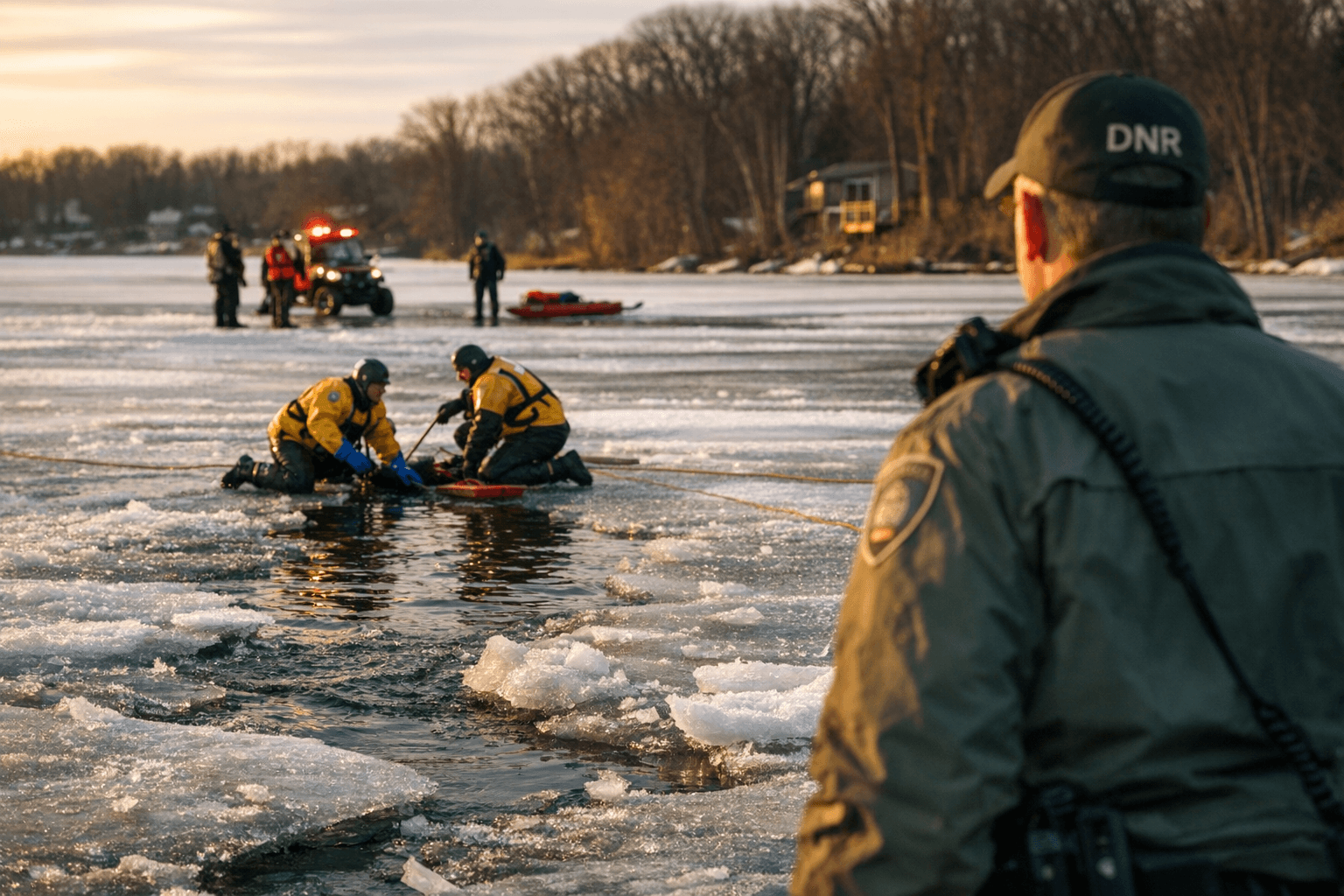
Officials in other states offered parallel warnings to underscore the pattern of spring‑like melt. Indiana DNR Conservation Officer Gannery Htoo, checking anglers on Lake Everett, said ice less than four inches “is too dangerous” and that on some sheltered lakes “Here on the lake, it’s about eight, ten average, plus it’s not a moving waterway,” while cautioning that moving waterways are “definitely not safe right now because ice on moving water is unpredictable.” Massachusetts State Police urged similar caution after a deadly Eastham river incident; Framingham Deputy Fire Chief Jose Lopez said, “I wouldn't go on it myself. Always assume the ice isn't safe.”
Counts vary across local reports, FergusNow said “at least three people have fallen through the ice, and two have died,” while Star Tribune reported a 17‑year‑old as “one of two people who have drowned in recent days” in the Twin Cities, and state and county agencies remain the sources to confirm exact incident totals and locations.
This article was produced by Prism’s automated news system from verified source data, official records, and press releases, then run through automated quality and moderation checks before publishing. The system is built and supervised by the people who set the standards it runs under. Read our full AI policy.
Did this article answer your question?


