Fischbach Bill Aims to Expand Markets for Minnesota Farm Products
A Fischbach bill would offer corn processors a 10-cent-per-pound federal tax credit to make plastics and chemicals instead of relying on foreign petroleum.
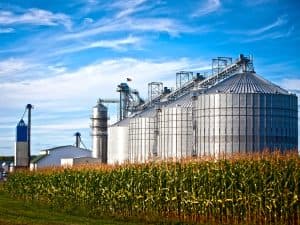
Every day, the ethanol plant two miles northwest of Fergus Falls burns through roughly 57,000 bushels of locally grown corn, converting it into fuel. Federal legislation introduced by Congresswoman Michelle Fischbach last week could offer facilities like it a significant financial incentive to expand into a second line of business: replacing foreign petroleum with corn-derived plastics and chemicals.
Fischbach and Illinois Democrat Nikki Budzinski introduced H.R. 8137, the Biobased Materials Investment and Production Act, on March 31. The bill gives companies a choice of two tax structures. The first is a 30% investment tax credit to offset construction or expansion costs for biobased manufacturing capacity. The second is a production credit of 10 cents per pound of renewable material produced and sold, capped at $10 million per company per year. Budzinski summarized the dual approach: "This 30% investment tax credit would help alleviate some of the price pain points to build out the business. Then once the business is in place, this bill would provide a production tax credit that's worth 10 cents for every pound of product produced."
"This legislation is a crucial step in supporting our farmers and manufacturers," Fischbach said. "By providing tax incentives, we can drive investment into rural communities, reduce our reliance on petroleum-based products, and strengthen our national supply chain using American-grown resources."
The policy targets a specific gap in the American bioeconomy. The United States has built a substantial ethanol industry, but most everyday products, from plastic packaging to industrial solvents, still depend on imported petroleum. The Plant Based Products Council puts the current domestic ag bioeconomy at $489 billion, with the market for renewable materials expected to grow by an additional $550 billion by 2050. Council director James Glueck said the obstacle is often not innovation but infrastructure. "Folks often go to Europe, or to Asia to China for that step," Glueck said of companies trying to move a biobased product from a laboratory to a manufacturing line.
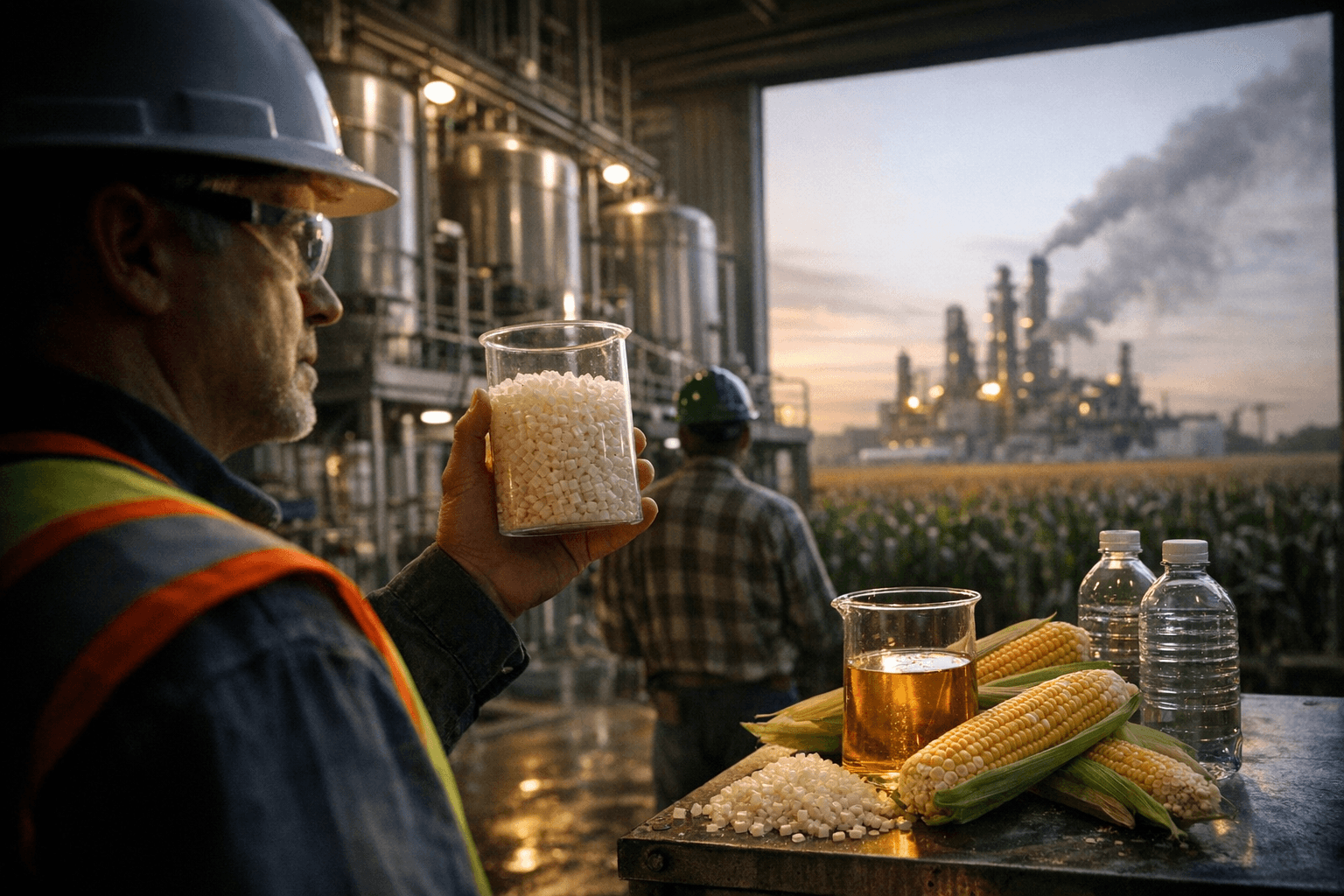
Otter Tail County's agricultural base, built primarily around corn and soybeans across hundreds of thousands of acres, sits directly in the crosshairs of what the bill envisions as its feedstock supply. The Fergus Falls ethanol plant alone consumes about 19.5 million bushels of corn per year. If similar facilities were to add biobased chemical production lines and qualify for the 10-cent-per-pound credit, the tax benefit could reach the bill's $10 million annual ceiling.
The National Corn Growers Association backed the measure. NCGA president Jed Bower said the bill would "create new revenue streams for growers of many different crops, which is particularly helpful during difficult economic times."
The bill's bipartisan co-sponsorship, pairing a Minnesota Republican with an Illinois Democrat, follows a pattern of farm-state coalitions working across party lines on narrow economic legislation. Whether it advances in a fractious Congress is a separate question, but its introduction signals that Fischbach's office sees rural processing, not just rural production, as the next frontier for federal agricultural policy.
This article was produced by Prism’s automated news system from verified source data, official records, and press releases, then run through automated quality and moderation checks before publishing. The system is built and supervised by the people who set the standards it runs under. Read our full AI policy.
Did this article answer your question?


