Minnesota doctor shares summer skin safety tips amid rising sun risk
Otter Tail County’s melanoma rate sits above the U.S. average, and one Minnesota doctor says summer sun exposure climbs fast on lakes, farms and job sites. Protection starts with sunscreen, clothing and timing.

On a summer day in Otter Tail County, the people most likely to get burned are the ones who stay outside longest: lakegoers, farm crews, construction workers, coaches and kids at ball fields from Fergus Falls to the smaller lake towns. That matters here because the county’s melanoma incidence rate from 2018 to 2022 was 48.9 per 100,000, well above the U.S. rate of 23.1 per 100,000, and the trend has been labeled rising.
Why the risk climbs in Minnesota summers
Dr. David Pearson of the University of Minnesota Medical School and M Health Fairview says Minnesota summers increase sun exposure in three ways at once: the duration of time spent in the sun, the frequency of that exposure and the amount of skin left uncovered. That combination raises the odds of sunburn, pigment changes, premature aging, heat rash, athlete’s foot, poison ivy, bug bites and tick-related illness, including Lyme disease.
The warning is especially relevant in Otter Tail County, where 60,884 people were estimated to live in the county in 2024 and 26.6% were age 65 or older. Older adults can be more vulnerable to heat and to the cumulative damage that builds up after years of fishing, yard work, farm labor, golfing, coaching and hours at lakes and ball fields.
Pearson also says Minnesota clinics still find attached ticks every week that people did not know about. That makes post-outing checks just as important as sunscreen, especially after time in grass, brush or along shorelines.
The protection routine people still skip
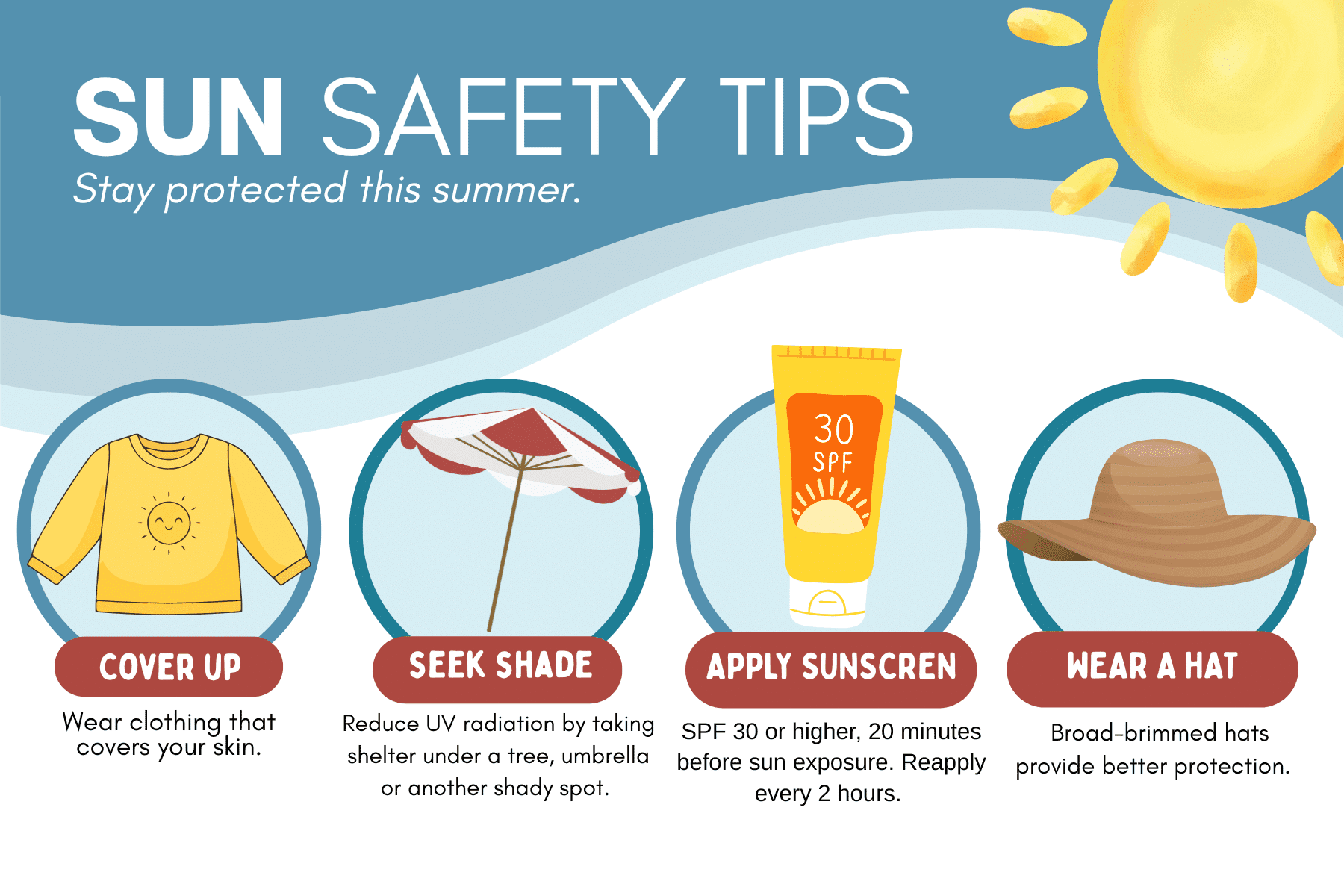
The basics are not complicated, but they are the parts people most often miss. Pearson recommends sunblock, sun-protective clothing and a broad-brimmed hat, along with reapplying sunscreen every few hours. He also advises limiting prolonged exposure between 10 a.m. and 5 p.m., when the sun is strongest.
In practice, that means the fisherman on a long morning at the lake, the field crew working through the afternoon and the softball coach standing at the fence all need the same routine, even if the day starts cool or cloudy. Sun damage does not require a beach vacation, and it does not wait for a pool day. It builds on ordinary days outdoors, which is why a quick application before leaving home and another application later in the day matter so much.
The most common preventable mistake is thinking one early coat of sunscreen is enough. In real life, sweat, water, long shifts and repeated activity strip protection away. Clothing does not wash off, hats cover the face and neck where damage accumulates quickly, and timing outdoor work or play outside peak hours can cut risk without changing the whole day.
Why this warning hits Otter Tail County especially hard
Minnesota has an unusual melanoma burden compared with many states. M Health Fairview said in 2024 that, when adjusted for age, Minnesota had the third-highest melanoma rate in the country, and that melanoma is the deadliest form of skin cancer. The Centers for Disease Control and Prevention says melanoma causes the most deaths among skin cancers.
Those statewide and national numbers matter in a place like Otter Tail County because the local rate is already above the national one. State Cancer Profiles puts the county at 48.9 cases per 100,000 for 2018 to 2022, a level that should make prevention feel practical rather than optional. In a county built around lakes, farms, outdoor work and summer recreation, the exposure is not abstract. It is part of the daily rhythm.
The CDC adds scale to the problem: about 6 million people in the United States are treated for some type of skin cancer each year, about $9 billion is spent annually on skin cancer treatment and about 8,000 people die from melanoma each year. Those figures underscore why early prevention is more effective than waiting for a diagnosis.
Kids, coaches and parents need a different playbook
Children and teens spend long stretches outside at camps, baseball diamonds, track meets, lakes and playgrounds, and the habits they build now can follow them for decades. The CDC says only 15.5% of U.S. high school students regularly wear sunscreen, while 4.5% used an indoor tanning device in the past year. That gap helps explain why summer skin damage keeps showing up in younger people.
Minnesota law gives schools a useful tool: students may possess and apply sunscreen during the school day and at school-sponsored events without a prescription or physician’s note. That means families do not need to wait for a medical form to make sunscreen part of the backpack, sideline bag or travel kit.

State law also prohibits people under 18 from using tanning equipment in tanning facilities. That matters because tanning still sends the wrong message to teens who are already getting too much sun from sports, jobs and leisure time outdoors. The safer message is simple: protection is normal, and tanning is not a health strategy.
Who needs extra caution
Pearson notes that people with autoimmune diseases such as lupus erythematosus and dermatomyositis may be especially sensitive to sun exposure, along with people who have melasma. For those groups, even shorter periods outside can trigger problems more quickly, so clothing, hats, sunscreen and shade are not optional extras.
The practical takeaway for Otter Tail County is straightforward. Build sun protection into the same routine you already use for water, work and sports: check the forecast, choose clothing that covers more skin, apply sunscreen before the day starts, reapply it during the day and step out of the strongest sun when you can. Add a tick check after time in the grass or brush, and do not ignore a rash, a bite or a burn that keeps getting worse.
In a county where more than a quarter of residents are 65 or older and the melanoma rate is already above the national mark, sun safety is not a summer slogan. It is a routine worth making automatic on every lake day, every shift and every practice.
This article was produced by Prism’s automated news system from verified source data, official records, and press releases, then run through automated quality and moderation checks before publishing. The system is built and supervised by the people who set the standards it runs under. Read our full AI policy.
Know something we missed? Have a correction or additional information?
Submit a Tip