Minnesota tightens raw milk oversight as demand rises
Raw milk can still be bought directly from Minnesota farms, but Otter Tail County shoppers face tight limits, testing rules and the risk of past outbreaks tied to unpasteurized milk.

As raw milk gains fresh attention around Perham and across Otter Tail County, Minnesota still keeps the market narrow: state law restricts sales of raw milk for human consumption, but allows occasional direct purchases from the farmer at the dairy farm. That leaves buyers with only a limited path to the product, while state oversight tries to keep pace with demand.
The bigger protection begins with pasteurization. Minnesota says all milk used for human consumption must be pasteurized unless it meets specific requirements, and dairy producers must submit raw milk samples to a certified lab for quality testing at least four out of every six months. That requirement applies to Grade A and Grade B producers, including farmstead cheese makers and on-farm processors. The Minnesota Department of Agriculture says inspectors oversee Grade A and manufacturing-grade farms, and any on-farm processing of raw milk, including pasteurization, bottling or raw milk cheese production, needs additional licensing and permitting.
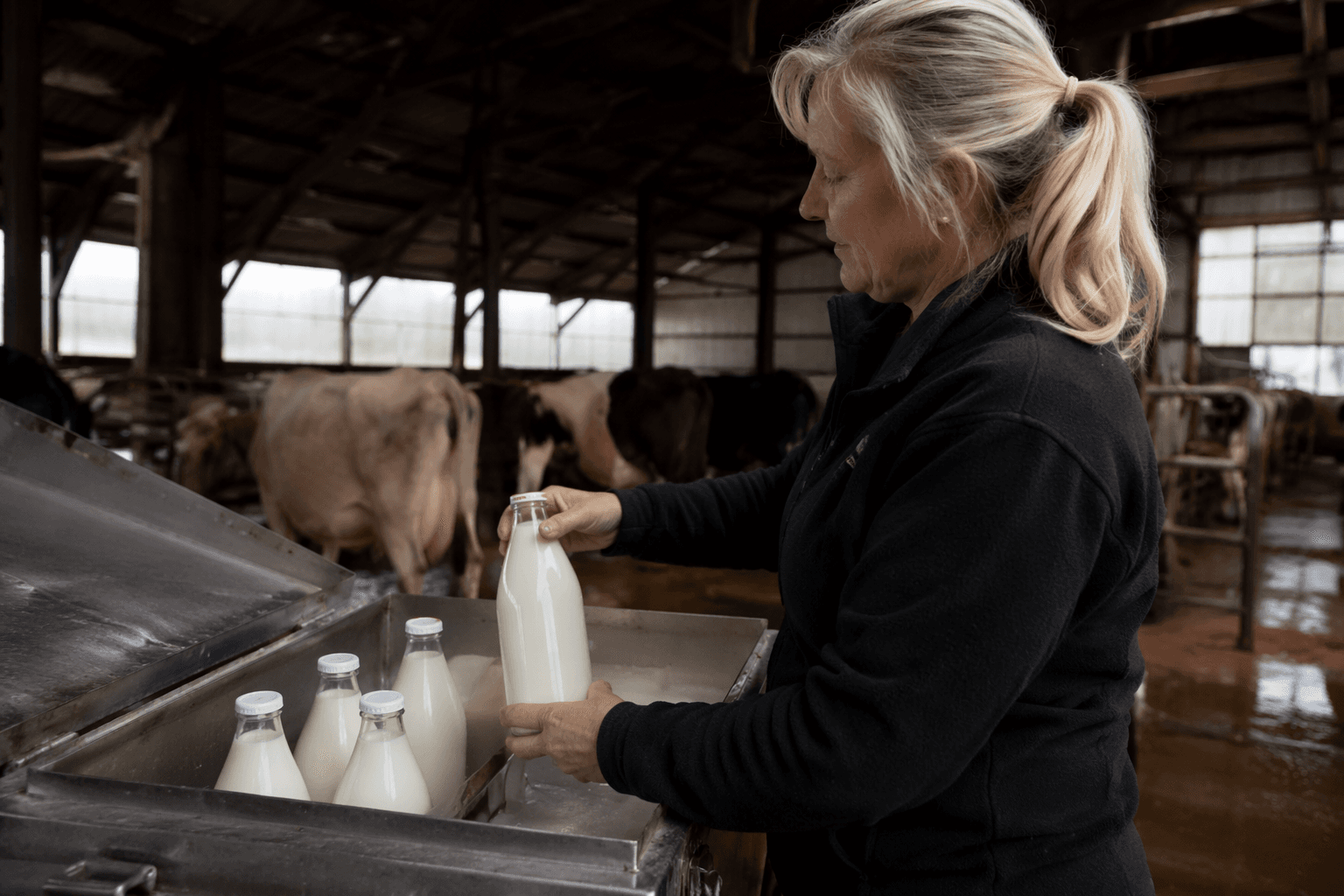
For small producers, the rules create a narrow lane, but not a free pass. The system allows direct farm sales while still recognizing that raw milk carries risks that pasteurized milk does not. That gap matters for families looking for local food, farmers-market shoppers drawn to unprocessed products and farms that want to meet demand without crossing into broader retail distribution.
Bird flu added a new layer of concern. Minnesota began sampling and testing raw cow milk for H5N1 on Feb. 24, 2025. After four straight months of no detections, the U.S. Department of Agriculture changed Minnesota’s dairy herd status from Affected to Unaffected on Sept. 10, 2025. The Minnesota Department of Health says avian influenza A, H5N1, was detected in dairy cattle in Minnesota on June 4, 2024, and there are currently no detections in people in Minnesota.
The Centers for Disease Control and Prevention says the public health risk from H5 bird flu remains low overall, but people exposed to infected animals or contaminated materials, including raw cow’s milk, face higher risk and should take precautions. Public health officials point to Minnesota’s own outbreak history as part of the reason the warnings remain sharp: in September 2023, raw milk from a Hillman farm was tied to eight cryptosporidiosis cases and one E. coli O111:H8 illness, and in July 2023, five children were linked to Salmonella Typhimurium infections from unpasteurized milk.
Federal data underline the scope of the issue. The U.S. Food and Drug Administration says there have been 143 reported outbreaks linked to raw milk and raw milk products since 1987, while the CDC says pasteurization has greatly reduced milk-borne illness since the early 1900s. Minnesota’s response network, including Minnesota Department of Health epidemiologists and University of Minnesota School of Public Health students on the interview team known as Team Diarrhea, is built to catch the next outbreak fast.
This article was produced by Prism’s automated news system from verified source data, official records, and press releases, then run through automated quality and moderation checks before publishing. The system is built and supervised by the people who set the standards it runs under. Read our full AI policy.
Know something we missed? Have a correction or additional information?
Submit a Tip