Otter Tail County's Popular Winter Lakes Demand Careful Attention to Ice Safety
The DNR warns that no ice is ever 100% safe — a fact every Otter Tail County lake-goer must reckon with before stepping onto the water this winter.
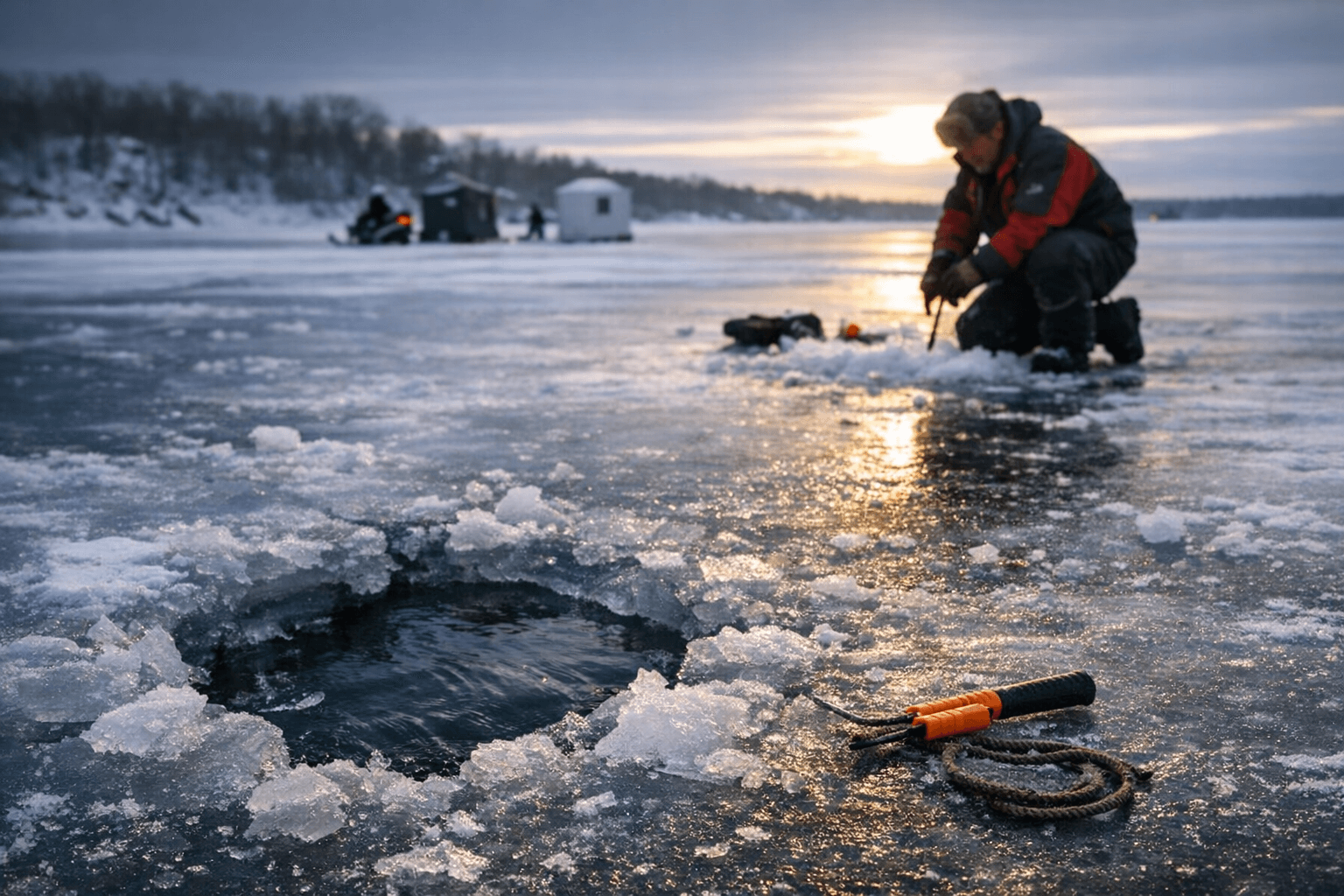
Few counties in Minnesota invite winter recreation the way Otter Tail does. With hundreds of lakes and thousands of shoreline miles, the county draws ice anglers, snowmobilers, and families looking for frozen-water adventure from the first hard freeze through the reluctant thaw of late winter. That sheer density of opportunity is exactly what makes ice safety not just a personal concern but a genuine community priority — because when so many people are out on so many lakes, the consequences of carelessness multiply fast.
The Minnesota Department of Natural Resources has delivered the same foundational warning for years: no ice is ever 100% safe. That message is worth sitting with. Not "usually safe," not "safe enough." No ice is ever fully guaranteed, regardless of how cold the temperatures have been, how many neighbors have already driven their fish houses out, or how thick the surface looks from shore.
Understanding Why Otter Tail County Demands Extra Vigilance
The county's popularity is part of what creates its particular risk profile. Hundreds of lakes means hundreds of different ice conditions, often varying dramatically within a single body of water. Springs, inlets, channels, and current-affected areas can remain dangerously thin even when surrounding ice appears solid and well-traveled. A lake that supported foot traffic on the north shore may be inches thinner on the south end where a creek feeds in. No single thickness reading from a single location tells the whole story.
Snowmobile traffic adds another layer of complexity. Otter Tail County's extensive lake network makes it a natural corridor for snowmobile routes, and machines crossing ice at speed create different stress conditions than stationary ice fishing. The DNR's consistent guidance reflects decades of data from exactly this kind of mixed-use winter environment.
The Thickness Standards Worth Knowing
While no ice is guaranteed safe, thickness remains the most practical starting point for assessing risk. General guidelines used by the DNR and ice safety educators provide a baseline framework:
- New, clear ice is significantly stronger than white or opaque ice, which forms from partially melted and refrozen snow and contains air pockets that reduce structural integrity.
- At least four inches of new, clear ice is the commonly cited minimum for a single person on foot.
- Motorized vehicles, including snowmobiles and ATVs, require substantially greater thickness, and full-sized trucks on ice demand thicknesses that only the deepest cold of a sustained winter can reliably produce.
- Ice thickness should be checked repeatedly as you move across a lake, not just at the entry point.
These numbers represent minimums, not comfort zones. The DNR's repeated emphasis on the "never 100%" principle is a reminder that even ice that meets thickness guidelines can fail due to hidden fractures, variable density, or temperature swings that weaken the structure faster than expected.
What to Do Before You Go Out
Preparation is the difference between a safe outing and a preventable tragedy. Before heading onto any Otter Tail County lake, build the following into your routine:
- Check current ice conditions through the Minnesota DNR's online resources and local bait shops, which often maintain informal but reliable condition reports for specific lakes.
- Carry ice picks, also called ice claws, on a cord around your neck. These handheld spikes allow a person who has broken through to grip the ice surface and pull themselves out of the water, a maneuver that is nearly impossible without them.
- Wear a life jacket or a float coat, particularly during early season and late season when ice conditions are most variable.
- Never go out alone. If you do go out without a partner, make sure someone onshore knows your location, your intended route, and when to expect you back.
- Bring a rope. A length of rope can allow a bystander to reach a person who has broken through without approaching the weakened ice directly.
Late Season Ice: When Familiarity Becomes a Liability
March is when Otter Tail County's winter recreationists face their most underappreciated risk. By mid-to-late winter, many anglers and snowmobilers have developed routines on lakes they have used all season without incident. That familiarity can breed the kind of confidence the DNR's warnings are specifically designed to counter.
Spring ice is deceptive in ways that early-season ice is not. It may look white and thick from the surface, but warming temperatures cause ice to lose structural integrity from within, a process sometimes described as "candling" or "honeycombing." Candled ice can be several inches thick and still offer almost no load-bearing capacity. It breaks not in large, manageable sheets but in vertical columns that fragment suddenly and without warning.
The date matters here. In a county where late-March temperatures can swing from below freezing overnight to well above it by afternoon, the same lake surface can change meaningfully over the course of a single day. Ice that held weight safely in the morning may not hold it safely by mid-afternoon.
Community Responsibility on Shared Lakes
Because Otter Tail County's lakes are a shared resource used simultaneously by anglers, snowmobilers, skaters, and families with children, ice safety is not purely an individual calculation. Experienced lake users have a practical role to play in how conditions information moves through a community. A bait shop operator who posts current thickness readings for area lakes, a snowmobile club that flags hazardous crossings, or a fishing group that shares real-time observations on community platforms all contribute to an informal safety network that no formal agency can fully replicate at the local level.
The DNR provides the framework and the warnings. What happens on Otter Tail County's specific lakes, on any given morning in January or a deceptively warm afternoon in March, depends on the collective judgment of the people who use them. That judgment starts with taking the DNR's core message seriously: no ice, anywhere, is ever 100% safe.
This article was produced by Prism’s automated news system from verified source data, official records, and press releases, then run through automated quality and moderation checks before publishing. The system is built and supervised by the people who set the standards it runs under. Read our full AI policy.
Did this article answer your question?