Walz Will Not Seek Reelection; Local Senator Issues Stark Criticism
Gov. Tim Walz announced Jan. 6, 2026 that he will not seek another term, saying he is stepping back from the campaign to concentrate on governing. Senator Jordan Rasmusson (R–Fergus Falls) responded with a sharply worded statement, calling the Walz administration "the greatest failure of state government in my lifetime" and pledging to hold the governor and Democratic lawmakers accountable.
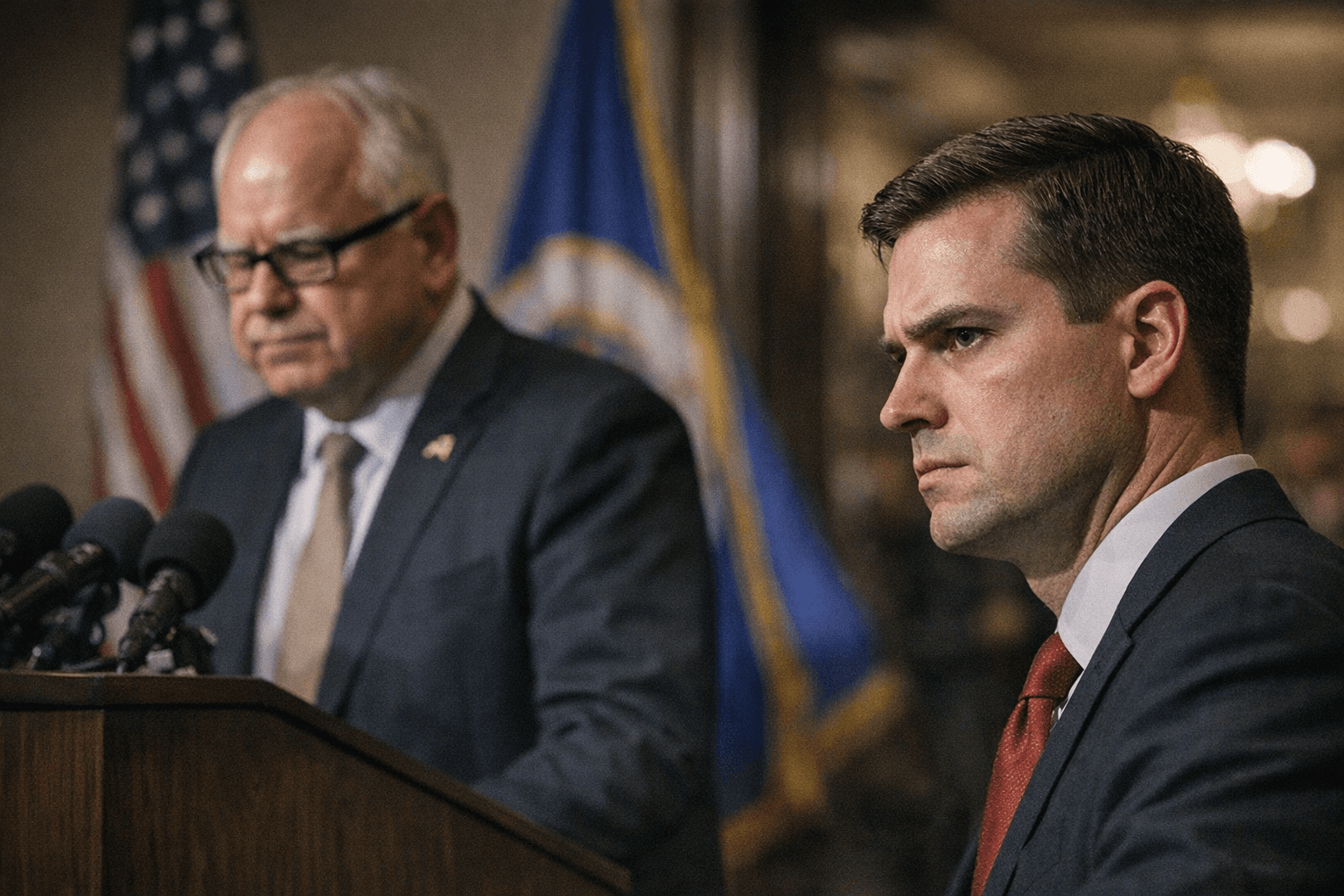
On Jan. 6, 2026 Governor Tim Walz formally announced he would not run for another term as Minnesota governor, shifting his immediate focus away from campaigning and toward governing for the remainder of his tenure. The decision removes an incumbent from the 2026 gubernatorial field and creates an open race that will reshape political calculations across the state, including in Otter Tail County and neighboring districts.
The announcement drew an immediate response from local Republican Sen. Jordan Rasmusson of Fergus Falls, who issued a statement sharply critical of Walz’s record. Rasmusson said the Walz administration was "the greatest failure of state government in my lifetime," and pledged to hold the governor and Democratic lawmakers accountable for what he described as budgetary and policy shortcomings. Rasmusson’s comment frames the county-level Republican message heading into the 2026 campaign cycle and signals an aggressive oversight and accountability push from local GOP legislators.
Walz’s decision to step back from the campaign while remaining in office carries direct implications for state policy and local constituents. An incumbent who halts campaigning can alter legislative dynamics at the State Capitol, potentially affecting the pace and content of negotiations on the biennial budget, infrastructure investments, and programs that fund county services. For Otter Tail County, which relies on state allocations for roads, public safety grants, and social services, uncertainty about leadership and priorities in St. Paul may influence local planning and lobbying efforts in the months ahead.
Politically, an open gubernatorial contest is likely to accelerate candidate recruitment, fundraising, and primary battles. For voters in Otter Tail County, the change underscores the importance of civic engagement: candidate forums, local party organizing, and turnout will shape which policy priorities receive attention at the state level. Local elected officials and civic leaders will now face decisions about endorsements and issue-based advocacy as state campaigns begin to coalesce.
Institutionally, the governor’s choice highlights the tension between governing responsibilities and campaign activity. With both parties preparing for a competitive cycle, the next phase will test Minnesota’s institutions of budgetary oversight, legislative-executive collaboration, and the role of county officials in advocating for regional needs. As parties and potential candidates respond, residents of Otter Tail County should expect an intensified political calendar and heightened scrutiny of how state decisions translate to local impacts.
This article was produced by Prism’s automated news system from verified source data, official records, and press releases, then run through automated quality and moderation checks before publishing. The system is built and supervised by the people who set the standards it runs under. Read our full AI policy.
Did this article answer your question?


