Booneville name traces back to Boone, Moores Station and Owsley Courthouse
Booneville might have stayed Boone’s Station, Moores Station or Owsley Court House. The final name tied Booneville’s identity to frontier legend, Moore family land and county government.

Booneville sits on the South Fork of the Kentucky River at KY 11 and KY 30, but the town could easily have carried a different name on the road sign and the courthouse papers. Before Booneville settled into place, the site was known as Boone’s Station, Moores Station and Owsley Courthouse, three labels that each told a different story about who shaped the town and what kind of place it was becoming.
Boone’s camp, then Boone’s Station
The earliest chapter reaches back to 1780-1781, when Daniel Boone’s party camped in the area. That frontier episode gave the place its strongest legend, and it is the reason Boone still anchors the town’s identity more than two centuries later. The Kentucky Historical Society’s history note on Owsley County places that Boone camp at the center of the story, where a temporary stop on the edge of settlement became part of local memory.
The first name, Boone’s Station, would have announced a frontier outpost tied to one of Kentucky’s best-known names. It also would have tied the town’s identity to migration, defense and the long arc of westward settlement. In a region where stations often became permanent communities, the name suggested a place marked by movement before it was marked by government.
Moores Station and the power of a local family
Moores Station carried a different kind of meaning. Instead of leaning on a legendary frontiersman, it pointed to the Moore family, one of the area’s early settler families. Kentucky Atlas and Gazetteer materials note that Elias Moore donated land for a seat for the new county in 1843, which gives the Moore name more than just historical presence. It marks the family as part of the physical and political foundation of the county seat itself.
That matters because place names often reveal who held influence when a community was taking shape. Moores Station would have centered local ownership and settlement power in a way Boone’s name did not. It would have told outsiders that this was not just a stop associated with a famous traveler, but a community grounded in the land and decisions of a local family.
Owsley Courthouse, the county seat and the paper trail
Owsley County was created on January 23, 1843, from Clay, Estill and Breathitt counties, and the county seat had to be set in motion right away. The Owsley County Historical Society says Booneville is the county seat on the South Fork of the Kentucky River at KY 11 and KY 30, and that the Owsley Court House and post office opened in 1844. A county histories collection at Morehead State University, citing RM Rennick, gives the paper trail more precisely: the Owsley Court House post office opened on May 20, 1844 and was officially renamed Booneville on December 8, 1846.
That courthouse name would have emphasized civic authority over family legacy or frontier myth. It said the place was the center of government, records and public business for a newly formed county. In a rural county seat, that is more than a label. It is the name that ties the town to maps, mail, legal documents and the daily work of local government.
Why Booneville won the naming contest
Booneville was incorporated in 1846, the same year the post office took the town’s new name. The shift did not erase the earlier identities; it folded them into one place name. The Kentucky Historical Society puts the competition plainly, saying Booneville “might have remained Boone’s Station, Moores Station or even Owsley Court House.” That line captures why the final name matters so much: it chose Daniel Boone’s symbolic power, but kept the memory of the Moore family and the courthouse era close to the surface.
The result is a name that works on several levels at once. It honors one of Kentucky’s most powerful frontier symbols, while still standing on the county’s own political history. It also shows how small Kentucky towns often developed, first as camps or stations, then as post office sites, then as courthouse towns with a more permanent identity.
The geography still tells the story
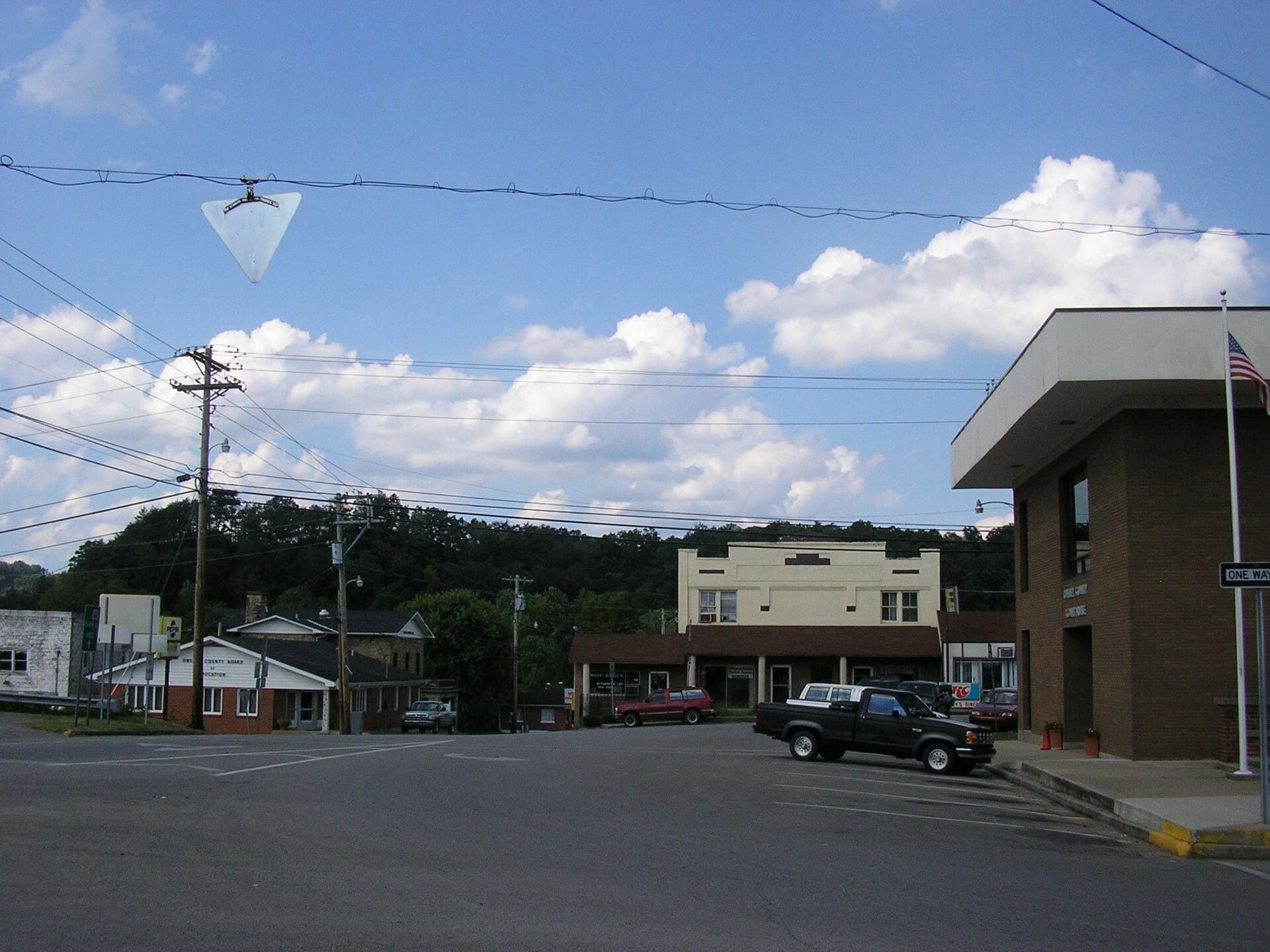
Booneville’s location on the South Fork of the Kentucky River at KY 11 and KY 30 helps explain why it became the county seat in the first place. River access and road crossings were practical advantages in a county where government, trade and travel all had to meet in one place. That geography gave the town a function before it had a finished name, and that function shaped how the name stuck.
The courthouse itself has a layered history. The current Owsley County Courthouse was built from 1929 to 1931, burned in 1967 and was replaced in 1971. That sequence matters because it shows how Booneville’s civic center has had to be rebuilt while the town’s identity stayed continuous. The courthouse name changed, the building changed, but the seat of government remained in the same town.
Booneville’s name as a local shorthand
Booneville’s current name now compresses the whole story into one word. It holds Boone’s camp, the Moore family’s land donation, the 1844 courthouse post office and the 1846 incorporation all at once. The town website calls Booneville “Kentucky’s Hidden Gem,” and the phrase fits a place whose identity is built from layers most people pass over without stopping to read.
That is why the name still matters in Owsley County. Booneville is not just a dot on a map at KY 11 and KY 30, and it is not only a county seat on the South Fork. Its name preserves the settlement history, the courthouse history and the local families that made the town before it became the Booneville residents know today.
This article was produced by Prism’s automated news system from verified source data, official records, and press releases, then run through automated quality and moderation checks before publishing. The system is built and supervised by the people who set the standards it runs under. Read our full AI policy.
Did this article answer your question?