Owsley County farms turn food, flowers and events into agritourism
Booneville’s farm map is real, not nostalgic: markets, flowers, goats and event venues give Owsley County a small but working agritourism circuit.
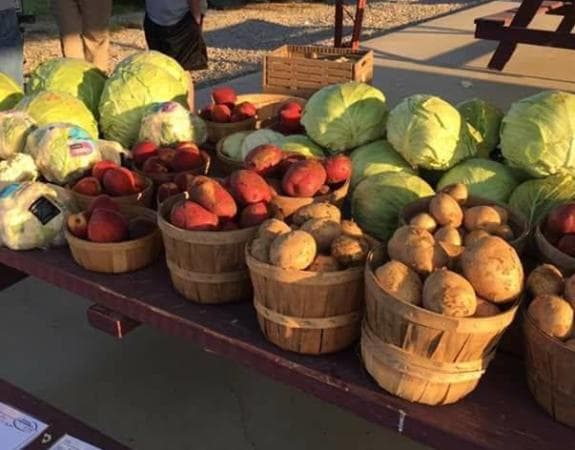
Booneville’s farm scene is concentrated enough to map and varied enough to make a day trip feel like a county tour. The town’s business directory points visitors to Wild Willow Farm LLC, The Noble Farm, Happy Hens Homestead, Shadytown Farms and Greenhouse, Stone Gully, South Fork Farms, Milltown Market and the Owsley County Farmers Market, a cluster that turns agriculture into something you can buy, taste and visit. In a county of just 3,928 estimated residents in 2024, that visibility matters: the farms are not only part of the landscape, they are part of the local economy and identity.
Booneville as the starting point
Booneville sits on the South Fork of the Kentucky River at the junction of Kentucky Route 11 and Kentucky Route 30, which makes it the practical starting point for anyone following Owsley County’s farm trail. The town was once known as Boones Station and Moores Station, was incorporated in 1846, and became the county seat in 1843 after Elias Moore donated land for it. That history gives the farm businesses around town a strong sense of place: this is a county seat built early and still organized around a small, navigable center.
The scale of Owsley County helps explain why a compact agritourism network can feel so important. The U.S. Census Bureau counted 4,051 residents in 2020, and the county’s 2024 estimate is even lower. In a place that small, each farm stand, market day and event venue carries extra weight because there are fewer of them, fewer alternate shopping options and fewer chances for visitors to stumble on local food by accident.
Named stops that shape the farm circuit
Wild Willow Farm LLC is the clearest example of how the county’s farm identity now blends production with visitor appeal. The farm says it grows hay and flowers, maintains a small vineyard for grapes, and produces apples, blueberries, raspberries and blackberries. It also keeps Nigerian Dwarf goats and several kinds of chickens, while building out a greenhouse. That mix matters because it gives visitors more than one reason to stop: flowers and fruit in one season, livestock in another, and greenhouse growth that suggests the farm is still expanding.
The Noble Farm adds a different kind of destination, one that combines a working family farm with event space. It says it began in 2016, has a farmhouse built from locally sourced white pine and added a pavilion in 2021. Its rhythm is seasonal, with green beans in summer and pumpkins in fall. That makes it useful not just as a scenic stop but as a place where the farm calendar can shape what gets sold, shown and celebrated.

Happy Hens Homestead gives the county a more direct food-to-table story. It started with five chickens and now sells jams, spices and pork packages under a “from our pasture to your plate” idea that is as straightforward as the name suggests. For visitors, that means the farm identity is not limited to scenery or seasonal decor. It is also a small-scale food system with packaged products that can leave the property and enter a kitchen.
Several other names in Booneville’s directory fill out the picture even when their offerings are less detailed in the public listing. Shadytown Farms and Greenhouse, Stone Gully, South Fork Farms, Milltown Market and the Owsley County Farmers Market indicate that the county’s agricultural footprint is not confined to one flagship operation. It is spread across multiple stops, which helps make the county feel like an agritourism cluster rather than a single roadside attraction.
What that cluster offers in practice
- Fresh produce and market goods through the Owsley County Farmers Market and Milltown Market.
- Flowers, fruit, hay and greenhouse products at Wild Willow Farm LLC.
- Event space and seasonal crops at The Noble Farm.
- Eggs, jams, spices and pork packages at Happy Hens Homestead.
- A broader mix of farm businesses that signals a county-level network rather than one isolated site.
That variety is what makes the area useful to both locals and out-of-town visitors. Locals can use it as part of ordinary shopping and seasonal routines, while visitors can build a short itinerary around Booneville without needing a long drive between stops. The result is a farm scene that still feels working, not staged.
Why agritourism here is more than nostalgia
The numbers from the USDA National Agricultural Statistics Service show that Owsley County’s farm sector still has real production behind it. In the 2022 Census of Agriculture, the county had 84 farms on 21,686 acres, with an average farm size of 258 acres and $1.455 million in market value of agricultural products sold. Sales were split almost evenly, with 49 percent from crops and 51 percent from livestock, poultry and products.
That balance is important because it shows the county is not dependent on one kind of agriculture. Forage and haylage were among the top crops by acreage, along with vegetables including pumpkins, which fits the seasonal rhythm seen at The Noble Farm and the greenhouse and flower emphasis at Wild Willow. In other words, the visitor-facing farm scene lines up with the county’s production profile rather than floating apart from it.
The numbers also suggest why a cluster of direct-to-consumer sales can matter in a small county. With only 84 farms and just over $1.4 million in agricultural sales, each market stand, roadside sale and event booking has a bigger local footprint than it would in a larger county with dozens more commercial channels.
The support network behind the farms
Owsley County’s farm identity is reinforced by institutions that connect agriculture to education, advocacy and marketing. The Owsley County Farm Bureau says it has served local members while offering advocacy and services, and Kentucky Farm Bureau traces its founding to November 1919 in Louisville. County Farm Bureau offices also support programs such as Women’s Leadership Activities, Ag in the Classroom, Commodity Market Information, Scholarships, Certified Roadside Farm Markets and the Young Farmers program.
The Owsley County Extension Office links that network to the University of Kentucky Cooperative Extension Service and Kentucky State University, with a mission centered on strengthening local economies and healthier lives through research-based education. That matters in a county where the farm economy depends not just on production, but on helping people sell, market and explain what they grow. Agritourism here is not a side hobby; it is one of the few ways for a small county to make its farm identity visible, usable and economically current.
This article was produced by Prism’s automated news system from verified source data, official records, and press releases, then run through automated quality and moderation checks before publishing. The system is built and supervised by the people who set the standards it runs under. Read our full AI policy.
Did this article answer your question?