Owsley County’s lone National Register site anchors local preservation story
Owsley County has only one National Register listing, and the Moyers Buildings now carry an outsized role in Booneville’s preservation, tax-credit, and downtown revival story.
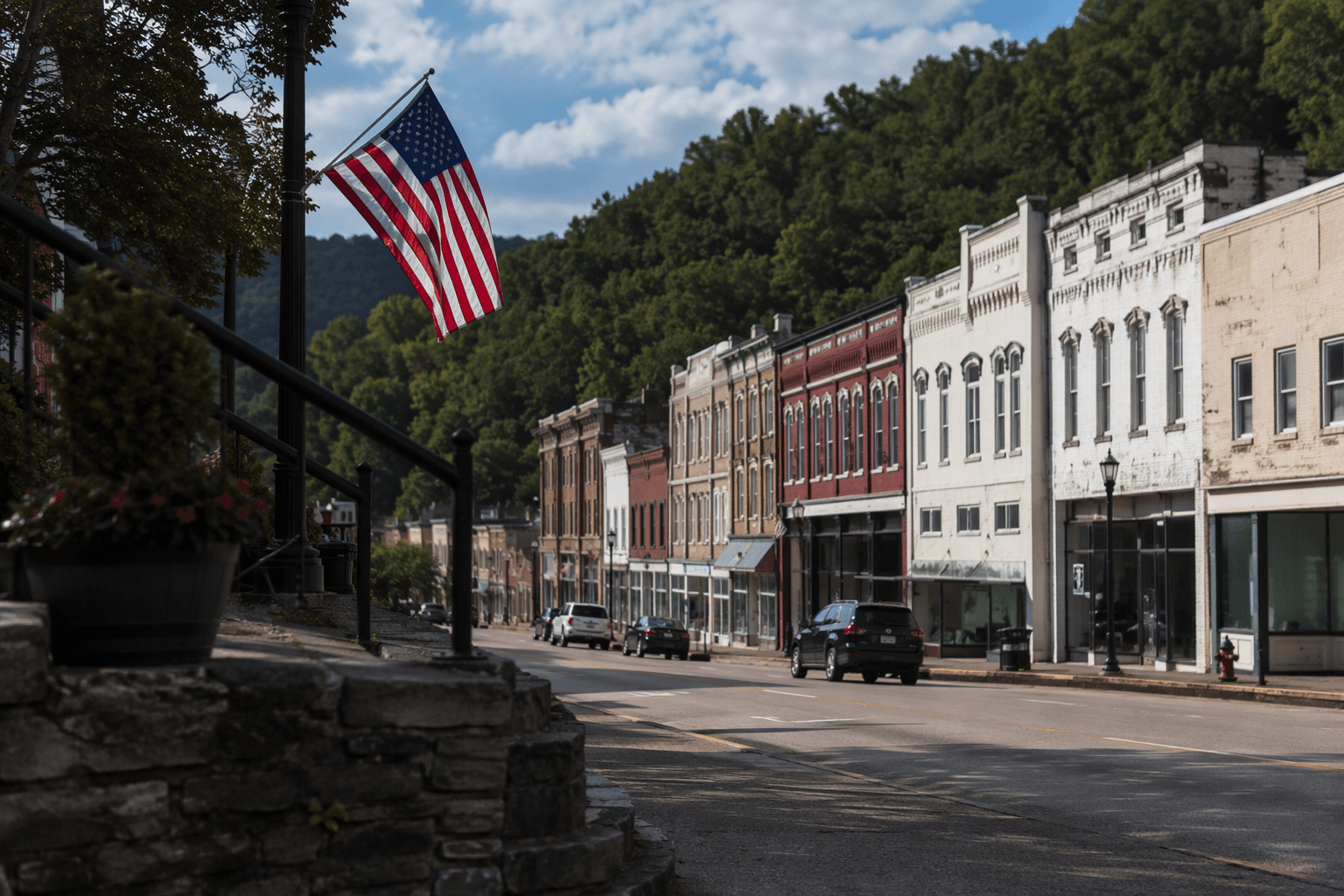
Owsley County’s entire National Register footprint fits on one property: the Moyers Buildings in Booneville, added in 1982 and listed under reference number 82001589. That scarcity matters because it makes the building more than an old storefront. It is the county’s only federally recognized historic place, and it sits at the center of how Booneville tells its own story.
Why one listing carries so much weight
The National Register of Historic Places is the federal government’s official list of places worthy of preservation, created under the National Historic Preservation Act of 1966. In a county with just one listing, the Moyers Buildings function as a public marker of what survives from Booneville’s commercial past and what still might be documented, protected, and reused. The nomination form places the building in Booneville, Owsley County, Kentucky, and the property’s presence on the Register gives local historians a fixed point of reference instead of a broad, unorganized memory.
That limited footprint also gives the site symbolic leverage. The Moyers Buildings are described as the oldest commercial building in Booneville and the oldest brick building in town, so the listing is not just about age on paper. It identifies a structure that already anchors the town’s built environment, which is why preservation advocates often treat such a building as the seed for broader downtown storytelling.
What National Register status does, and does not, provide
For residents trying to understand the designation in practical terms, the simplest answer is that National Register listing is recognition first, regulation second. It is not a local zoning rule, and it is not a blanket preservation order. A private owner does not automatically lose control of the property just because it is listed.
Here is the useful shorthand:
- The listing puts the building on the official federal inventory of historic places worthy of preservation.
- It does not automatically create restrictions on a private owner’s everyday use of the property.
- It does not, by itself, bring a check in the mail or guarantee a grant.
- It can, however, strengthen a case for rehabilitation funding and make the property easier to market as a heritage asset.
For the Moyers Buildings, that distinction matters. If the building remains in private hands, its future still depends on the owner’s plans, the condition of the structure, and whether outside money can be matched with a viable reuse. The National Register label does not solve those problems, but it can make them easier to approach.
Where the money can come from
The federal Historic Preservation Tax Incentives program is the most concrete financial tool tied to National Register status. It is aimed at historic commercial or other income-producing properties and offers a 20% federal tax credit on qualified rehabilitation expenses when the work is substantial and the building keeps its historic character.
That does not mean every listed property qualifies. It means the Moyers Buildings could fit the program only if the building is used in an income-producing way and the rehabilitation meets the federal standards that come with the credit. For a small county with one listed site, that is a major practical pathway because it connects preservation to real redevelopment math, not just nostalgia.
The listing also helps with visibility. Being on the National Register can make a property easier to feature in local history materials, walking tours, tourism brochures, classroom projects, and downtown promotion. It does not create those uses automatically, but it gives Booneville a nationally recognized anchor that can help tell visitors why this specific block, and this specific building, matter.
A closer look at the Moyers Buildings
The building itself gives Owsley County’s preservation story its texture. It was built in 1888 as a general store by B. G. Moyers, who was a merchant at the time. The bricks were burned at a local kiln down on Buck Creek, a detail that ties the structure directly to the county’s own material history rather than to imported or standardized construction.
Architecturally, the building is described as a two-story, front-gable structure, three bays wide, with pilasters separating segmentally arched openings on the facade. One source also notes original 2/2 wooden double-hung sash windows still in place. Those surviving details matter because they show how much of the original commercial fabric remains visible after more than a century of use.
That physical survival is part of why the building stands out in Booneville. A structure built for everyday trade in 1888 has outlasted the businesses, owners, and street life that once surrounded it. Even the sparse county-level listing page says something useful by omission: there is still far more local history in Owsley County that has not been gathered into a formal public record.
How leaders and property owners can turn the designation into a community asset
The National Register listing becomes useful only when someone builds on it. For Booneville, that means treating the Moyers Buildings as a site for interpretation, not just a line in a database. Local leaders, property owners, and preservation-minded residents can use the building as the starting point for signage, photography, school projects, and downtown history materials that explain why the town’s oldest commercial brick building is still standing.
The most practical next steps are straightforward:
1. Document the property thoroughly, using old photographs, deeds, oral history, and the nomination record.
2. Keep the building visible in downtown planning so it remains part of Booneville’s public identity.
3. If a substantial rehabilitation is planned, evaluate whether the building’s use can qualify it for the federal historic tax credit.
4. Match any rehabilitation with a clear public story, so the building supports both investment and civic memory.
That is where scarcity becomes leverage. Owsley County has only one National Register site, but that single listing already carries enough history to shape how Booneville sees its past and how it imagines the next phase of its downtown.
This article was produced by Prism’s automated news system from verified source data, official records, and press releases, then run through automated quality and moderation checks before publishing. The system is built and supervised by the people who set the standards it runs under. Read our full AI policy.
Did this article answer your question?