Tell City water department details service scale, online customer tools
Tell City’s water page shows where service starts and how to use online account tools. It also spells out the wells, pipelines, and capacity behind Perry County service.
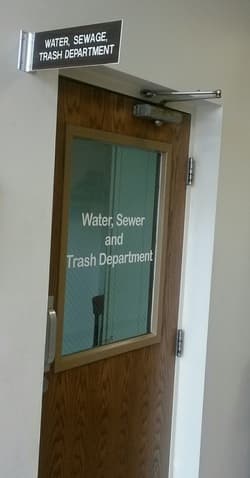
Tell City residents who need to pay a bill, start service, or close an account can use the water department’s page as a quick utility desk. The same page also explains where the city’s drinking water comes from and how large the system is, which makes it useful far beyond a simple contact page.
What the water page lets residents do
The most immediate value of the Tell City Water Department page is practical: it connects customers to online payment, termination of utility service, and a utility service application. That matters for longtime homeowners, new arrivals, landlords, and business customers who need to handle routine water-account tasks without a trip across town.
For a city utility, that kind of access is more than convenience. It is part of how the system keeps pace with the everyday churn of households, rentals, and businesses in southern Perry County. The page puts basic account functions in one place, which makes it easier to keep service moving when people are moving in, moving out, or changing billing needs.
The scale behind the tap
Tell City’s Water Department serves 3,450 households and industrial customers in southern Perry County. That is a sizeable footprint for a community the size of Tell City, and it helps explain why the department emphasizes capacity, pipelines, and well fields rather than just customer service forms.
The system relies on 11 wells that tap a freshwater aquifer underneath the Ohio River. Department figures say it can pump 1,580 gallons per minute and filter 2,885 gallons per minute, with about 154,500 feet of pipeline running throughout the community. Taken together, those numbers show a utility built to serve not only homes, but also industrial users that depend on steady pressure and reliable treatment.
Those figures also matter for day-to-day reliability. A network of that size suggests the city is serving a spread-out service area, not a compact downtown block, and that maintenance of mains and well capacity is central to keeping water moving. For Perry County households, the important point is simple: the water service is a regional-scale operation anchored in local infrastructure.
Where the drinking water comes from
Tell City’s 2024 Consumer Confidence Report gives the system a clearer operational identity. The report covers January 1 to December 31, 2024, identifies the system as Public Water System ID IN5262004, and lists active wells including WELL #1, WELL #3A, WELL #5, WELL #6A, WELL #7, WELL #8, and WELL #9.
The 2023 report adds one detail that is easy to miss but important for local understanding: Tell City’s drinking water is drawn from an aquifer through wells, not taken directly from the Ohio River. That distinction matters because it shows the city is depending on groundwater beneath the river corridor, then treating and monitoring that water before it reaches homes and businesses.
The report also notes that people who are immunocompromised, elderly, or infants may be more vulnerable to contaminants, and it points residents toward the U.S. Environmental Protection Agency Safe Drinking Water Hotline. In plain terms, the message is that the aquifer is the source, but treatment, monitoring, and oversight are what make the supply safe enough for daily use.
Who oversees the system and how to reach it
The 2024 report gives residents direct contact points for the utility. It lists the Tell City Water Department business office at 812-547-3266, Superintendent Brent Badger at 812-548-4044, and the Tell City Water Treatment Plant at 812-547-3751. It also says monthly Water Board meetings are held on the third Monday of the month at 7:00 p.m. at City Hall.
That schedule gives residents a clear place to understand oversight, not just service delivery. A water system this size is part infrastructure and part public governance, and the meeting calendar shows where those two pieces come together. For anyone watching city operations, the Water Board is one of the places where long-term reliability, maintenance, and public accountability are discussed in the open.
Why groundwater geology matters in Perry County
The source of Tell City’s water also fits the county’s broader geology. Indiana Department of Natural Resources aquifer mapping relies heavily on the Water Well Record Database and other geologic data, which is the kind of technical work needed to understand what lies beneath a river-adjacent community.
A Perry County water-resources summary says wells in the Ohio River Outwash Aquifer Subsystem are commonly completed at depths of about 60 to 150 feet. That lines up with Tell City’s groundwater-dependent system and helps explain why the city’s water supply is tied to local aquifer conditions rather than a surface-water intake. In a county shaped by the Ohio River, the underground water system is doing much of the quiet work.
The water system and the wastewater system work together
Tell City’s utility story does not stop at drinking water. The Tell City Waste Water Department says its treatment plant serves citizens and industries in Tell City, plus Cannelton, Troy, and the Branchville Correctional Facility through the Branchville wastewater force main. That wider service area shows how public works in southern Perry County are interconnected across municipal lines and major institutions.
The wastewater plant treats an average of 1.4 million gallons a day and can handle peak flows of 7.5 million gallons. It also operates more than 100 miles of pipeline and 28 lift stations. Those numbers matter because they show the city’s water infrastructure is supported by a large sewer network that helps protect health, manage growth, and serve industrial demand.
A system still being maintained and improved
Tell City’s water utility is not just a fixed map of wells and pipes. A city water-upgrade report says the city has been advancing a 14th Street main replacement project, which signals continuing work to maintain and improve the system’s backbone.
That kind of project fits the broader picture shown on the department page: a utility with deep local reach, substantial pumping and filtration capacity, and a service network that has to be kept in working order block by block. For Tell City and southern Perry County, the water department is best understood as a living public system, one that connects household routines, industrial operations, and city oversight every day.
This article was produced by Prism’s automated news system from verified source data, official records, and press releases, then run through automated quality and moderation checks before publishing. The system is built and supervised by the people who set the standards it runs under. Read our full AI policy.
Did this article answer your question?