Fort Curtis anchored Union defenses that repelled Confederate attack in Helena
Fort Curtis still marks the high ground that saved Helena, and the surviving batteries and downtown sites make Phillips County’s Civil War ground a year-round classroom and tourism asset.
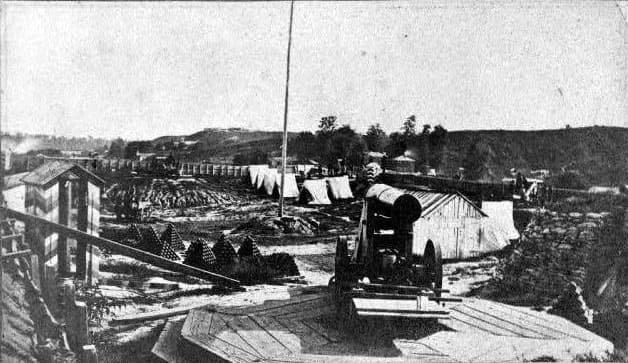
Fort Curtis still sits where Helena’s fate was decided: on the high ground between the old Battery B and Battery C positions, inside a defensive ring that turned a Mississippi River port into one of the Union’s most important footholds in eastern Arkansas.
Helena’s high ground became the point of the war
When the Union Army of the Southwest occupied Helena on July 12, 1862, commanders moved quickly to hold the town’s approaches and the river landing below. Helena sits at the end of Crowley’s Ridge, and that geography gave the defenders a natural advantage: the hills around town overlooked the roads and low ground Confederate forces would have to cross to reach the port.
That advantage shaped the layout of the defenses. Four batteries, A, B, C, and D, were built on the outskirts of the city to protect the roads leading in. Fort Curtis served as the center of that system and as an important command post in eastern Arkansas for about a year. The fort was dedicated on October 30, 1862, after Federal troops and freed slaves worked together to construct the fortifications.
Why the Battle of Helena turned on these works
The Battle of Helena came on July 4, 1863, when Confederate forces under Lt. Gen. Theophilus Holmes attacked to relieve pressure on Vicksburg and push Union forces out of Arkansas. Roughly 12,000 combatants took part, including about 4,100 Union defenders and about 7,500 Confederate attackers.
The assault centered on the batteries first, because breaking those outer positions offered the best chance to crack the Union line. Instead, the defenses held, and Helena remained in Union hands. The battle is remembered as the last major Confederate offensive in Arkansas. The Confederate push failed to change the larger campaign around Vicksburg.
The river mattered too. The U.S.S. Tyler patrolled the Mississippi during the fighting, tying Helena’s land defenses to control of the waterway below the bluffs.
What you can still stand inside today
Fort Curtis itself, located downtown near Perry and Columbia Streets, is the clearest place to start. The reconstructed fort lets visitors read the battlefield from the center of the Union line instead of from the edge of town. Its location between Batteries B and C is the key clue: the fort was not an isolated post, but the anchor of a connected system meant to cover every approach into Helena.
Battery C Park is another essential stop. It sits on a hilltop site associated with one of Helena’s four Civil War batteries and is used for interpretation of the Battle of Helena. From that elevation, the artillery positions could see the routes coming into town, and that visibility helped Union gunners command the approaches from the ridge line.
The broader battlefield still includes the other battery locations, the Confederate Cemetery, and the downtown interpretation sites the Delta Cultural Center ties together.
How the Delta Cultural Center connects the places
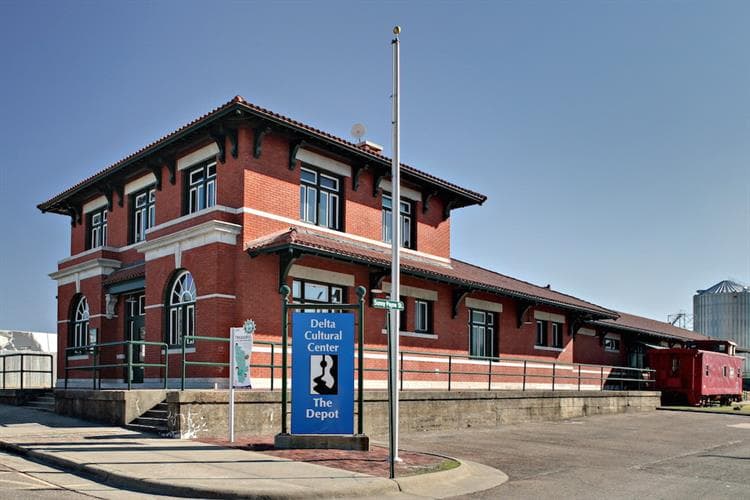
The Delta Cultural Center opened in 1990 with The Depot as its first property, and it now uses living history programs to link several of Helena’s Civil War sites into one accessible narrative. Its tours include Fort Curtis, the Moore Horner House, Freedom Park, and Battery C Park, often with costumed Civil War soldiers and civilians.
The battlefield is a set of places spread through historic downtown Helena that can be walked, compared, and interpreted in sequence. Visitors can start at Fort Curtis, move to Battery C Park, and then connect the military story to the civilian landscape that surrounded it. That sequence shows how Helena functioned as a garrison town deep in enemy territory, with Union authorities using it as a base for patrols and expeditions into the surrounding countryside.
Why Phillips County still has something to gain
Helena’s battlefield has current value because it works in three directions at once: heritage tourism, classroom use, and preservation. The sites bring visitors into downtown Helena-West Helena in a way that supports local businesses and gives the county a destination rooted in place. The fort, the batteries, and the cemetery also give teachers a way to show students how geography, war, emancipation, and river commerce collided in one county seat.
The battlefield is legible because of what remains visible: the hilltop positions, the downtown fort location, the battery sites, and the cemetery landscape. Phillips County does not have to rely on a distant museum to tell this story, because part of the battlefield is still standing in the city itself.
This article was produced by Prism’s automated news system from verified source data, official records, and press releases, then run through automated quality and moderation checks before publishing. The system is built and supervised by the people who set the standards it runs under. Read our full AI policy.
Did this article answer your question?