Phillips County native builds nursing career from Marvell roots
From Turner to Marvell and into nursing, Catlett’s path shows why Phillips County needs homegrown health talent and the training pipeline to keep it.
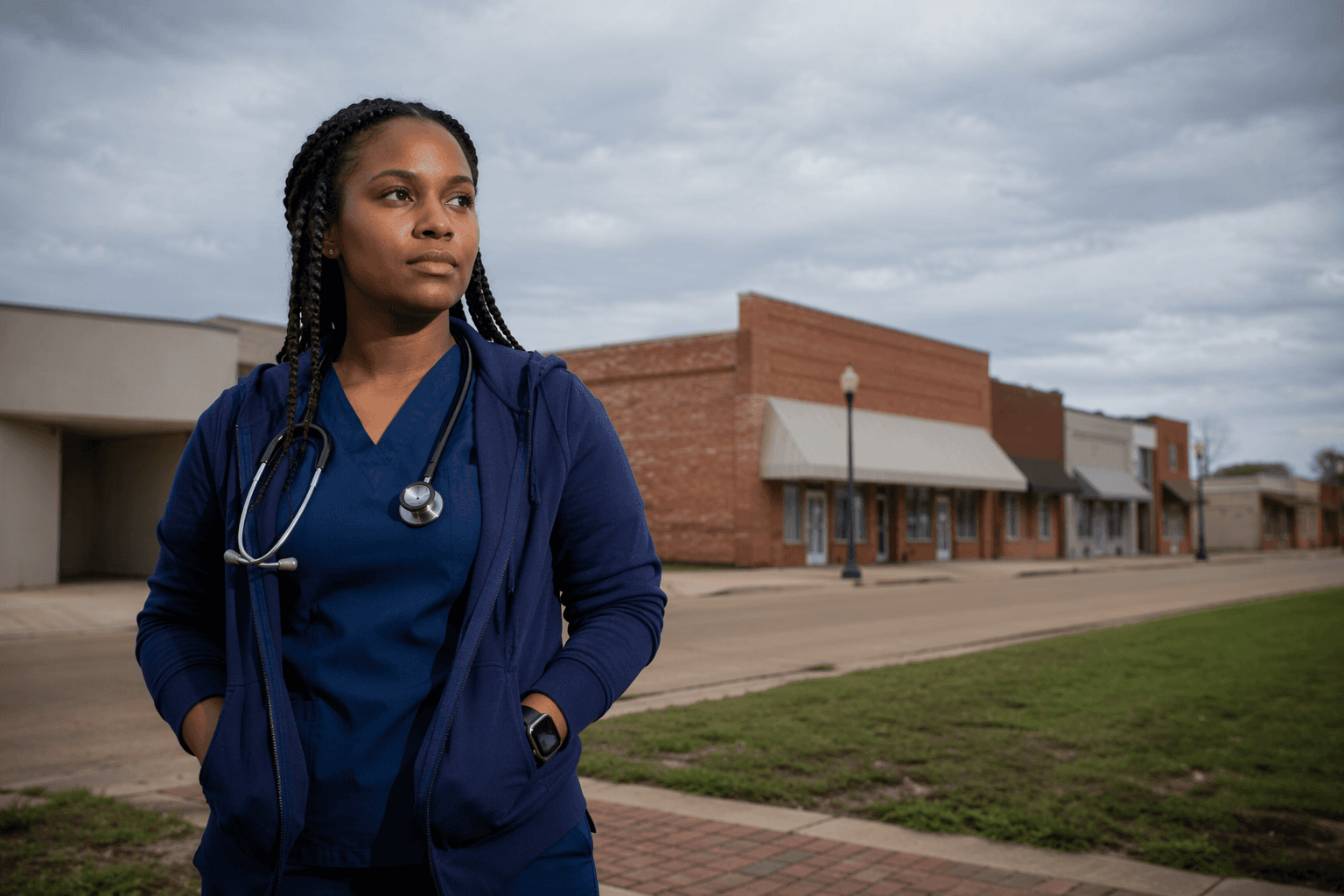
A Turner native who came up through Marvell Academy and the basketball court, Cat (Russell) Catlett now fits a need Phillips County feels every day: homegrown health workers who know the Delta and choose to stay in it. Her path from small-town roots to nursing leadership is personal, but the local payoff is practical. It connects one resident’s career to the clinics, colleges, and staffing gaps that shape care across the county.
From Turner to Marvell Academy
Catlett graduated from Marvell Academy in 2010, and her school years already showed the mix of discipline and competitiveness that would carry into her professional life. She stood out in basketball and earned All-Star honors, a detail that matters because it says something beyond athletics: she learned how to show up, work with a team, and handle pressure in public.
That kind of background resonates in Phillips County, where many families know what it takes to build something steady from limited local options. Catlett’s story is not a straight line from school to a single job title. It is a local example of how talent can move through different stages of growth and still remain rooted in the same place.
A career that did not begin in nursing
Before nursing became the center of her work, Catlett pursued interests in skincare and aesthetic medicine. That matters because it shows a career shaped by service long before it became a nursing résumé. The thread running through those choices is care for other people, whether through appearance, confidence, or more formal clinical work.
For Phillips County readers, that non-linear path is familiar. Many people in the Delta move between jobs, training tracks, and family responsibilities before landing in a field that fits both their skills and their community’s needs. Catlett’s career arc shows that nursing does not always begin with a direct march through one program and one job. Sometimes it is built over time, from work that teaches patience, trust, and attention to detail.
Why the county’s health-care map matters
Catlett’s story lands in a county where health care depends on a small but important network of local access points. The Arkansas Department of Health lists the Phillips County Local Health Unit in Helena-West Helena, a satellite clinic in Lake View and Wabash, Helena Family Health Center in Helena-West Helena, and East Arkansas Family Health Center-Marvell in Marvell. Those names are not abstract infrastructure. They are the places where residents go for care, follow-up, and the kinds of everyday health needs that keep communities functioning.
A county with multiple clinics still depends on people to staff them. Nurses, nursing assistants, and allied health workers are the difference between a health facility that exists on paper and one that can actually serve patients. That is why profiles like Catlett’s matter here: they show what it looks like when a Phillips County native becomes part of the workforce that keeps those doors open.
The pipeline Phillips County can build on
Phillips Community College of the University of Arkansas operates a Helena-West Helena campus that serves Phillips County and the surrounding Delta region. Among its workforce offerings are nursing and allied health programs designed to meet local employment needs and create a pipeline into area jobs. For students deciding what to do after high school, that makes the path clearer: train nearby, build skills nearby, and, if possible, work nearby.
That local pipeline is especially important in a county where leaving for training can easily become leaving for good. Catlett’s example shows the value of a Phillips County upbringing that leads to a professional role without erasing hometown identity. For students at Marvell Academy, Helena-West Helena schools, or elsewhere in the county, it is a concrete reminder that a stable health-care career does not have to begin in a distant city.

What the workforce numbers say
The need is bigger than one county. The Arkansas Department of Health says its Health Professions Manpower Assessment is the state’s primary source of data on the health-care workforce, which is the kind of planning tool counties and colleges need when they are trying to match training to demand. The Arkansas Hospital Association has said the state faced a shortfall of 9,000 registered nurses, and that shortage was expected to persist.
At the national level, the Health Resources and Services Administration defines health-workforce shortages as the point where the supply of providers cannot meet patient demand. Its nursing projections continue to show concern about the balance between supply and demand. In plain terms, that means the problem is not just whether there are enough training slots. It is also whether enough licensed workers stay in the field and in the places that need them most.
What Catlett’s example means now
Catlett’s rise from Turner to Marvell Academy to nursing leadership gives Phillips County something more useful than a feel-good profile. It shows students and families what a local career in health care can look like when a resident combines discipline, education, and a willingness to grow through different stages of work. It also reminds the county that local pride and local workforce development are linked.
When a Phillips County native becomes the kind of nurse the region needs, the benefit extends beyond one résumé. It strengthens the case for local training, local mentorship, and local retention in a county where every nurse matters.
This article was produced by Prism’s automated news system from verified source data, official records, and press releases, then run through automated quality and moderation checks before publishing. The system is built and supervised by the people who set the standards it runs under. Read our full AI policy.
Did this article answer your question?