Phillips County’s Doughboy monument honors local World War I service
Phillips County’s downtown Doughboy is a 1927 World War I memorial built by a countywide campaign, and it still anchors Helena-West Helena’s civic memory.
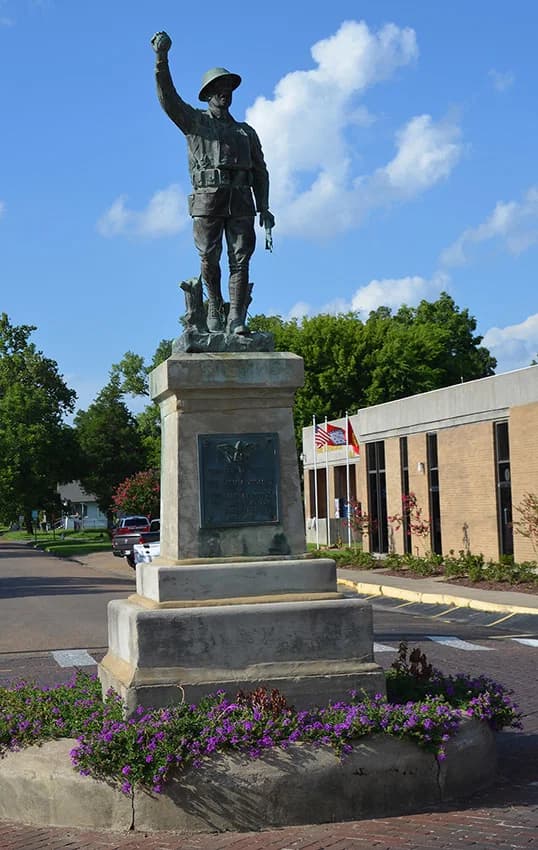
The Spirit of the American Doughboy is one of Helena-West Helena’s most visible downtown history markers, a 1927 monument that still anchors the Phillips County courthouse area. It honors local men and women who served in World War I, while also functioning as a public landmark that ties civic identity, heritage tourism, and local pride to a single place visitors can actually stand beside today.
A downtown landmark with countywide meaning
The statue belongs to the nationally recognizable E. M. Viquesney Doughboy tradition, the kind of public art communities across the country used to commemorate service in the First World War. In Phillips County, that familiar form took on a distinctly local role because it was not simply installed and left alone. It became a shared county project, tied to land, fundraising, and civic decisions made in Helena.
The Encyclopedia of Arkansas entry on the monument places that effort in context: the Phillips County Memorial Association worked for nine years before the monument was erected. That long timeline matters because it shows remembrance here was organized, financed, and carried across years of persistence. The project also drew support from the Seven Generals Chapter of the United Daughters of the Confederacy and the City of Helena, which gave the memorial a broad civic base rather than a single sponsor.
Built through civic effort, not quick ceremony
The monument’s history reads like a local coalition. The City of Helena gave the land where it stands, and citizens from Phillips County contributed to its purchase, making the memorial a county-owned symbol in more than name. A Phillips County Historical Quarterly reference describes it as a World War I memorial erected in 1927 by Phillips County citizens, which underscores how deeply the effort belonged to the people who lived there.
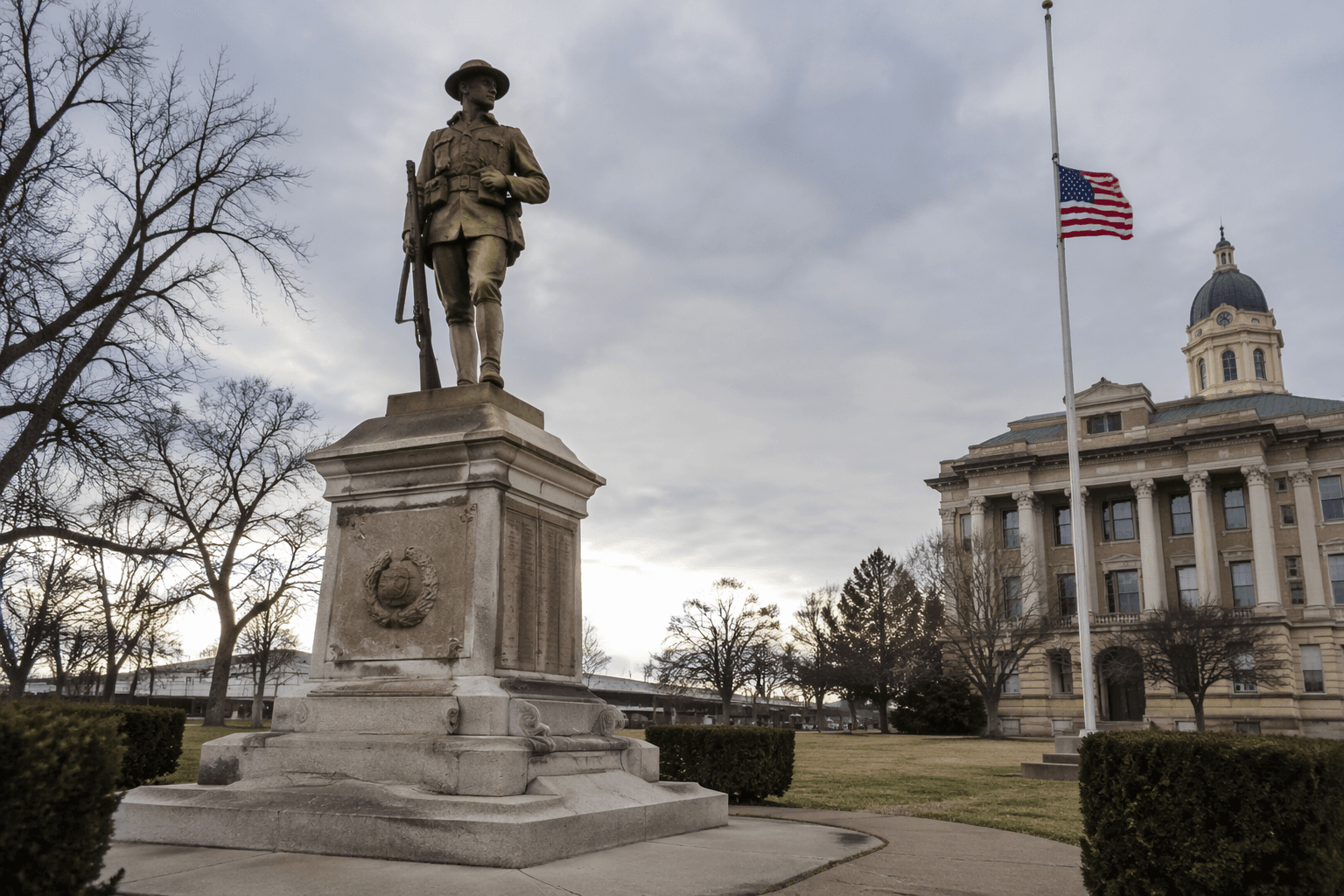
That ownership still matters because downtown landmarks work best when they feel embedded in place, not detached from it. The Doughboy does that in Helena-West Helena by standing in a public civic setting rather than behind a fence or inside a museum, where it becomes part of everyday downtown sightlines. For visitors moving through the courthouse area, it is a clear, recognizable stop that links military memory to the city’s public core.
A precise date and a formal historic record
The National Register of Historic Places registration form gives the monument a firm documentary frame. It identifies the site as PH0260S and says the monument was dedicated on July 10, 1927. That same listing places the Spirit of the American Doughboy on the National Register of Historic Places as of May 23, 1997, giving the memorial formal recognition as a historic asset in Phillips County.
Those dates are useful because they separate the monument’s life as a civic object from the broader history it commemorates. The dedication date marks a specific moment when Phillips County made its public statement about World War I service, while the National Register listing shows later generations continued to treat the site as worth preserving. Together, the records show a memorial that moved from local initiative to historic landmark status without losing its downtown function.
What stands there and what the site has endured
Visitors at the Phillips County courthouse area see more than a bronze soldier. They see a memorial that has survived decades of weather, public use, and the occasional loss that comes with outdoor art. The Arkansas Delta Byways tourism listing says that for about 40 years part of the rifle barrel and the bayonet were missing, and a Doughboy database note says the bayonet was apparently stolen sometime during the 1970s.
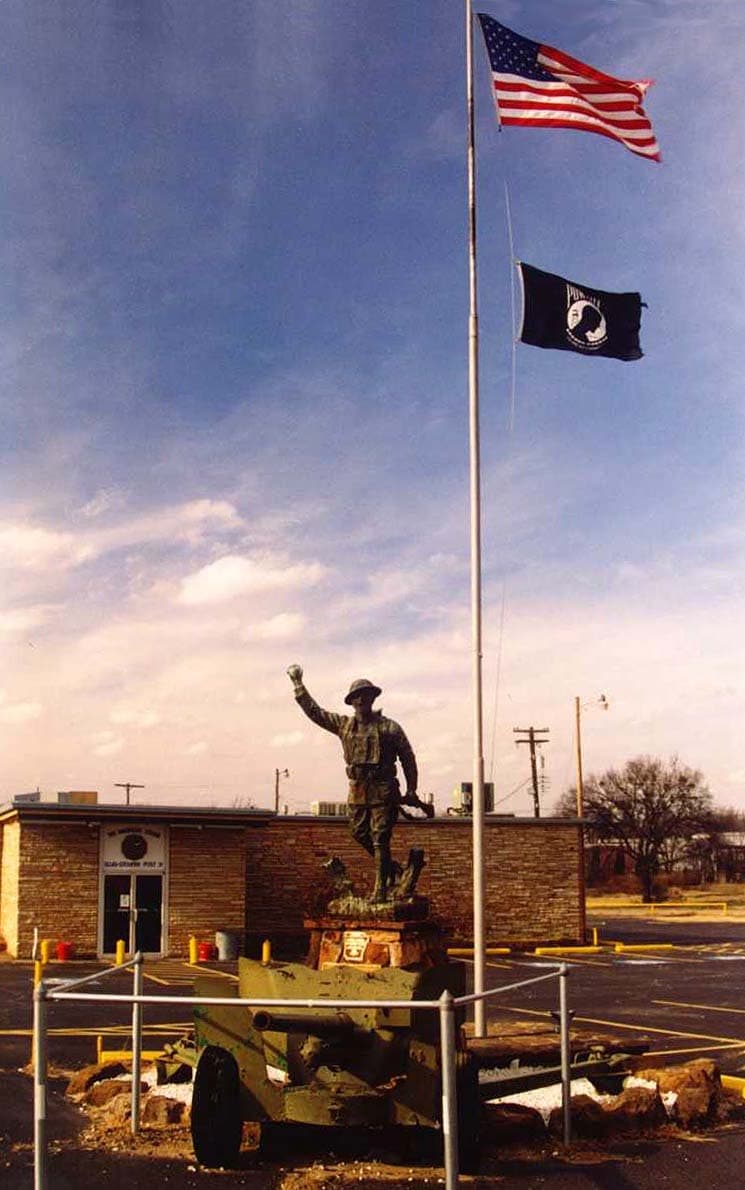
That damage is part of the monument’s story, not a footnote to it. The same tourism material says the statue needed cleaning and treatment after those losses, which shows that preserving a downtown landmark requires active care. In practical terms, the monument’s condition over time tells the same story as its construction: this is a public object that has depended on community attention from the beginning.
How the monument fits into downtown Helena
The Doughboy also makes sense as part of a larger downtown heritage landscape. A 2018 Arkansas Historic Preservation Program walking-tour script for Historic Helena, led by Holly Hope and sponsored by Main Street Helena, placed the monument within a route that included Columbia Street and other historic downtown context. That matters because it shows the statue is not isolated as a single memorial; it is one stop in a broader public-history corridor.
That setting gives the monument value beyond commemoration alone. It helps connect World War I memory to the streets, buildings, and civic spaces that still define downtown Helena-West Helena, making the memorial useful to teachers, students, heritage visitors, and local families tracing Phillips County history. In a county where recognizable anchors help tell the story of place, the Doughboy remains one of the clearest examples of how preservation and public identity can occupy the same square of ground.
The Spirit of the American Doughboy endures because it is both specific and visible: a Phillips County memorial with a named history, a documented dedication, a National Register listing, and a downtown location that still gives the county a physical point of pride.
This article was produced by Prism’s automated news system from verified source data, official records, and press releases, then run through automated quality and moderation checks before publishing. The system is built and supervised by the people who set the standards it runs under. Read our full AI policy.
Did this article answer your question?