Sylvanus Phillips helped shape Arkansas Territory and inspired Phillips County's name
Phillips County's name still points back to Sylvanus Phillips, whose land claims, town-building and Helena roots shaped the county’s first public memory.
Phillips County still carries Sylvanus Phillips in its name, and that matters because the county’s beginnings were written in the same territorial-era forces he helped direct: land claims, town building, and local officeholding in southeastern Arkansas. In Helena-West Helena, the county seat, the documentary trail starts almost as soon as the county does, with land and court records beginning in 1820. That makes Phillips more than a historical footnote. His name remains one of the clearest links between present-day Phillips County and the Arkansas Territory that came before statehood.
Why the county name still points back to the territorial era
Phillips County was established on May 1, 1820, when this part of southeastern Arkansas was still being organized out of the Arkansas Territory and, in earlier county arrangements, from Arkansas County. Today the county covers 690.36 square miles and had a 2020 Census population of 16,568, with Helena-West Helena serving as the county seat. Those numbers matter because they show how a county built in the territorial era still centers its public life in one compact city, while the county name continues to carry the memory of the man associated with its earliest settlement pattern.
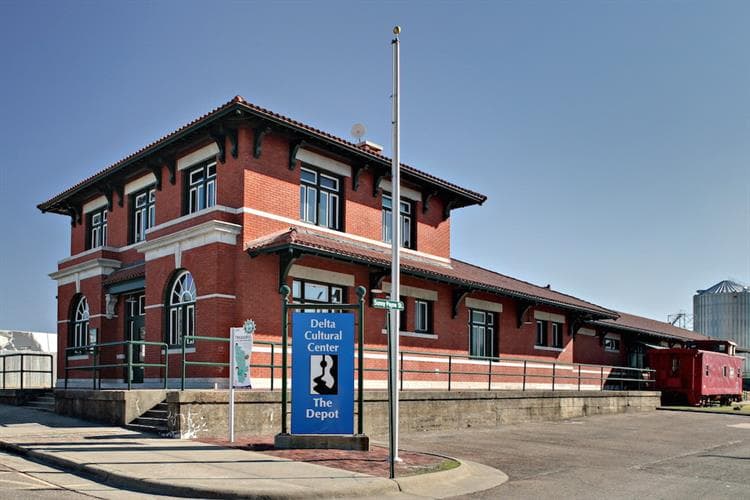
Helena-West Helena itself had a 2020 Census population of 9,519, covered 13.09 square miles, and sat at an elevation of 188 feet at 34º31’46″N 090º35’30″W. That geography helps explain why the county’s oldest stories still cluster there. The courthouse, the town layout, and the paper trail of land and court records all point to Helena as the place where Phillips County began to take formal shape.
The man behind the name
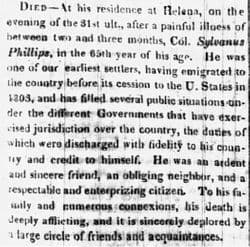
The Encyclopedia of Arkansas identifies Sylvanus Phillips as an early American pioneer and Arkansas settler, born in 1775 and dying in 1830. It describes him as a prominent land speculator and town developer who held numerous offices in southeastern Arkansas and helped shape settlements and communities in Arkansas Territory just before statehood. That is the core reason his surname stayed attached to the county: he was part of the machinery that turned frontier land into organized communities.
Family-history material adds another layer by placing Phillips in Mecklenburg, North Carolina, as the son of William Phillips and Lussy Buchanan Phillips, and saying he left home at an early age to travel westward. The same material places him in the world of politics and speculation by the early 1800s, which fits the broader territorial pattern of men whose influence came through land, office, and relocation. His early life is not as fully documented as his public role, and that is often how local history survives in Arkansas. The record preserves what a man did to a place more reliably than it preserves the details of his childhood.
One source tied to family and land claims says Phillips received 1,920 acres, claimed 800 arpents of land in 1803, and made Spanish land claims for the Territory of Arkansas. Those details show the scale of the holdings and the legal complexity that shaped settlement in the Mississippi River region. In the Arkansas Territory, land was never just acreage. It was leverage, influence, and a way of deciding where communities would grow.
Helena and the town-building story
A 1954 article quoted in a JSTOR result says Sylvanus Phillips, an emigrant from North Carolina, "laid out the town of Helena in 1820." That claim places him directly in the story of the county seat, not just the county name. It also helps explain why Helena remains central to Phillips County’s identity. The town was not an afterthought to the county’s creation. It was part of the same territorial project.
That connection still shows in the way Helena-West Helena anchors the county. The city is small in area compared with the county as a whole, yet it carries the functions that matter most for public memory and local government. The town Phillips helped shape became the place where residents would later find county records, public offices, and the civic frame for telling the county’s own story.
How the paper trail keeps his era visible
FamilySearch notes that Phillips County began keeping land records in 1820, court records in 1820, and marriage records in 1831. Those dates are more than archival trivia. They show how quickly the county’s documentary life began after its creation, and they point to the courthouse as one of the places where Phillips County’s earliest history can still be traced. When a county’s records start the same year the county is formed, the settlement story and the government story are almost inseparable.
That paper trail also helps explain why the name still matters now. A county named for Sylvanus Phillips preserves a specific version of origin: land ownership, territorial influence, and organized settlement. It does not preserve every voice from the era, and that is part of the historical tension in Phillips County today. The county’s formal memory begins with men who acquired land, laid out towns, and held office, while the lives of many others remain harder to recover.
The county’s later history kept it in the spotlight
Phillips County did not leave the territorial era behind and become historically quiet. The Battle of Helena took place in Phillips County on July 4, 1863, during Grant’s Operations against Vicksburg. That battle fixed the county in another layer of Arkansas history, one shaped by war rather than settlement. It also means Phillips County carries two kinds of legacy at once: the territorial story that gave it its name, and the Civil War story that gave it a place in national military memory.
Taken together, those facts make Sylvanus Phillips more than a namesake. He stands at the intersection of land, law, and town building that formed Phillips County in 1820, and the county still reflects that origin in its courthouse records, its county seat, and the way local history is organized around Helena. In Phillips County, the name on the map still points back to the territory that made it.
This article was produced by Prism’s automated news system from verified source data, official records, and press releases, then run through automated quality and moderation checks before publishing. The system is built and supervised by the people who set the standards it runs under. Read our full AI policy.
Did this article answer your question?