West Helena fairgrounds became World War II prisoner camp
Phillips County farmers got 885 POWs after the fairgrounds camp opened, and the labor kept rice, cotton and livestock work moving across the Delta.
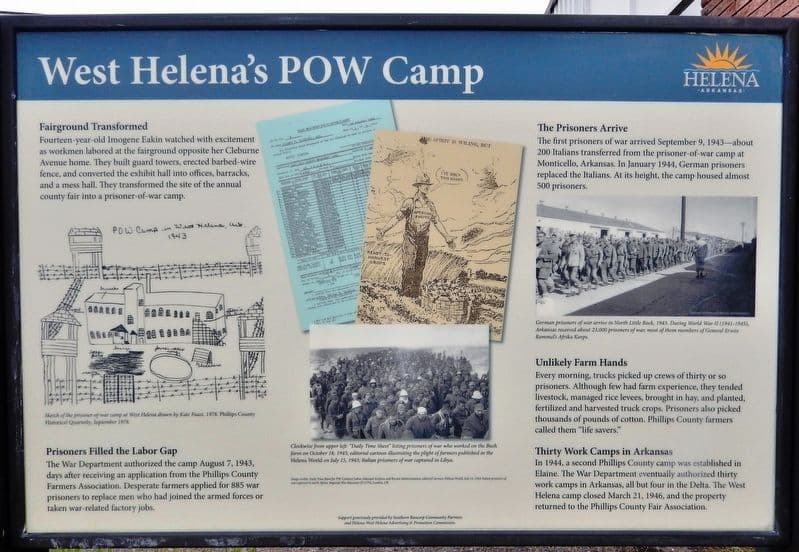
The Phillips County fairgrounds in West Helena became a World War II prisoner camp after local farmers asked the War Department for help replacing men lost to military service and war-related factory jobs. A historical marker on Plaza Avenue says the Phillips County Farmers Association pressed for 885 war prisoners, and the War Department authorized the camp on August 7, 1943.
The first prisoners arrived September 9, 1943, when about 200 Italian POWs were transferred from Monticello. German prisoners replaced the Italians in January 1944, and the camp held almost 500 prisoners at its peak. Every morning, truck crews carried the prisoners out to Phillips County fields and farms, where they worked livestock, rice levees, hay, truck crops and cotton. In a county built on agriculture, that labor became part of the daily machinery of wartime production.
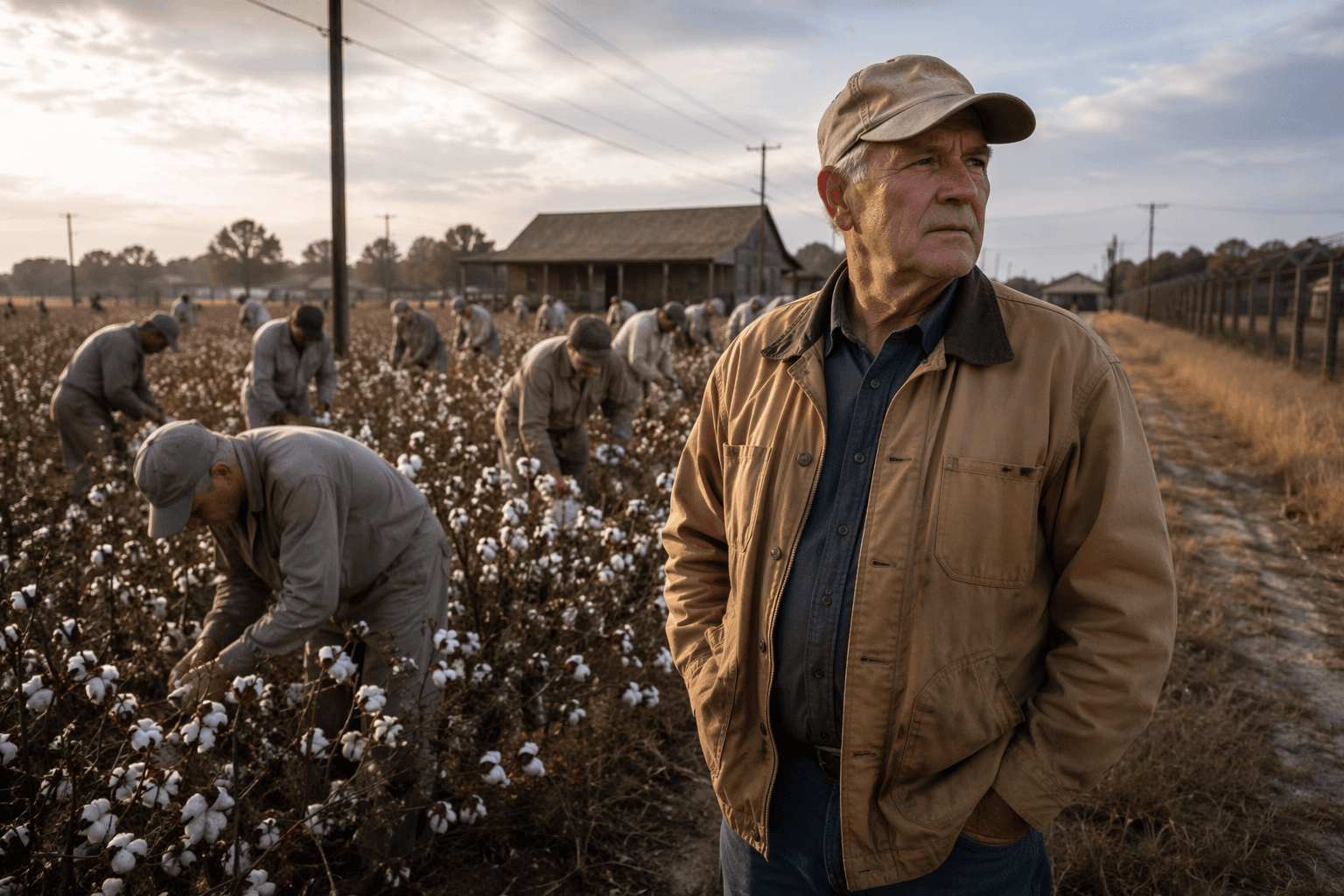
The marker records what the camp meant to farmers in plain terms: a steady supply of workers when local labor had been pulled away by the war. Phillips County’s farms needed hands in the rows, on the levees and around the barns, and the camp tied federal wartime policy directly to the county’s agricultural economy. A second Phillips County prisoner camp was established in Elaine in 1944, showing that West Helena was part of a broader county response to labor shortages, not an isolated arrangement.
What remains visible today is the site itself. The marker stands at the former fairgrounds location on Plaza Avenue, where the county’s annual fair once drew crowds and where wartime federal decisions briefly turned public land into a labor camp. The camp closed on March 21, 1946, and the property returned to the Phillips County Fair Association, leaving West Helena with a concrete reminder of how deeply the war reached into local farm life.
This article was produced by Prism’s automated news system from verified source data, official records, and press releases, then run through automated quality and moderation checks before publishing. The system is built and supervised by the people who set the standards it runs under. Read our full AI policy.
Did this article answer your question?