Marks Amtrak stop shows rural rail travel in Quitman County
Marks has one of Quitman County’s few everyday travel lifelines: a daily Amtrak stop with real reach, but almost no on-site amenities. For riders who can plan ahead, it can open Chicago, New Orleans, Memphis and beyond.

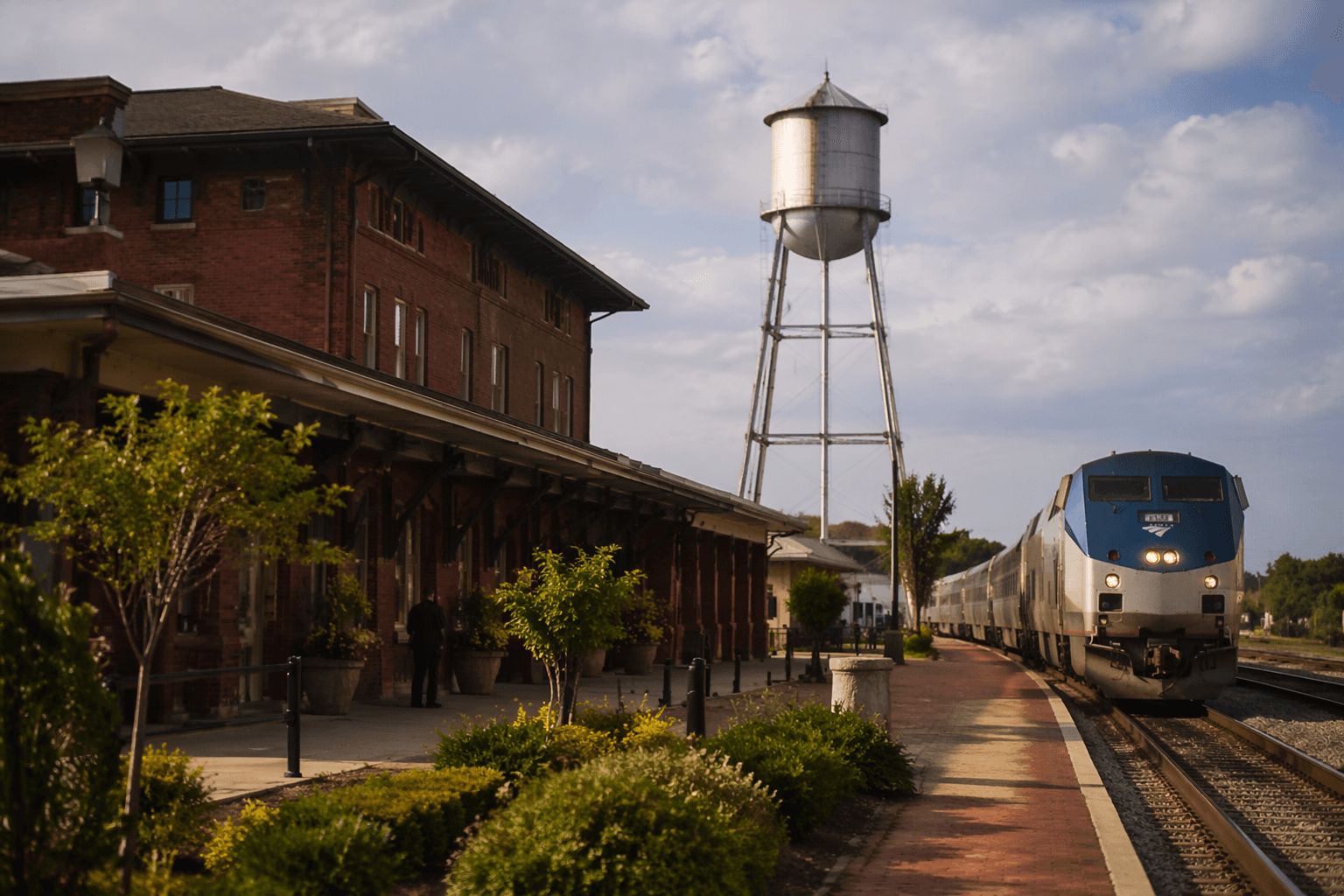
A small platform on Cherry Street gives Quitman County something rare in rural Mississippi: a passenger rail stop that runs every day and connects directly to the City of New Orleans line. For a county where most trips still depend on a car, a ride from the Northwest Mississippi Regional Station can mean a long-distance train instead of a long highway drive, but only if travelers arrive prepared.
What the Marks stop is, and where it fits
The station sits at 285 Cherry Street in Marks and serves the City of New Orleans route, Amtrak’s daily 900-mile train between Chicago and New Orleans. That route gives Quitman County a direct place on a corridor that links the Delta to two major metro areas and passes through Mississippi’s musical crossroads.
City of New Orleans service has been available at the Marks station since 2018. The stop is not an inherited legacy station with a century of continuous use. It is a modern addition to a rural county’s transportation map.
What travelers should expect at the platform
The Northwest Mississippi Regional Station is deliberately simple. It is a platform with shelter, and the list of what is not there tells most of the story: no ATM, no elevator, no payphones, no ticketing kiosks, no restrooms, no vending machines and no Wi-Fi. The station is also unstaffed.
That means the stop works best for travelers who are self-sufficient. Tickets need to be handled before arrival, meals and water should be brought along, and anyone planning a tight connection should account for the fact that there is no on-site staff to help with delays, baggage questions or last-minute changes.
Why this stop matters in a county with limited options
Quitman County does not have the kind of transportation network that makes missed trains easy to recover from. The Marks stop is one of the few public, fixed-schedule travel options in the county that can carry a resident far beyond the Delta. A rider can board in Marks and continue toward Memphis, Jackson, New Orleans and, on the full route, Chicago.
That kind of reach is especially valuable for people who do not drive, cannot make a long trip in a personal car, or need a rail option that avoids airport transfers and intercity bus schedules. That includes a student heading to a campus move-in, a worker taking a job interview out of state, or a family member traveling to see relatives in another city.

How far the train can realistically take Quitman County riders
The City of New Orleans line gives local riders a direct link to two major destinations and a string of intermediate stops. For Quitman County residents, that makes Marks a launch point for regional travel that would otherwise require multiple forms of transportation or a long drive to a larger hub.
At the same time, the line’s broad reach does not erase the realities of rural travel. The train is useful for longer trips, but it is not a substitute for local mobility. If a resident needs to get across Quitman County, the station does nothing to solve that problem.
How the station came to Marks
The station’s opening was scheduled for May 4, 2018, after about 20 years of planning.
County officials said the stop would help connect riders to other routes across the country and help revitalize downtown Marks. The project was funded with a mix of support, including a Federal Highway Administration grant, Mississippi Department of Transportation support, a Delta Regional Authority grant and a local match.
Who benefits most, and who still faces barriers
The stop is most useful for riders who can plan around the schedule, travel light and handle the trip without much handholding. A traveler with checked baggage, someone needing wheelchair assistance beyond what the platform can support, or a person who needs food, cash or a restroom before departure will feel the station’s limits immediately.
Those limits are especially important in a county with few transportation backups. If a ride falls through, if a train is delayed, or if a traveler arrives early, there is little on site to bridge the gap. The shelter helps, but it does not replace the services found at larger stations.
This article was produced by Prism’s automated news system from verified source data, official records, and press releases, then run through automated quality and moderation checks before publishing. The system is built and supervised by the people who set the standards it runs under. Read our full AI policy.
Did this article answer your question?