Marks Mule Train Legacy Shapes Quitman County Tourism and Civil Rights History
On May 13, 1968, 115 Quitman County residents left Marks in mule-drawn wagons bound for Washington; now an 11-marker interpretive trail is turning that journey into the county's economic future.
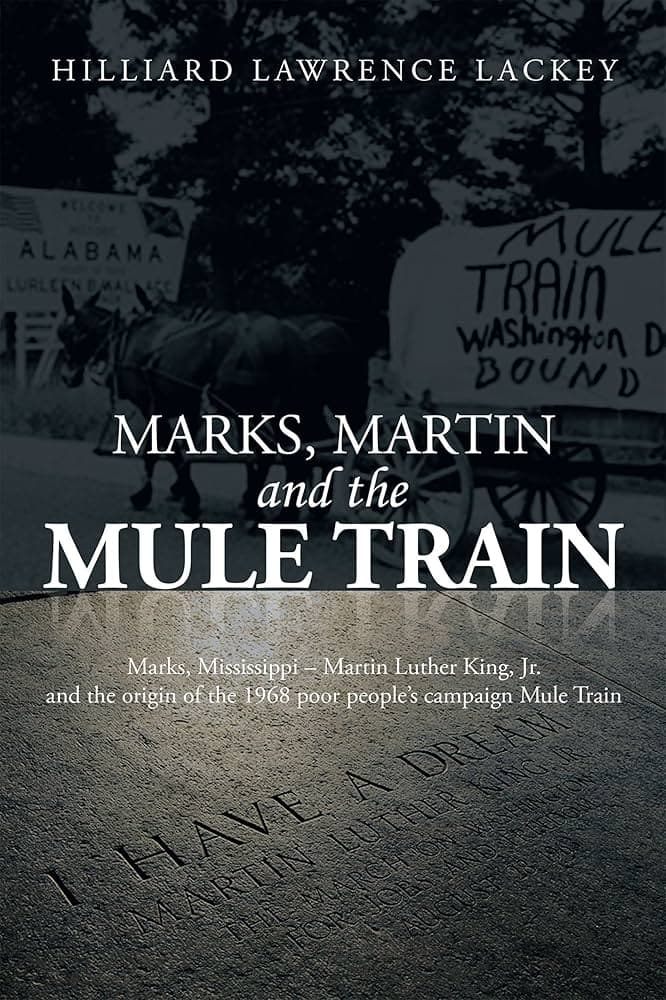
On May 13, 1968, 115 Quitman County residents, ranging in age from eight months to 70 years old, left Marks traveling in more than a dozen wagons. That caravan, now known as the Marks Mule Train, has shaped how the rest of the country remembers this small Mississippi Delta town and, increasingly, how Quitman County is choosing to build its economic future. The story it tells is extraordinary: a community so impoverished it moved Dr. Martin Luther King Jr. to tears became the launch point of a national anti-poverty campaign that drew 50,000 people to the nation's capital. Fifty-eight years later, the question facing Marks is whether it can finally convert that history into lasting civic and economic power.
What Happened Here, and Why It Still Matters
Dr. Martin Luther King Jr. visited Marks, Mississippi, to rally support for the Southern Christian Leadership Conference's (SCLC) "Poor People's Campaign," a nationwide march to Washington, D.C., to raise awareness of economic disparity and persistent poverty. On visits to Marks in 1966 and 1968, he was shocked by the number of destitute families and impoverished schools there. He decided to launch the campaign's march on Washington, D.C., from Marks, using mule-drawn wagons to dramatize its theme.
Speaking at the National Cathedral in Washington just days before his assassination, King made Quitman County's suffering part of the national record. When King spoke at the National Cathedral in his final Sunday sermon before he was killed in Memphis, he relayed the bleak conditions he had seen: "I was in Marks, Mississippi, the other day, which is in Quitman County, the poorest county in the United States. And I tell you I saw hundreds of black boys and black girls walking the streets with no shoes to wear."
After King's assassination on April 4, 1968, the SCLC did not stand down. Three marches were conducted in the streets of Marks, one of which was led by nearly 300 high school students and 13 teachers who left campus in protest of the arrest of SCLC organizer Willie Bolden, who had been visiting the high school recruiting volunteers for the Mule Train journey. The students and teachers marched through downtown to the jail located behind the county courthouse, where the peaceful protest was met with gun butts pointed in their faces by a drove of state troopers wearing riot gear. Several students and teachers were injured and later taken to the nearby hospital. That confrontation, far from killing the movement, only deepened local resolve.
The Mule Train headed out Highway 6 to Batesville, then southward to Grenada and Winona, then east to Columbus and on to Montgomery and Birmingham, Alabama, and finally to Atlanta, Georgia, where mules and passengers boarded trains for Washington, D.C. Along the way, passengers slept in wagons, cars, churches, and homes of local people. They met both harassment, in the form of bomb threats and heckling, and encouragement from onlookers as they made their way on highways and through towns. In its first month of travel, the Mule Train covered approximately five hundred miles, averaging about twenty-five miles per day.
On June 19, 1968, Quitman County's famous Mule Train rolled into the nation's capital and joined the large protest on the National Mall. The world watched as residents from Marks, as well as a reported 50,000 U.S. citizens, participated and marched on Washington, addressing anti-poverty issues within the nation.
What's Visible in Marks Today
The most concrete result of years of preservation planning is a walkable interpretive trail that officially opened on May 13, 2021. After three years of planning and hard work, the Civil Rights Marks Mule Train Interpretive Trail was unveiled to commemorate the 53rd Anniversary of the 1968 Mule Train and Dr. Martin Luther King Jr.'s Poor People's Campaign. This historic trail showcased eleven markers, displaying the history and activities which took place fifty-three years ago of Dr. King's visit to Marks and Quitman County, and earned Marks the distinction of being known as the 'Home of the Mule Train.'
The Small Town Center at Mississippi State University, comprised of architects and planners, in conjunction with the Quitman County Board of Supervisors, the Mayor of the City of Marks, and the Board of Aldermen, designed and installed 11 wagon wheel trail markers, some with benches, and seven wayfinding signs around the city of Marks. These markers signify the locations and places where Dr. King, members of the Southern Christian Leadership Conference including noted celebrities, Freedom Riders, and hundreds of civil rights community organizers, as well as scores of local leaders and residents emerged, creating this civil rights history, which is now documented and artistically displayed on the eleven interpretive markers.
One of those markers stands at the intersection of Roger Road and Martin Luther King Jr. Drive (State Route 3), the very highway that once carried the wagon train north. This historical marker was erected in 2015 by the Mississippi Development Authority Tourism Division. Marks is now a stop on Mississippi's Freedom Trail highlighting civil rights history.
The interpretive trail project was made possible through the funding of a 2018 National Park Service African American Preservation Grant and the collaborative partnership with Mississippi State University's Carl Small Town Center. That federal investment set the template for what continued public-private collaboration can accomplish here.
Who Is Driving Preservation Now
The institutional backbone of Marks' Mule Train memory is a tightly coordinated group of local partners. The Quitman County Board of Supervisors, the City of Marks Board of Aldermen, and the Mule Train Historical Society have all played central roles in moving interpretive work from planning documents into physical infrastructure. Velma Benson-Wilson, who as a high school junior in 1968 slipped through a crowd to catch a glimpse of King, went on to serve as Quitman County Administrator and later as Director of Quitman County Tourism and Economic Development. She was instrumental in the 50th Anniversary of Marks' Mule Train and Poor People's Campaign in 2018.

The organizers of the "Rebuild the Dream" anniversary symposium partnered with Dr. Charles Steele, the national president and CEO of the Southern Christian Leadership Conference, and extended invitations to SCLC leaders and activists who were in Marks during the spring of 1968 to help organize the Marks Mule Train and the Poor People's Campaign. That connection to national civil rights leadership is a strategic asset for any future grant applications or partnership proposals.
In 2015, Quitman County hosted its first annual Mules and Blues Fest. Centered on the Mule Train and Dr. Martin Luther King Jr.'s Poor People's Campaign, this event links the established Mississippi Blues Trail and the Mississippi Freedom Trail. The festival represents one of the most direct existing vehicles for converting historical interest into visitor spending.
A Realistic Visitor Itinerary
Marks sits about 90 minutes south of Memphis, Tennessee, making it accessible for a day trip or weekend visit from the regional hub. The 2018 opening of the Northwest Mississippi Regional Amtrak station in downtown Marks added a transit option that is rare in rural Mississippi and signals serious intent by regional planners. For visitors arriving by car or train, a half-day on the Mule Train Interpretive Trail is the logical starting point:
- Begin at the historical marker at the intersection of Roger Road and Martin Luther King Jr. Drive, where Dr. King stood and the wagons rolled north.
- Journey along the marked Mule Train Interpretive Trail to read, touch, and explore the content of each marker.
- Stop at the former SCLC field office at 802 Third Street in Marks, one of the trail's named anchor points, where organizers coordinated logistics for the wagon train departure.
- Visit the schools and churches where Dr. King spoke, rallying support from ministers, community leaders, and volunteers to help launch the second War on Poverty. Valley Queen Baptist Church, where King addressed the congregation in March 1968, is among the most historically significant.
- Tour the historic Marks Roadside Park, which has been used for commemorative picnic and community events tied to the Mule Train anniversary.
School groups and researchers should contact Quitman County Economic and Tourism Development in advance; oral history programming and guided tours are among the interpretive offerings available through county coordination.
What Funding and Permissions Come Next
The interpretive trail is built, but the larger vision for a permanent Mule Train interpretive center remains in the planning stage. Completing that vision requires navigating specific funding channels and institutional partnerships.
Each Mississippi Freedom Trail marker costs $10,000 to install, and for the first time, that fee has been 100% funded by additional money from Visit Mississippi. The Mississippi Freedom Trail is administered by Visit Mississippi in partnership with the Mississippi Humanities Council, with support made possible by a State Tourism Grant from the U.S. Economic Development Administration. Quitman County organizations can use this mechanism to propose additional markers that fill gaps in the trail narrative, particularly for sites not yet formally recognized.
Beyond markers, a permanent interpretive center would require a larger capital campaign, likely combining National Park Service preservation grants (the same category that funded the 2018 trail project), Mississippi Development Authority tourism funds, and private philanthropic investment. The Mule Train 50th Anniversary planning hub developed by the county already contains project descriptions and timelines formatted for grant applications, giving local organizations a ready-made documentation base to work from.
Quitman County is now becoming a nascent civil rights destination, with the potential to bring economic stimulus in tourism growth and the capacity to attract private investors and businesses for downtown and regional development. That potential depends on converting the trail's existing foot traffic into longer stays, which means Marks needs lodging investment, restaurant capacity, and guided tour operators to fill in what the markers alone cannot provide.
The Unfinished Reckoning
Quitman County remains on the federal list of the nation's persistent poverty counties, with more than 34 percent of residents living below the federal poverty line. The irony is not lost on longtime Marks residents: the county that inspired a national anti-poverty campaign is still among the poorest in the United States. That fact gives the Mule Train story a moral urgency that no other civil rights heritage site in Mississippi can quite claim. Honoring what happened here in 1968 is not merely an exercise in historical memory. It is, as Velma Benson-Wilson once put it, the beginning of finally opening a gift that has been sitting unopened for more than half a century.
Sources:
Know something we missed? Have a correction or additional information?
Submit a Tip
%2Ffit-in%2F200x300%2Ffilters%3Afill(white)%2Fprod%2F1058%2F482390%2FN7comsT2JaNbFuUoIMG_2599.png&w=1920&q=75)