Monarch Butterfly Spotted Near Marks, Signaling Spring Migration Through Quitman County
A monarch butterfly photographed near Marks on March 22 is Quitman County's first confirmed spring sighting — and a signal for gardeners to act now.
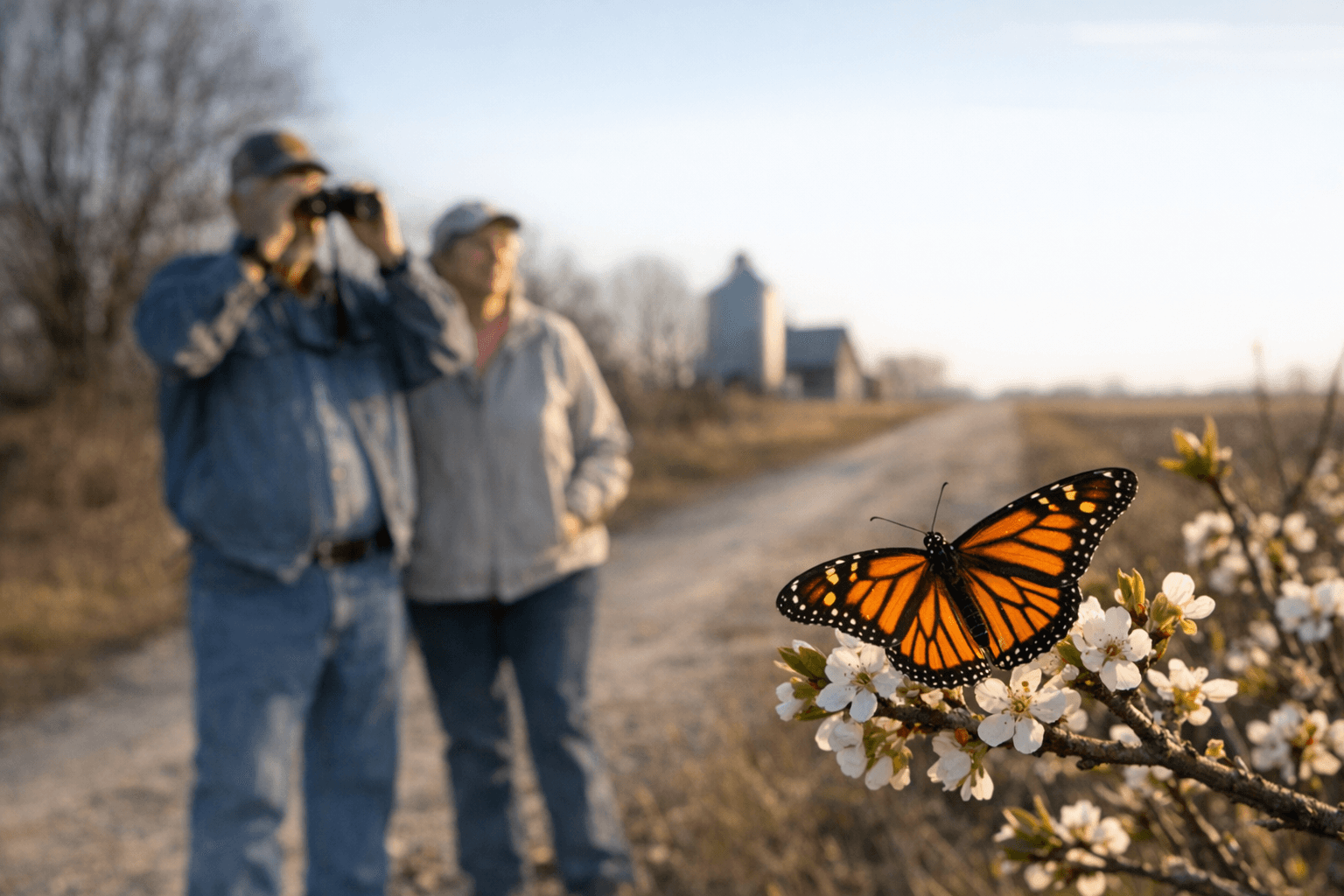
A single orange-and-black wing caught the afternoon light near Marks on March 22, and an iNaturalist user named elishaellis299 had the presence of mind to photograph it. That image, timestamped and geolocated in Quitman County, became the first publicly verified monarch butterfly sighting of the spring migration season in this part of the Mississippi Delta, entered into a citizen-science database used by researchers tracking pollinator movements across the Lower Mississippi Valley.
The sighting is not a guarantee of peak migration. Drought and a lack of rain in northern Mexico and southern Texas this spring have resulted in fewer blooms for migrating butterflies, which conservation biologists note can slow and weaken the northbound pulse. Cold snaps can be just as disruptive as heat waves, and a stretch of warm weather may bring migrants into a region only for a freeze or severe storm to knock back both flowers and milkweed. What one photograph near Marks does confirm is that at least one butterfly completed the first leg of the journey and found something worth stopping for in Quitman County.
Eastern monarchs begin flying north into Texas in March, reach the central U.S. by late April and May, and spread across the northern breeding range through summer. Quitman County sits squarely in the Delta flyway those butterflies use as they work their way north, making a late-March sighting here a meaningful phenological marker: the migration corridor is open, and early migrants are moving through. The first generation leaving Mexico are the offspring of the overwintering population, and each successive generation travels farther north, taking three to four generations to reach the northern United States and Canada.
What that means practically for yards and farms between Marks, Lambert, Crowder, and Falcon comes down to three decisions landowners can make right now.
Plant milkweed, and choose native species suited to Delta soils. Monarchs cannot survive without milkweed; caterpillars only eat milkweed plants, and monarch butterflies need milkweed to lay their eggs. For Quitman County's mix of moist bottomlands and drier roadsides, butterfly milkweed works in dry spots, swamp milkweed in moist soil, and whorled milkweed in tough, lean ground. Plugs, not seeds, give the fastest results: starter plants arrive with established root systems, making them much hardier and more likely to provide a food source for monarchs in their very first season.
Time pesticide applications carefully. When we plant or protect monarch habitat and avoid using pesticides, that habitat can be vital for ensuring crop pollination and also for reducing pest outbreaks. Early migrants passing through in late March and April are particularly vulnerable to broad-spectrum applications on field edges and roadsides. Insecticides should never be used in or surrounding pollinator habitats.
Hold roadside mowing on unmaintained margins through June where possible. Habitat can be created in any open space protected from untimely mowing or pesticide application. The roadsides that connect Marks to the rest of Quitman County function as linear corridors; a mowed ditch in April erases whatever milkweed and nectar plants were beginning to emerge.
Beyond the yard, the observation logged by elishaellis299 is itself a model for what conservation scientists need from this region. Journey North is actively looking for volunteers in Mississippi to monitor monarch activity and the location of milkweed. Any resident in Marks, Lambert, Crowder, or Falcon who photographs a monarch and submits it to iNaturalist or Journey North adds a verified data point to the regional migration record, helping researchers understand whether the Delta flyway is strengthening or thinning from year to year.
The eastern monarch population shrank by 84 percent between 1996 and 2014, a decline driven in large part by milkweed loss along exactly the kind of agricultural corridor that defines Quitman County. The county's extension office and local NRCS office in Clarksdale are the right first calls for landowners wanting technical guidance on pollinator habitat plans, which can qualify for federal cost-share assistance under NRCS conservation programs. What arrived near Marks on March 22 was one butterfly. What lands here in May and June may depend in part on what gets planted this week.
This article was produced by Prism’s automated news system from verified source data, official records, and press releases, then run through automated quality and moderation checks before publishing. The system is built and supervised by the people who set the standards it runs under. Read our full AI policy.
Did this article answer your question?