Quitman County government page lists key officials and office contacts
Need the right county office fast? Quitman County’s officials page puts names, numbers, and courthouse locations in one place for taxes, records, and safety.

A missed stop in Marks can mean another trip down county roads, another phone call, and more time lost on errands that should have been simple. Quitman County’s officials page solves that problem by putting the county’s top offices, their names, and their locations in one place, so residents can get to the right desk the first time.
Start with the office that matches the job
If the issue is taxes, the county points you to Tax Assessor/Tax Collector Alice Crowder-Smith. If it involves court filings or records, the Chancery Clerk and Circuit Clerk are the offices to know, with T.H. (Butch) Scipper in the chancery role and Teareathrea Keeler in the circuit role. Safety concerns go through Sheriff Oliver Parker, Jr., while county accounting and day-to-day administration begin with Beatrice Pryor, the County Administrator/Comptroller.
The page also names Randy Hester as coroner and Walter Atkins as Superintendent of Education, which matters because county government in Quitman County is not just about roads and records. It also touches schools, public safety, and the basic services that shape how people live in a small Delta county.
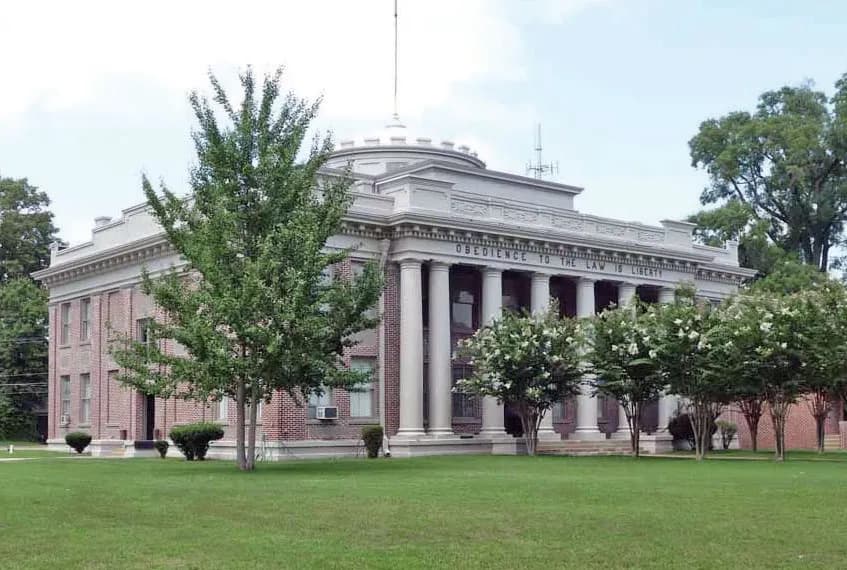
The courthouse at 220 Chestnut Street is the center of the map
Most of the county’s business is anchored at 220 Chestnut Street in Marks. That address appears as the courthouse hub and helps residents avoid the guesswork that can come with rural travel, especially for families coming in from Lambert, Crowder, or Falcon. Instead of driving from office to office without a clear plan, residents can use the county directory as a guide before leaving home.
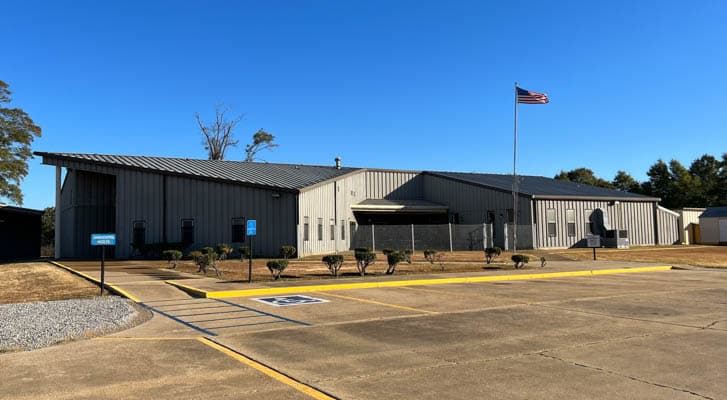
The county also groups related services close by. The Quitman County School District Superintendent’s Office is listed at 310 Pecan Street in Marks, the Marks Police Department at 340 Pecan Street, the health department on Chestnut Street, the Department of Human Services at 1054 Martin Luther King Drive, and the VA office at 235 Chestnut Street. That concentration of offices makes Marks feel less like a scatter of separate stops and more like a usable civic center.
Board meetings show how county decisions get made
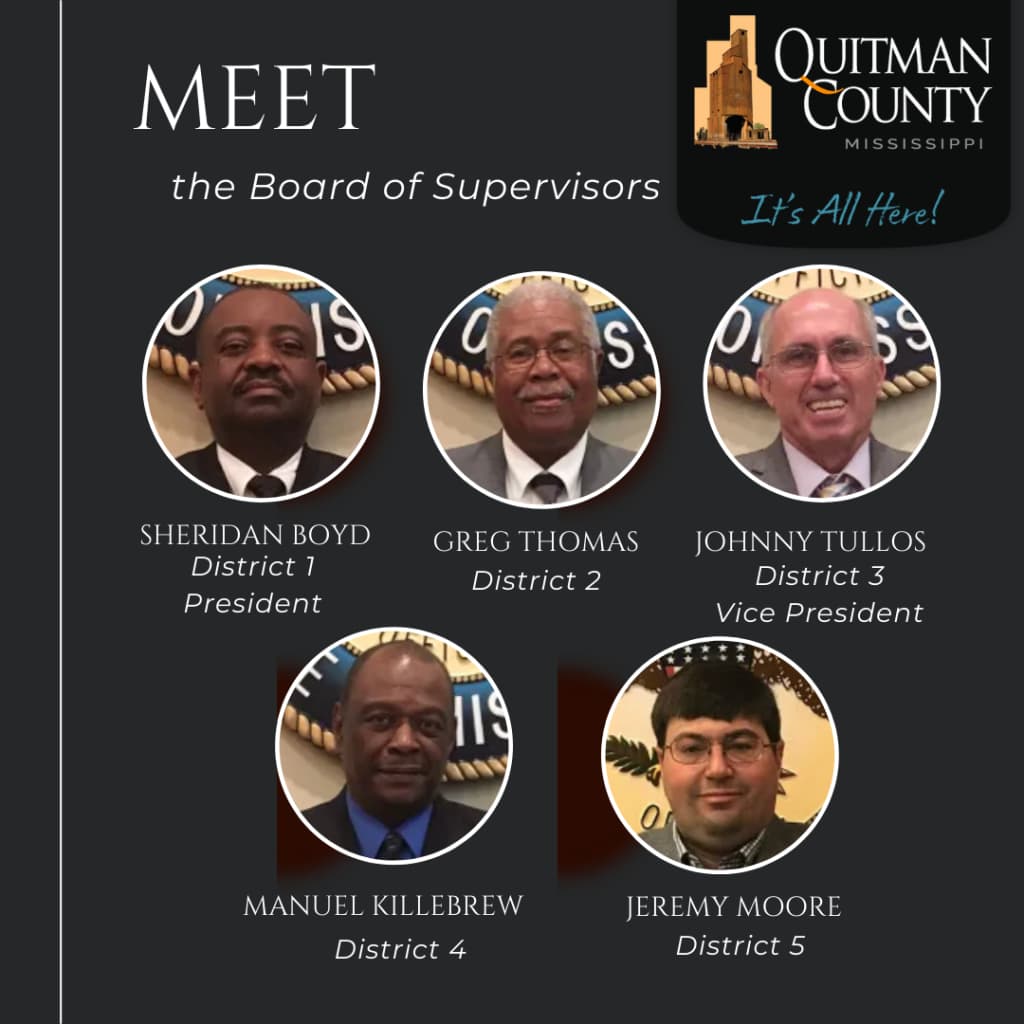
The Board of Supervisors is the governing body of Quitman County. One supervisor is elected from each of the county’s five districts to four-year terms, and the board appoints the county administrator to manage daily operations. That structure puts the board at the center of county government and makes its meetings the place where many local decisions start.
Quitman County says public participation is encouraged at those meetings. The schedule shown for the board places meetings at 9 a.m. at 220 Chestnut Street in Marks, with a recurring first-Monday pattern and one listed meeting date of August 3, 2026. For residents watching road work, budgets, or county services, that schedule provides a direct route into the process rather than leaving decisions hidden behind phone trees or guesswork.
The county’s five supervisors, Sheridan Boyd, Greg Thomas, Johnny Tullos, Manuel Killebrew, and Jeremy Moore, represent the district structure that keeps the board tied to different parts of the county. In a county this small, that representation matters because residents can connect local concerns to a board built around geographic districts rather than a distant central office.
One detail on the site matters more than it first appears: 911 addresses
The county’s “How Do I?” page says a 911 address is assigned through the Chancery Clerk’s office. That single fact is useful for anyone building, moving, or sorting out an address issue tied to emergency response. It also shows why the chancery clerk’s office is more than a records desk. It is part of the county’s basic navigation system.
For a rural county, that connection between an office and an emergency-ready address can save time in a crisis. It also helps new residents understand where one of the most important administrative tasks in county government actually happens.
How to use the directory for everyday needs
A resident can treat the officials page like a first stop before making a call or driving into town. The logic is straightforward:
- Tax bills, assessment questions, and collection matters: Tax Assessor/Tax Collector Alice Crowder-Smith
- Court filings, civil records, and chancery matters: Chancery Clerk T.H. (Butch) Scipper
- Circuit court business and related records: Circuit Clerk Teareathrea Keeler
- Safety concerns and sheriff’s office matters: Sheriff Oliver Parker, Jr.
- County administration and accounting questions: Beatrice Pryor
- School leadership questions: Walter Atkins
- Coroner matters: Randy Hester
That kind of plain map is exactly what people need when they are trying to handle business quickly and avoid an unnecessary second trip.
A small county with a short list of places to know
Quitman County had 6,176 residents in the 2020 census, and the U.S. Census Bureau estimated the population at 5,364 on July 1, 2025. The county was established in 1877 from parts of Tallahatchie, Tunica, Panola, and Coahoma counties, and the bill creating it was introduced by Leopold Marks. Marks remains the county seat, which is why so much of the county’s public life still centers on the courthouse area.
That history helps explain why a single directory page is so practical now. In a county shaped by rural distance, a smaller population, and a courthouse-centered layout, the county officials page does more than list names. It gives residents a working map of where to go for records, taxes, safety, education, and the daily business of local government.
This article was produced by Prism’s automated news system from verified source data, official records, and press releases, then run through automated quality and moderation checks before publishing. The system is built and supervised by the people who set the standards it runs under. Read our full AI policy.
Did this article answer your question?