Quitman County highlights Delta music heritage, Charley Pride connection
Quitman County is putting Charley Pride and the Mississippi Country Music Trail at the center of its Delta identity, linking pride, tourism and preservation.
Quitman County is placing music alongside agriculture and civil rights as one of the county’s defining stories. Its tourism pitch, “Agriculture. Civil Rights. Music Legends. Sportsman’s Haven. All in one place,” and the description of the county as “Deep within the Mississippi Delta” make clear that Charley Pride and the wider Delta soundscape are part of the county’s public identity, not a footnote.
Music as part of Quitman County’s public brand
The county’s Music Legends page links Quitman County to both the Mississippi Blues Trail and the Mississippi Country Music Trail, pulling local heritage into the larger map of Mississippi music history. That framing matters because it places the county inside a cultural region that has helped shape American popular culture, from Delta blues to country music and the church, work and migration traditions that fed both.
For residents in Marks and across Quitman County, the message is practical as well as symbolic. When a county presents music heritage on its official site, it gives schools, visitors and local organizations a shared language for talking about where the community fits in Mississippi history. The county is not just saying it has music stories, it is saying those stories help define the place itself.
Charley Pride’s place in the Delta story
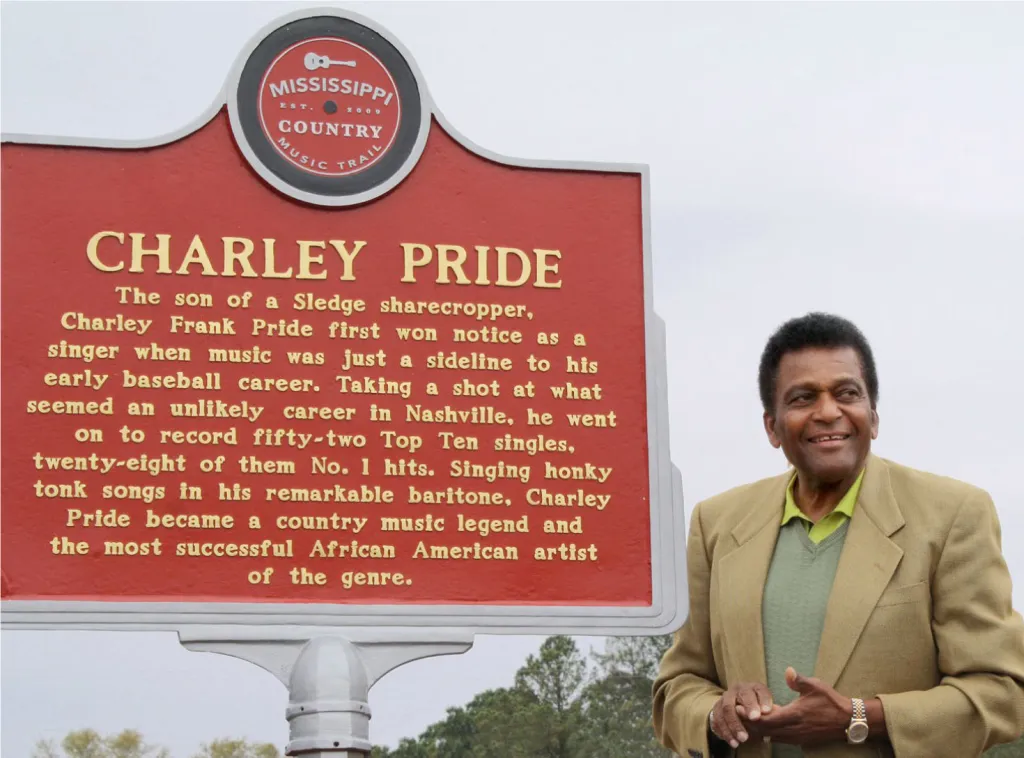
Charley Pride gives that identity a recognizable face. He was born in Sledge, Mississippi, on March 18, 1938, the fourth of eleven children born to sharecroppers Tessie and Fowler McArthur Pride. He grew up in the Mississippi Delta and became one of the most important Black artists in country music history, later known as the first Black superstar in the genre. His death in 2020 makes him part of living memory for many Mississippians, not a distant figure from a museum wall.
That matters in Quitman County because Pride’s life links local geography to national cultural history. A county page that highlights him is doing more than name-dropping a celebrity. It is pointing to the Delta as a place where country music, blues, gospel and farm life overlapped, and where Black musical achievement emerged from the same soil that shaped the rest of the region.
How the Mississippi Country Music Trail turns memory into place
The Mississippi Country Music Trail gives this story a physical form. The trail was established in 2009, and by 2011 WLBT said it had more than 30 markers across the state. That same year, Charley Pride received a marker in Sledge, and a portion of Mississippi Highway 3 was renamed Charley Pride Highway. Those kinds of markers turn heritage into something drivers can see, stop at and photograph.
Visit Mississippi describes the trail as a statewide series of markers commemorating the people, places and events that shaped country music, and says the state’s contributions are “boundless.” For Quitman County, that statewide system matters because it connects a small Delta county to a larger tourism network. A roadside marker in Sledge does not just honor one singer; it helps route visitors through the county’s history and encourages them to see the Delta as a connected cultural corridor.
Why this recognition matters now
Quitman County’s broader heritage strategy shows why the music story is being pushed now. The county’s civil-rights page says Congress created the Mississippi Delta National Heritage Area in 2009 to foster preservation, celebration and sustainable economic development across the region, including Quitman County. That links cultural memory directly to planning, tourism and preservation, rather than leaving it as nostalgia alone.
The county also ties music to civil rights and archaeology in its official branding, which makes the heritage pitch broader than entertainment. That combination can help in three concrete ways:
- It gives schools and teachers a local entry point for lessons about Delta history, Black artistry and the reach of Mississippi music.
- It creates a clearer tourism route for visitors who may already know Charley Pride’s name but not the county that helped shape the Delta story around him.
- It strengthens the case for preserving markers, archives and historic sites before they fade from public view.
That last point is especially important in a county with a 2024 population of 5,774, according to Census Reporter. Smaller counties often have to work harder to keep their history visible, and Quitman County’s own branding shows an effort to turn heritage into a civic asset. The county’s music story is now part of the same public identity that includes agriculture and civil rights, and that makes preservation more than a cultural gesture. It becomes a strategy for keeping Quitman County on Mississippi’s map.
This article was produced by Prism’s automated news system from verified source data, official records, and press releases, then run through automated quality and moderation checks before publishing. The system is built and supervised by the people who set the standards it runs under. Read our full AI policy.
Did this article answer your question?