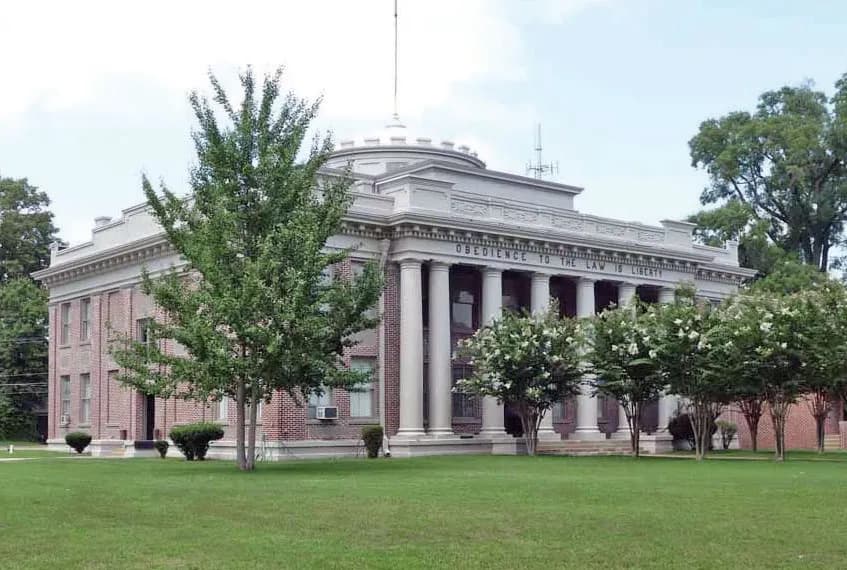
Quitman County markers trace Sunnyland Slim and John Lee Hooker roots
Lambert and Vance hold two blues stops that locals can tour in an afternoon: Sunnyland Slim and John Lee Hooker both trace back to Quitman County.
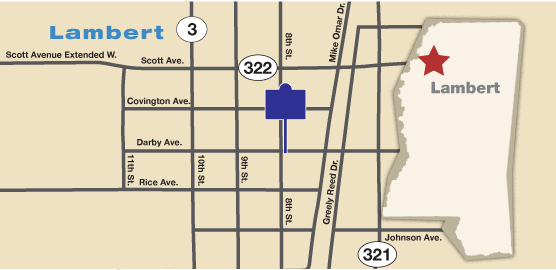
Quitman County’s blues story is more surprising than most people realize, and the best way to see it is as a short hometown loop from Lambert to Vance. Two roadside markers tie this county to Sunnyland Slim and John Lee Hooker, giving residents a concrete way to point visiting family and friends to places that shaped nationally known artists.
A two-stop heritage route that fits an afternoon
Start in Lambert, where the Mississippi Blues Trail marker is titled “Sunnyland Slim - Lambert.” From there, the route runs into Vance, where another marker places John Lee Hooker in the county. That simple pairing turns Quitman County into a compact blues geography: not a vague region with broad cultural claims, but a place with named stops, named people, and documented roots.
The point is not just to admire the signs. These markers let people reclaim local identity in public, visible space. A resident can stand at a roadside marker and tell a visitor that Quitman County is part of the origin story of artists who carried Delta sound into Chicago and beyond.
Sunnyland Slim’s Quitman County connection
The Sunnyland Slim marker ties Albert Luandrew, better known as Sunnyland Slim, to Vance, where he was born around 1906. The Mississippi Blues Trail says he became a central figure on the Chicago blues scene from the 1940s until his death in 1995. The Historical Marker Database gives an even wider frame, saying he was a central figure on the Chicago blues scene from the 1930s through the 1970s.
Taken together, those details show why the Lambert stop matters. The marker is not about an abstract genre label. It points to a musician whose path runs from Quitman County to Chicago, Illinois, where he helped shape the city’s blues sound across several decades.
For locals, the power of that marker is in the specificity. Sunnyland Slim is not a distant celebrity with a loose Mississippi connection. He is Albert Luandrew, born in Vance around 1906, whose name now anchors one of the county’s most important blues stops.
Why John Lee Hooker belongs in the same county story
The Vance marker for John Lee Hooker adds another major name to the county’s music map. Visit Mississippi places the trail marker in Vance and identifies Hooker as one of the most famous and successful blues singers of all time. Its marker text says he was born around 1917 and died in 2001, and that he learned to play guitar in the Delta in the style of his stepfather.
That line matters because it grounds Hooker’s wider reputation in a local musical upbringing. His story links Quitman County to the Mississippi Delta’s deep instructional traditions, where family, place, and sound were passed down long before an artist reached a national stage.
Seen alongside Sunnyland Slim, Hooker makes the county’s blues identity harder to overlook. One marker would be notable. Two markers, in two communities, make a stronger case that Quitman County is not just nearby to blues history. It is in the middle of it.
How the marker system turns roads into a local museum
The Mississippi Blues Trail is more than a list of signs. Mississippi Blues Travellers describes it as a state program created to promote Mississippi’s musical heritage, and says it has established over 180 commemorative markers statewide. Another source says the first three Mississippi Blues Trail markers were dedicated on December 11, 2006, showing that this is a long-running interpretive effort rather than a one-off project.
That statewide framework gives Quitman County’s markers added weight. The county does not need a dedicated building or ticketed exhibition to tell this story. The signs themselves are the exhibit, placed in public view where drivers, teachers, students, and family groups can stop and read them on an ordinary afternoon.
Quitman County’s marker count reinforces the point. The Historical Marker Database county results page lists 11 historical-marker entries, which means the blues stops sit within a broader landscape of local memory. The county’s history is not confined to a single era or subject, but the blues markers offer one of the clearest ways to see its national reach.
What Quitman County says about itself
The county’s tourism page makes the larger claim directly: “The Delta is a major source of American popular culture, and Quitman County has strong ties with the Mississippi Blues Trail and the Mississippi Country Music Trail.” That statement fits the marker evidence. When a county tourism page, a state blues trail, and marker records all point to the same geography, the result is a usable local heritage route, not just a line in a brochure.
That same tourism page also connects Quitman County to Charley Pride, identifying him as a county-linked music legend and saying he was born in Sledge, Mississippi, on March 18, 1938. Pride widens the story beyond the blues, showing that Quitman County’s music legacy includes country music as well as Delta blues.
For residents, that mix matters. It means the county’s cultural identity can be shown to guests in more than one register: blues markers in Lambert and Vance, a country music link through Sledge, and a statewide trail system that places Quitman County inside Mississippi’s broader musical inheritance.
A practical way to use the trail
- begin at the Sunnyland Slim marker in Lambert
- continue to Vance for the John Lee Hooker marker
- read the marker text closely, because the details are the point
- use the stops as a way to talk about Quitman County’s place in Delta music history
The easiest way to experience the story is to keep it simple:
That small loop is enough to show why these markers matter. They turn local roads into a shareable heritage route and give Quitman County a way to present its own history with confidence, in the exact places where that history began.
This article was produced by Prism’s automated news system from verified source data, official records, and press releases, then run through automated quality and moderation checks before publishing. The system is built and supervised by the people who set the standards it runs under. Read our full AI policy.
Did this article answer your question?