Quitman County promotes Amtrak station as Delta gateway and economic link
Quitman County is pitching the Marks Amtrak stop as a Delta gateway, but its real value will be judged by how well it fits everyday travel, not just tourism.
A station meant to do more than move passengers
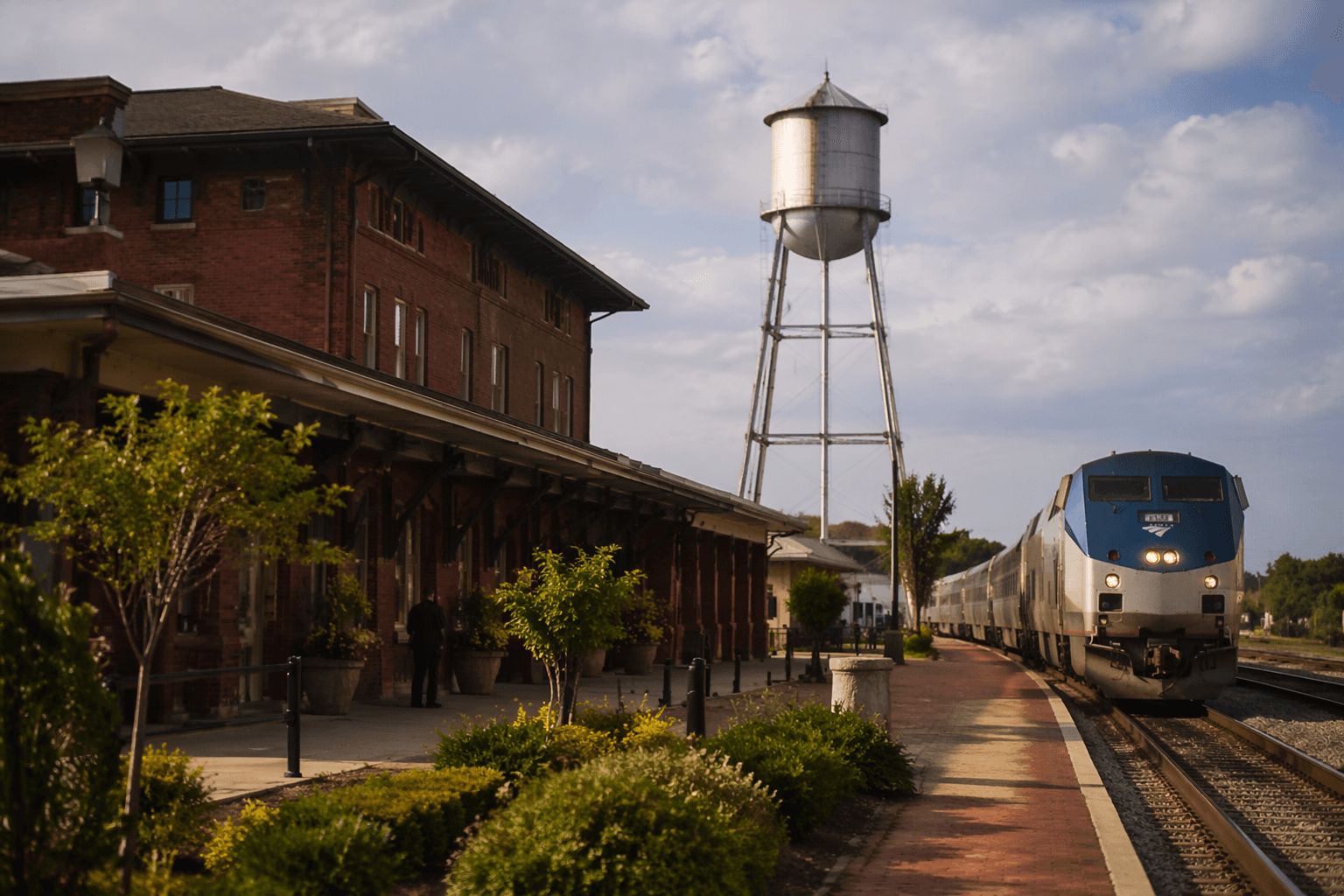
Quitman County presents the Northwest Mississippi Regional Station in Marks as a new rail gateway to the Mississippi Delta, and the county’s own pages frame it as part of the City of New Orleans route between Chicago and New Orleans. The station sits at 285 Cherry Street in Marks, a stop that the county says took years to bring into service and now anchors a broader transportation story for the Delta.
That framing matters because Marks is not just another dot on a timetable. It is the county seat, and the county is using the rail stop to reinforce Marks as a recognizable entry point for Quitman County, one that can connect residents and visitors to a larger regional network instead of leaving them dependent only on highways and personal vehicles.
What the train connection actually gives residents
The county’s practical case for rail is straightforward: the station broadens access. A stop in Marks can open a travel option for people heading to jobs, medical appointments, college visits, family trips, and tourist destinations, especially because the line connects the Delta to Jackson, Memphis, New Orleans, St. Louis, and Chicago. In a rural county where long drives are often part of daily life, that kind of link can matter even if it is used only for certain trips rather than for everyday commuting.
Quitman County also emphasizes that the station serves more than one place. The Northwest Mississippi Regional Station is described as serving Bolivar, Coahoma, Grenada, Lafayette, Panola, Quitman, Tallahatchie, Tate, Tunica, and Yalobusha counties, which gives the stop a regional role rather than a strictly local one. That helps explain why county leaders describe passenger rail as something that moves people while also supporting rural economies.
How the schedule shapes real-world use
The county’s schedule details show both the promise and the limits of the service. Amtrak train #59 stops in Marks southbound around 8:00 a.m. CST, while train #58 stops northbound around 8:30 p.m. CST, which means the station offers daily service but not the kind of flexible timing that makes quick errands easy. For many riders, that makes the train most useful for planned trips rather than spontaneous ones.

The county also tells riders to buy tickets through Amtrak and to download the app for updates, while warning that traffic delays can affect arrival times. That small detail is important in a rural setting: if you need to catch the train from elsewhere in the county, the trip to Marks becomes part of the ride, and the train’s usefulness depends on whether your schedule can absorb those extra steps.
Tourism is part of the point
Quitman County does not treat the station as a stand-alone transportation facility. In county tourism materials, rail is placed alongside civil rights history, music heritage, and annual festivals as part of the county’s identity and economic development strategy, which shows how closely transportation and visitor marketing are tied together. The station is meant to help travelers get to Marks, but it also helps the county tell a larger story about what makes this stretch of the Delta worth visiting.
That story is visible across downtown Marks. The Pride of Quitman County Park sits across the street from the train station and is designed to welcome people arriving by rail, with a life-size statue of Charley Pride and a mural backdrop that tells the story of the 1968 Marks Mule Train and Martin Luther King Jr.’s Poor People’s Campaign. The county also describes a farmers market and train depot area as a connector between the station, the park, the welcome center, and the depot.
Why the county keeps calling it an economic link
For Quitman County, the station is not just about moving bodies from one city to another. It is a signal that Marks belongs on the map as a place that can receive visitors, support downtown foot traffic, and create a stronger link between transportation and local business. The county’s broader materials point to the downtown historic district, the depot, the park, and the welcome-center corridor as pieces of one visitor-facing district rather than separate projects.
That is why the Amtrak stop carries so much symbolic weight. It gives the county a concrete transportation asset, but it also supports a bigger claim: Quitman County is not trying to market itself as rural in isolation. It is trying to be reachable, connected, and useful to travelers whose trips can spill into local stores, historic sites, festivals, and public spaces. If the station’s promise holds, its value will be measured not only by trains arriving in Marks, but by how often those arrivals translate into real movement through the county’s economy and daily life.
This article was produced by Prism’s automated news system from verified source data, official records, and press releases, then run through automated quality and moderation checks before publishing. The system is built and supervised by the people who set the standards it runs under. Read our full AI policy.
Did this article answer your question?