Bath hosts April 23 forum on emerald ash borer threat
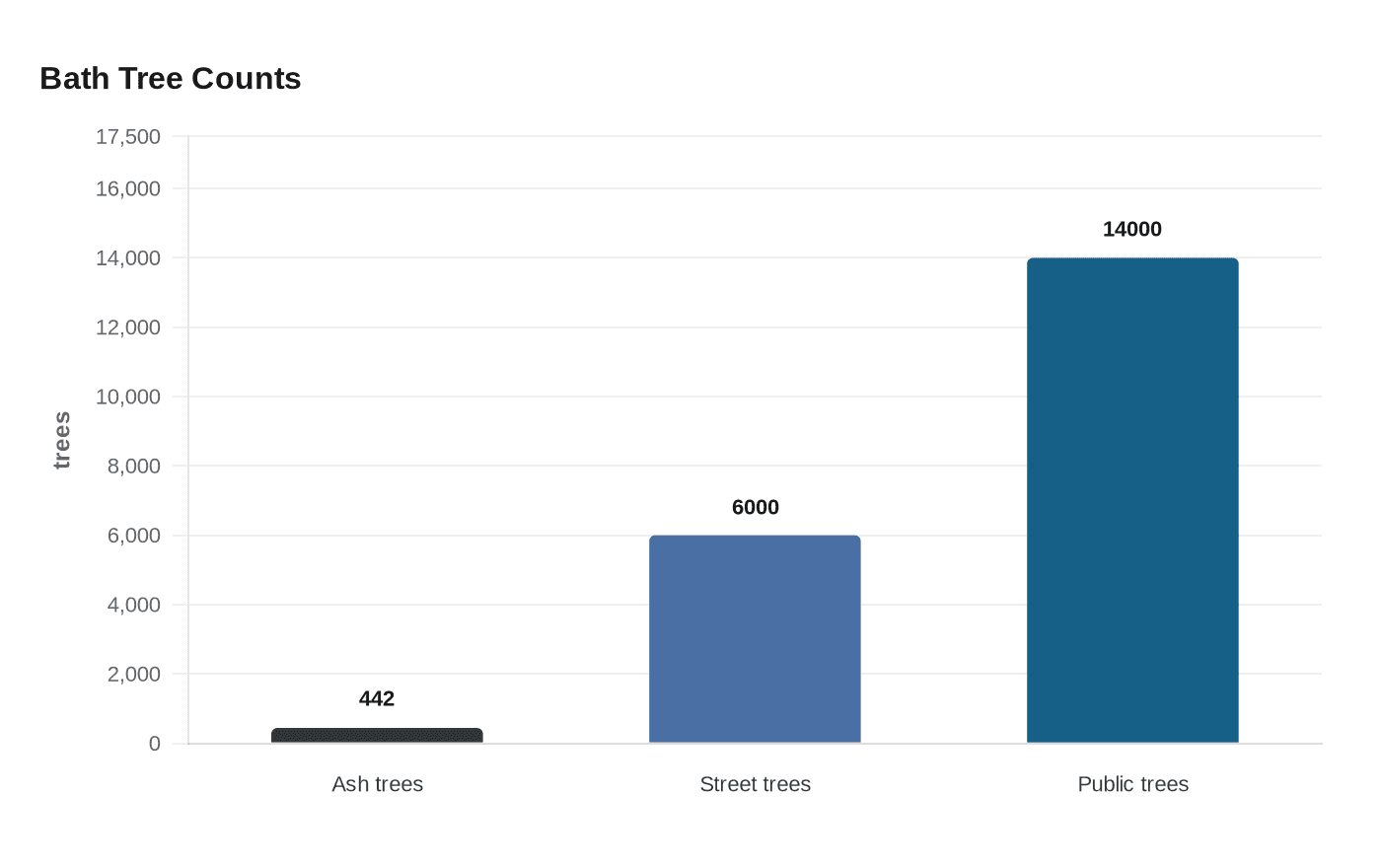
Bath warned that 442 public ash trees, part of an $8 million urban forest, could be lost unless residents spot emerald ash borer early.
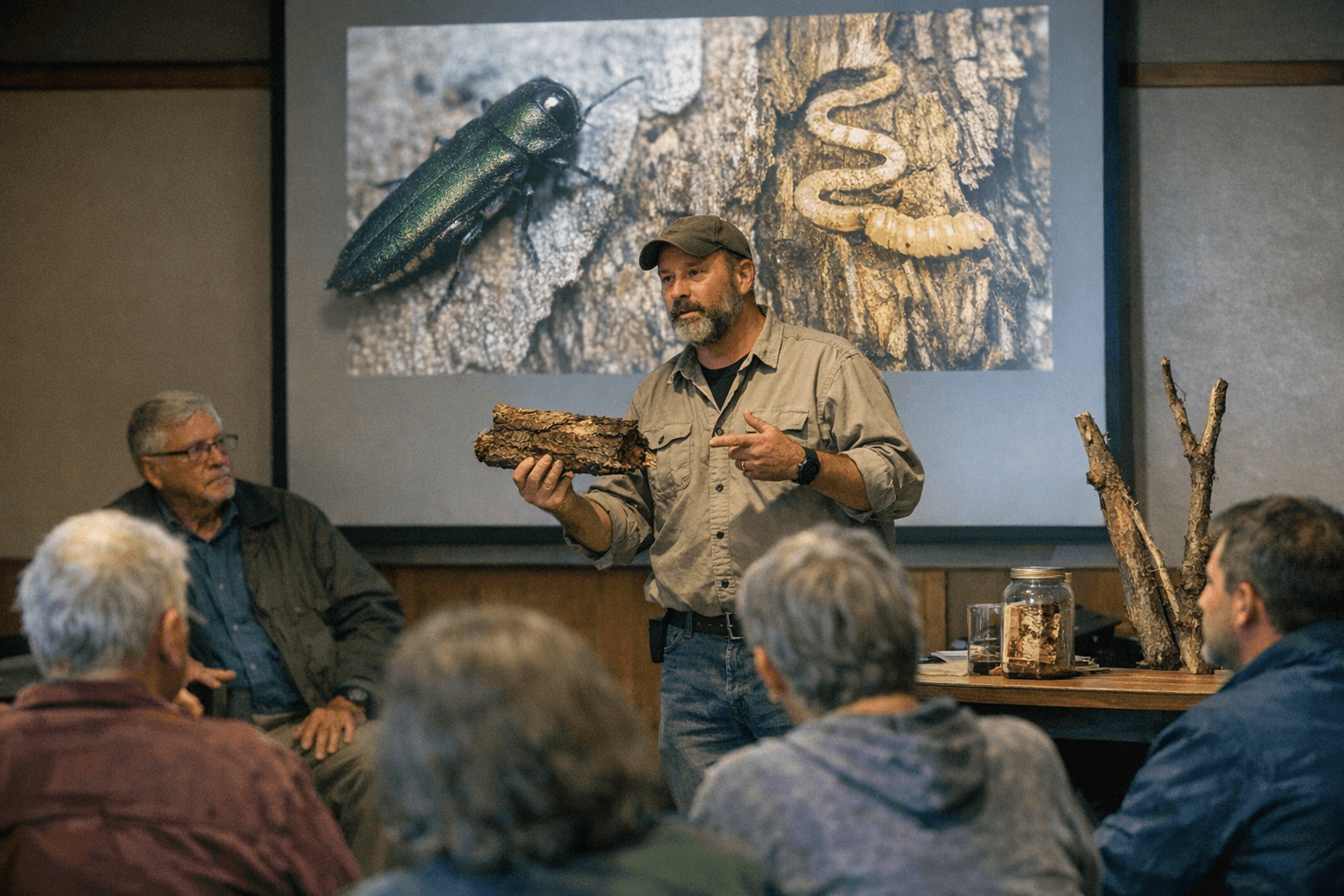
Bath used a forum at Union + Co to put a hard number on what the emerald ash borer could cost the city: 442 public ash trees already identified, 6,000 street-side trees in all, and a public tree stock Bath values conservatively at about $8 million. The April 23 event at 31 Centre Street was presented by the Bath Community Forestry Committee with Union + Co, and city officials framed it as both an education session and a warning about a pest that can strip away shade, street character and safety margins across town.
Bath’s own emerald ash borer page says the city is taking a proactive approach by inventorying ash trees on public property, prioritizing high-value trees for treatment, planning phased removal and replacement, and expanding tree diversity. That matters in a city that says it has 14,000 public trees, 14 state champion trees, and 21 years as a Tree City USA community with eight Growth Awards. If ash trees start dropping out in numbers, the first losses will be visible on streets, in cemeteries, parks, schools, boat launches and other public spaces where the canopy does everyday work.
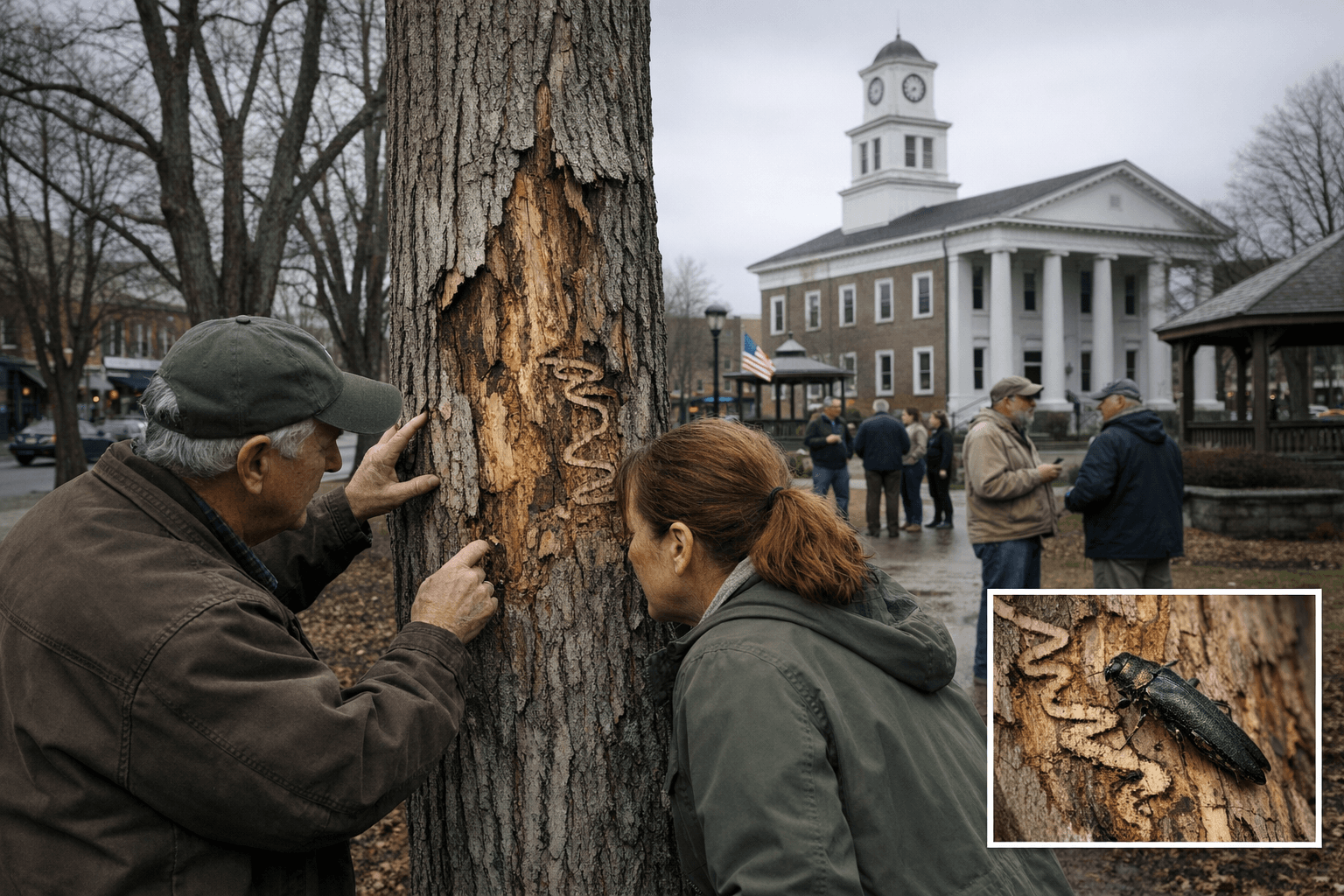
Homeowners can identify ash trees by their opposite branching, compound leaves with five to 11 leaflets, and mature bark with deep diamond-pattern furrows on white and green ash or a corky look on black ash. The warning signs are harder to miss once a tree is already under attack: woodpecker “blonding,” S-shaped tunnels under the bark, D-shaped exit holes, epicormic shoots, bark splits and crown dieback that often starts at the top of the tree. The city’s page directs residents with private-property trees to contact a licensed arborist for evaluation and next steps.
The threat is not theoretical. Maine Forest Service says emerald ash borer was first detected in Maine in 2018, all ash species in the state are susceptible except mountain ash, and trees injured by the insect become brittle enough to threaten property and people. Sagadahoc County sits inside Maine’s quarantine area, which is why moving untreated firewood or ash material remains such a serious spread risk. The state also advises people to take pictures and report signs of infestation.
Bath is already moving beyond education into implementation. The city has issued an RFP for an Emerald Ash Borer Urban Forest Resilience and Canopy Restoration Project, funded through the Maine Forest Service’s Project Canopy Urban & Community Forestry Restoration Grant Program, and the plan calls for targeted insecticide treatments, removal of dead and hazardous ash, replanting and public engagement. City records say EAB was confirmed in Bath in 2024 by City Arborist Jack Hernandez, and that strategic injections may preserve 40% to 50% of Bath’s mature ash canopy for decades. That is the window Bath is trying to use before replacement costs rise and weakened trees become liabilities.
This article was produced by Prism’s automated news system from verified source data, official records, and press releases, then run through automated quality and moderation checks before publishing. The system is built and supervised by the people who set the standards it runs under. Read our full AI policy.
Did this article answer your question?