Brunswick workshop links land use, watershed health, and community solutions
Brunswick is tying lawn care and future pesticide rules to Mare Brook, runoff, and shellfish waters so residents can see how yard choices shape flooding and water quality.
What the workshop is really about
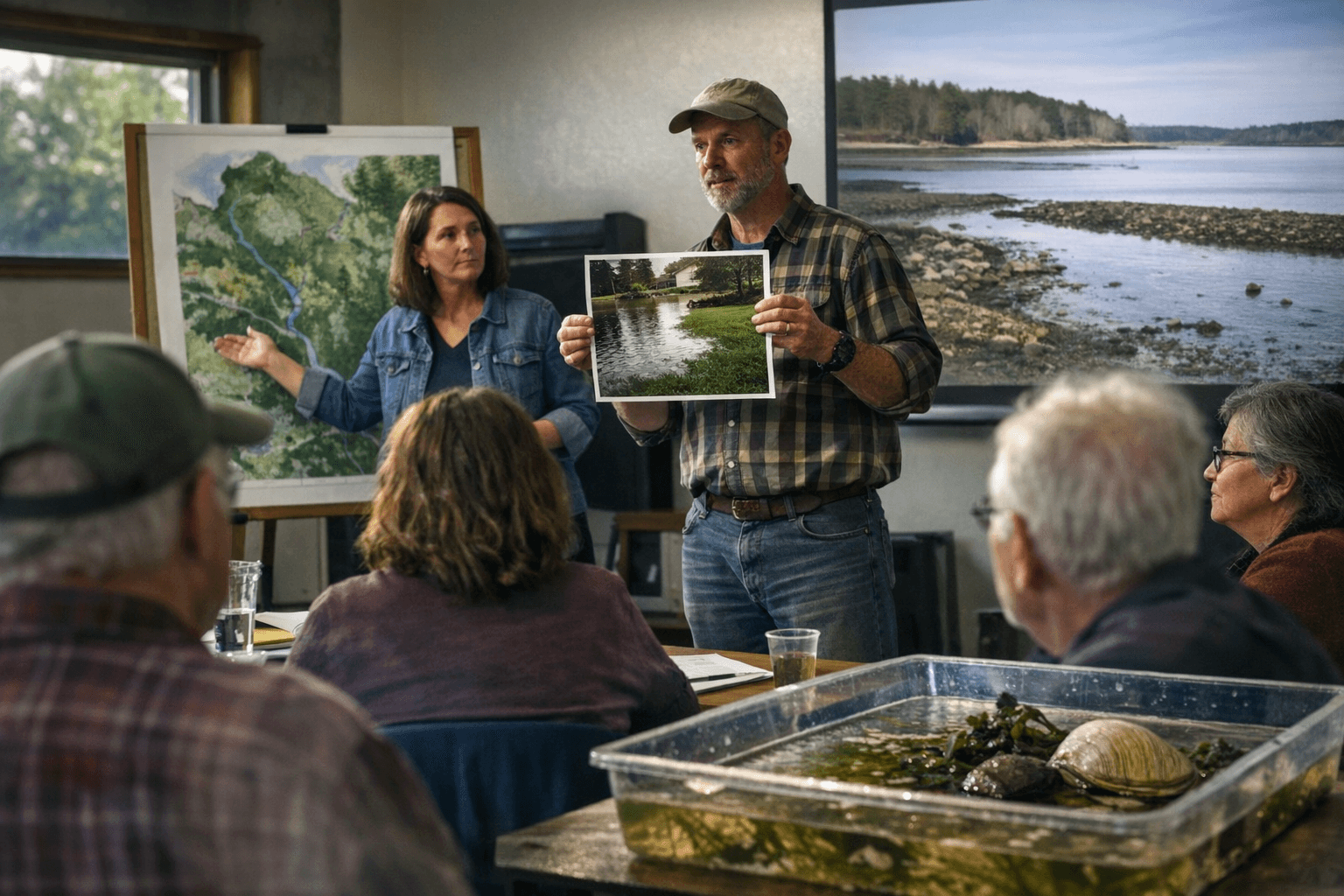
Brunswick is putting lawn care, runoff, and future pesticide rules on the same table because what happens in yards, driveways, and construction sites can shape the health of Mare Brook, nearby wetlands, and the New Meadows River watershed. The free Healthy Watersheds Workshop, set for Tuesday, April 28, at Crooker Theater in Brunswick High School, is meant to show how everyday land-use choices ripple through flooding, drainage, and water quality across town.
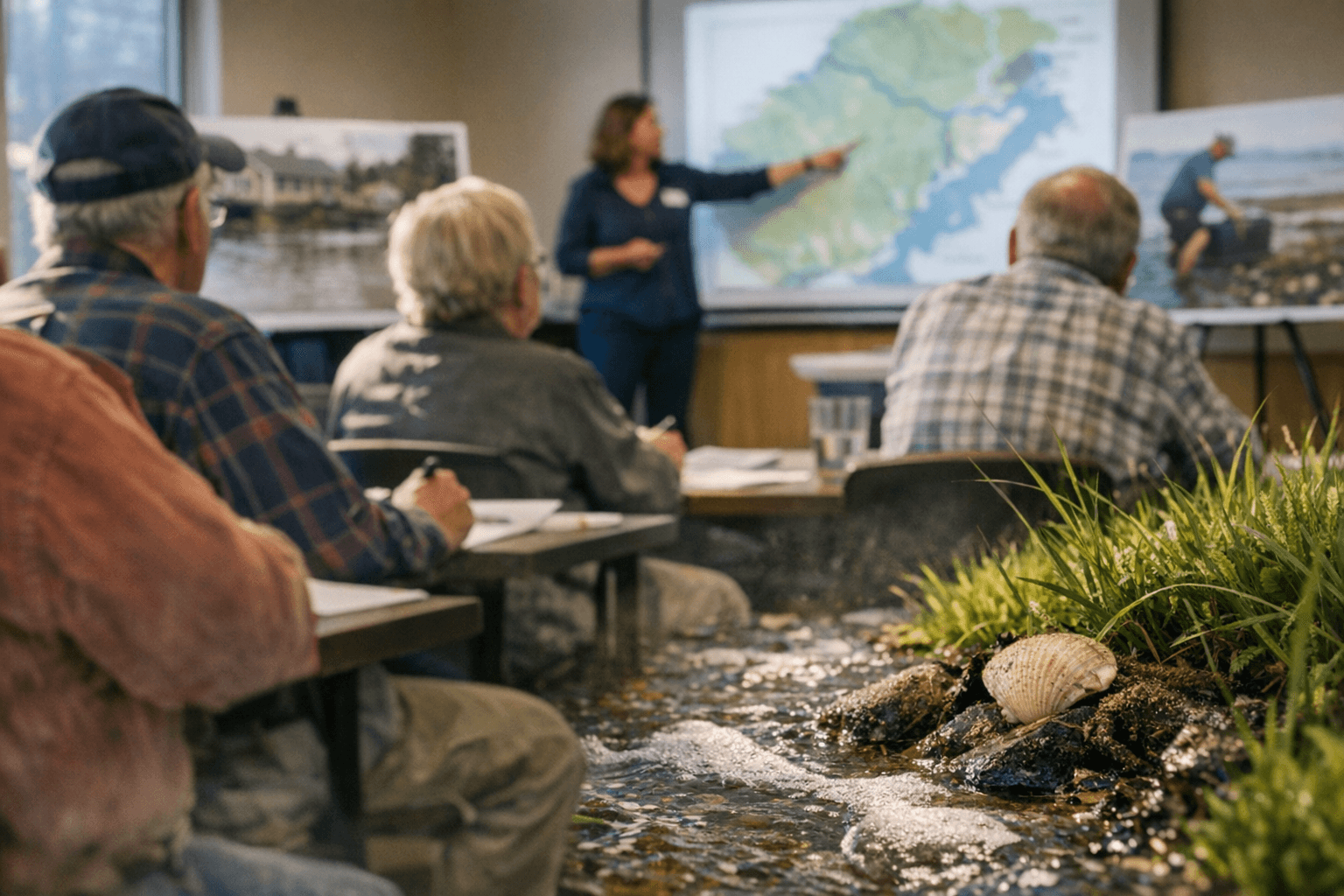
The timing matters because this is not just a public-education session. The Town of Brunswick says the workshop is also an unofficial kickoff for efforts to establish a more inclusive pesticide and fertilizer ordinance, which makes the event part outreach, part policy launch, and part neighborhood planning session. For anyone who lives, works, owns a business, or goes to school in Brunswick, the issue is immediate: cleaner runoff means less stress on streams, less pressure on stormwater systems, and fewer pollutants carried into water bodies people depend on.
Why Mare Brook is the local pressure point
Mare Brook is the clearest example of why Brunswick is focusing on watershed health now. The town’s watershed management plan was delivered on January 5, 2022, adopted by Town Council in February 2022, and built from planning work that began after the town received a State of Maine watershed planning grant in 2019. Brunswick’s long-range goal is to bring Mare Brook up to state-designated Class B standards by 2037, a target that depends on reducing the damage created by runoff and poorly managed development.
The stressors identified in the plan are the kind residents encounter without always realizing their effect. Stormwater runoff from developed land, altered riparian zones, loss of floodplains, temperature increase, altered channels, loss of wetlands, road salt, nutrient loading, and improperly placed or undersized culverts all combine to push the brook out of balance. That is a policy problem, but it is also a practical one: when water cannot spread out naturally or move through culverts the way it should, flooding risk rises and the town pays later in repairs, restoration, and repeated damage.
Maine’s Department of Environmental Protection describes watershed management as a way to keep polluted runoff from land-use activity from reaching surface waters. It also notes that polluted runoff can carry soil particles, nutrients, bacteria, and other toxic materials through developed or agricultural areas. That definition is exactly why the Brunswick workshop is framed around more than one department or one issue, since stormwater, lawn chemicals, road salt, and culvert design all meet at the same streambank.
The policy question behind lawn care
One reason the event stands out is that Brunswick already has a pesticide-related rulebook in place. The town says its existing ordinance restricts most pesticides in the aquifer protection zone, with exceptions for household and farm use, and limits aerial pesticide use except for public-health applications confirmed by the town or the state. That existing framework helps explain why the workshop is being used to build public understanding before ordinance changes move forward.
The town says the workshop will highlight healthy lawncare practices, local watershed initiatives, pollution prevention, and pesticide and fertilizer management. That list sounds technical, but the economic logic is simple: less fertilizer and fewer pesticides in the wrong places means less contamination in runoff, less strain on stormwater systems, and less long-term cleanup cost for the town and for property owners. For residents, this is where environmental policy becomes household policy, because what you spread on a lawn can travel into a brook after the next heavy rain.
Ashley Charleson, Brunswick’s environmental planner, is the listed contact for the event. The town says the workshop will also bring local nonprofits, municipal staff, town committees, and Brunswick High School students into the room, including Merrymeeting Bay Trout Unlimited, Friends of Casco Bay, Bowdoin Sustainability Office, Free the Andro, and Brunswick-Topsham Land Trust. That mix signals that the town wants more than a presentation; it wants a working coalition around land care, water quality, and ordinances that people can actually follow.
Why the New Meadows River watershed adds a wider regional stake
Brunswick’s watershed decisions also reach beyond town boundaries. The New Meadows River watershed covers 23 square miles and includes parts of five towns, with Brunswick accounting for 11 percent of the watershed area. The Casco Bay Estuary Partnership says many areas still have good water quality, but other sections face low dissolved oxygen in northern areas and lakes, along with high nutrient levels and algal blooms.
That matters because the watershed supports valuable shellfish harvesting and more than 200 commercial diggers. When nutrients and polluted runoff feed algal growth or degrade water quality, the impact is not abstract. It can affect shellfish areas, working waterfront livelihoods, and the health of the broader Casco Bay system that links Brunswick to the region’s coastal economy.
For Brunswick residents, that makes the workshop more than a classroom session. It is a chance to connect the backyard to the bay, the culvert to the shellfish bed, and the fertilizer bag to the next round of local rules. In a town where watershed health touches infrastructure, drinking-water protection, flood risk, and coastal livelihoods, the choices discussed on April 28 are likely to shape the next decade of land-use decisions.
What residents can expect to take away
The workshop runs from 5 p.m. to 8 p.m. at Crooker Theater, 71 Dragon Drive, with doors opening at 5 p.m. and the main presentation beginning at 6 p.m. Ali Clift of the Cumberland County Soil and Water Conservation District will lead the presentation, and the event is free, though registration is required. The town says refreshments will be provided, lowering one more barrier to turnout for a meeting that is designed to be practical rather than ceremonial.
For Brunswick households, the useful takeaway is likely to be a clearer sense of how small changes in lawn care and household chemical use connect to larger systems. For town leaders, the real test will be whether the workshop turns public interest into support for better ordinances, smarter stormwater choices, and faster action on Mare Brook. The town is not just explaining a watershed plan; it is asking residents to help shape the next chapter of Brunswick’s land-care rules.
This article was produced by Prism’s automated news system from verified source data, official records, and press releases, then run through automated quality and moderation checks before publishing. The system is built and supervised by the people who set the standards it runs under. Read our full AI policy.
Did this article answer your question?