Bowdoin College Museum of Art anchors Brunswick’s downtown and culture
Bowdoin’s museum is more than a campus landmark. It helps keep Brunswick’s downtown moving, draws off-season visitors, and raises a local access question: who is it really serving?
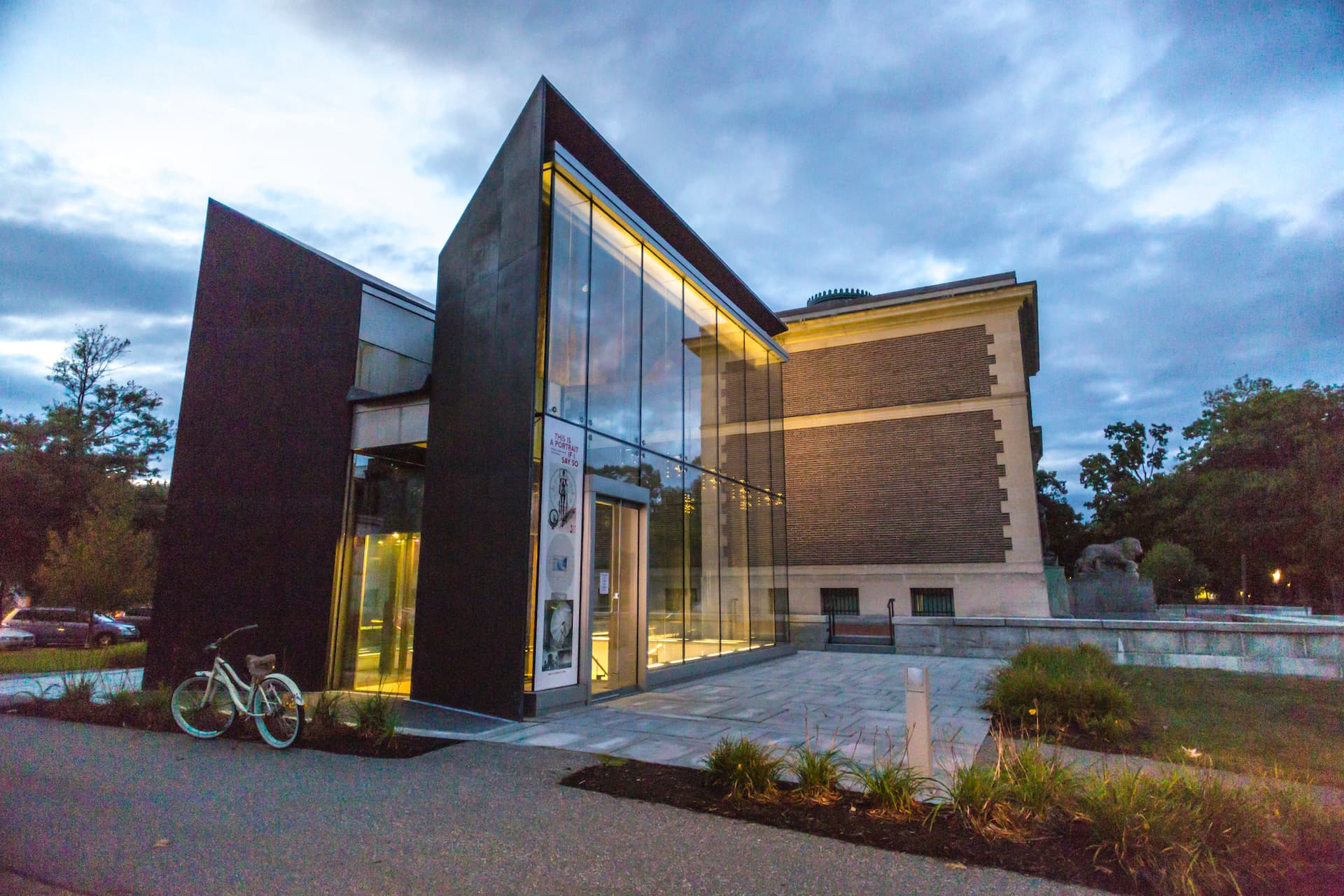
A museum built into Brunswick’s downtown fabric
The Bowdoin College Museum of Art is not just a college amenity tucked behind campus walls. In Brunswick, it functions as a public-facing institution with a reach that extends well beyond Bowdoin students, drawing local residents, day visitors, and art lovers from across the Midcoast.
That matters in a town where downtown life depends on more than one engine. Brunswick’s center runs on a mix of college activity, local commerce, restaurants, and cultural traffic, and the museum helps hold those pieces together. It gives people a reason to walk the campus-adjacent streets, linger in town, and connect one stop to the next instead of treating Brunswick as a place to pass through.
Why the museum matters to the downtown economy
For a small Maine town, a major museum experience is not a minor perk. It is part of the infrastructure that can shape how downtown feels in the shoulder seasons, when the campus rhythm and the broader tourist calendar do not always line up. The museum helps create reasons to stay in Brunswick, which can translate into visits to nearby businesses, meals at local restaurants, and foot traffic that supports the street-level economy.
That role is especially important because downtown stability depends on variety. A place like the Bowdoin College Museum of Art reinforces that mix by giving Brunswick something durable and noncommercial to draw people in. Instead of relying only on retail openings or short-term events, the town benefits from a steady institution that adds repetition, predictability, and an ongoing reason to visit.
A cultural anchor with educational reach
The museum’s significance goes well beyond its economic effect. It is also educational, providing Bowdoin students with direct contact between classroom learning and original works of art. That kind of access deepens the college experience, turning art history and visual analysis from abstract concepts into encounters with real objects, real collections, and rotating exhibitions.
Its reach does not stop with the college. For local schools and families, the museum offers an accessible place where students can encounter art, history, and interpretation in a setting that feels open to the community. In a county where educational resources are often discussed in terms of school budgets, classroom space, and access to enrichment, the museum stands out as a public cultural resource that broadens what young people can experience close to home.
Who uses it beyond the campus gate
A central question for any institution with a college address and a public mission is whether it truly serves the broader town. The Bowdoin College Museum of Art does because it draws more than students. It welcomes residents, visitors, and regional art audiences, which makes it part of Brunswick’s civic life rather than a closed academic space.
That broader use is important in a community where public gathering places matter. The museum gives residents a place to meet around art and ideas instead of around commercial development or town politics alone. In that sense, it supports a kind of civic balance: one more anchor in the middle of downtown that is not dependent on a single retail trend, a single season, or a single debate.
Off-season foot traffic and the case for staying power
Museums in towns like Brunswick often serve as more than display spaces. They become civic anchors that keep foot traffic moving through the center of town even when classes are out and the pace of the academic year changes. That is one of the museum’s most practical roles, because sustained downtown activity is not only about big events or headline-grabbing openings. It is also about the everyday flow of people who come for culture and then spend time elsewhere in town.
For Brunswick businesses, that flow can matter as much in quieter months as it does in the summer. A museum visit is often the kind of trip that spills over into other local purchases, whether that means coffee, lunch, browsing, or a longer walk through the downtown corridor. The institution’s value is therefore not only symbolic. It is tied to real patterns of movement, spending, and street life.
What accountability looks like for a public-facing cultural institution
The access question is not abstract. If the museum is one of Brunswick’s most important cultural institutions, then its public value depends on how well it remains open to the people who live nearby, not only to the people enrolled at Bowdoin. That means looking at who comes through the doors, who feels invited in, and how the museum connects with schools, families, and residents who may not have any direct tie to the college.
It also means recognizing that cultural institutions can shape civic identity as much as formal government bodies do. In Brunswick, where school planning, business openings, and downtown change regularly shape local conversation, a stable museum helps preserve the town’s broader appeal. It offers a shared public space that strengthens the center of town without asking residents to choose between culture and commerce.
The Bowdoin College Museum of Art matters because it does several jobs at once. It is a learning tool, a visitor draw, a downtown stabilizer, and a public gathering place. In a town that depends on keeping people moving, staying, and spending downtown, that combination gives Brunswick something rare and valuable: a cultural institution with real civic weight.
This article was produced by Prism’s automated news system from verified source data, official records, and press releases, then run through automated quality and moderation checks before publishing. The system is built and supervised by the people who set the standards it runs under. Read our full AI policy.
Did this article answer your question?