Fort Baldwin batteries tell historic Harbor Defense story in Phippsburg
Fort Baldwin folds a short Phippsburg walk into a clear Harbor Defense lesson, with named batteries, bay views, and ruins you can still trace on Sabino Hill.
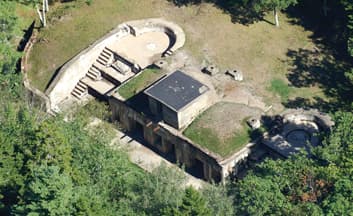
Fort Baldwin is one of Sagadahoc County’s easiest history outings to understand on the ground: park, walk, and follow the names of the batteries as they step through a real coastal-defense story. On Sabino Hill in Phippsburg, the former fort still reads like a small outdoor classroom, with earthworks, concrete remnants, and a view toward the mouth of the Kennebec River that explains why the site mattered.
A compact fort with a big river job
Fort Baldwin was built between 1905 and 1912 on about 38 acres near the mouth of the Kennebec River, a position that made sense for a gun battery meant to watch a major approach into Maine’s coast. The fort was named for Jeduthan Baldwin, the Continental Army engineer, which gives the place a Revolutionary-era name even though the structures you see today belong to the age of coastal artillery. It was not a sprawling garrison town or a single masonry fortress, but a small, purpose-built defense site designed for a very specific stretch of water.
Originally, Fort Baldwin consisted of three batteries. ExploreForts says the fort had three 6-inch guns and two 3-inch guns, numbers that help explain its scale: compact, armed, and focused on harbor defense rather than long-range battlefield power. Today, the State of Maine preserves the site as the Fort Baldwin State Historic Site, where the walk itself is part of the experience.
Follow the batteries, not just the trail
The Maine Bureau of Parks and Lands identifies the site’s signature features as the batteries of Fort Baldwin, and that is exactly how to approach a visit. Instead of looking for one central monument, you move from one named position to the next, which makes the fort feel legible as a working defense system.
The batteries named on the official site include Battery Patrick Cogan, Battery John Hardman, and Battery Henry Hawley. Battery Patrick Cogan carries especially vivid history: it was named for a lieutenant in the 5th Continental Infantry who also served as quartermaster of the 1st New Hampshire Regiment and died on August 21, 1778. That detail gives the site a human scale and shows how later military sites often carried forward earlier American service through naming.
On the ground, those names matter because they turn a set of ruins into a sequence. You are not just standing near old concrete and earth; you are moving through a place where each battery marked a different part of the fort’s job at the river mouth.
What the Kennebec defenses were meant to do
Fort Baldwin was part of the Harbor Defenses of the Kennebec, also described in historical summaries as the Coast Defenses of the Kennebec. That larger system is the key to understanding why Fort Baldwin sits where it does and why nearby Fort Popham belongs in the same conversation. Together, the two sites helped guard the mouth of the Kennebec River, a route that mattered for shipping, movement, and coastal security.
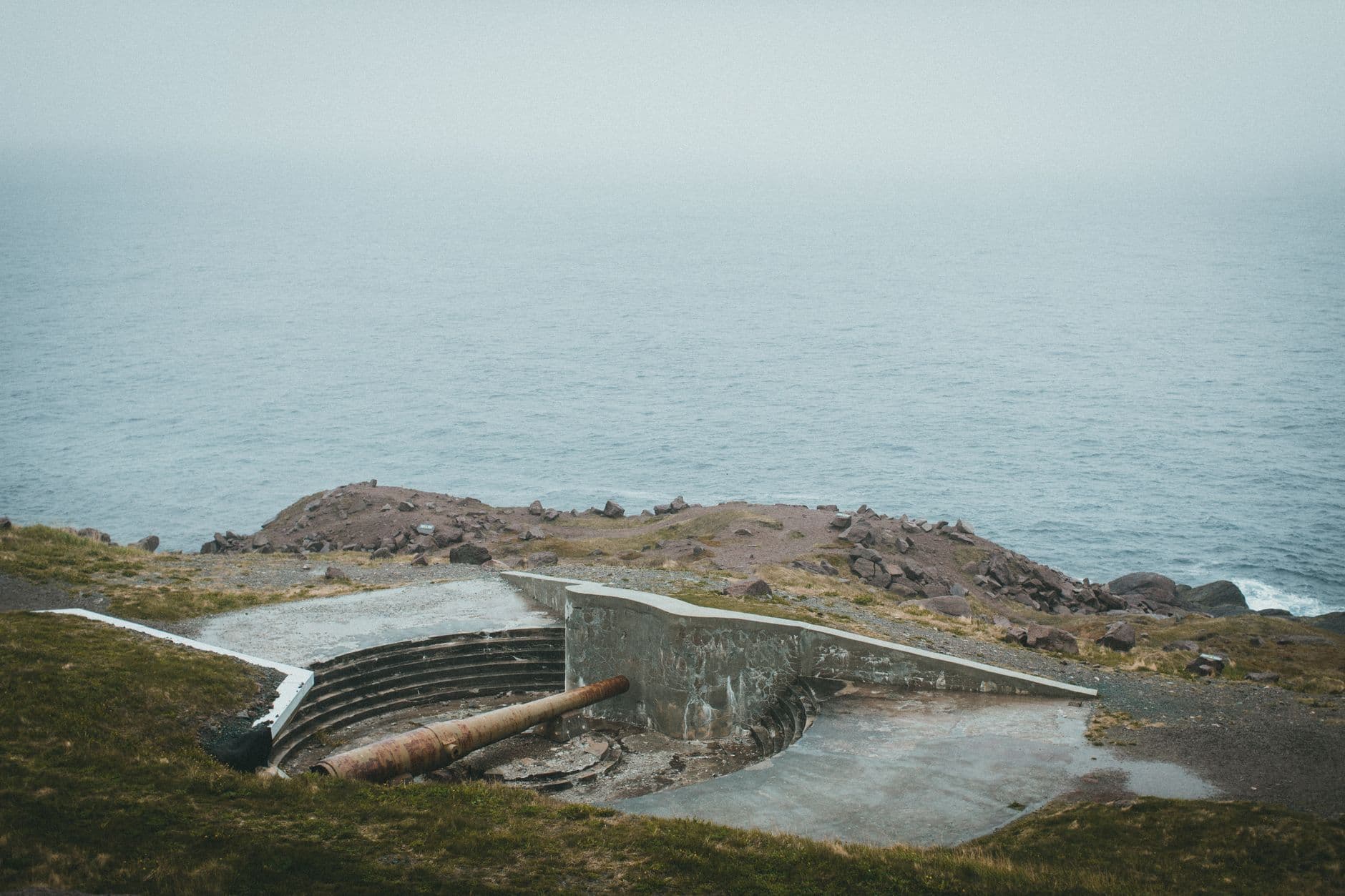
The fort’s wartime role was not abstract. During World War I, Fort Baldwin and Fort Popham reportedly had a combined garrison of 200 soldiers from the 13th and 29th Coast Artillery companies of the Coast Defenses of Portland. Another historical source notes that Fort Baldwin protected the mouth of the Kennebec during both World Wars. That context makes the quiet, wooded setting feel more specific: this was once a staffed military position watching one of Maine’s important coastal gateways.
The elevation on Sabino Hill also matters. From that height, observers and gunners could look over the river approach, which is part of why the site still makes geographic sense when you stand there now. The landscape itself tells the story, with the hilltop position, the open views, and the remains of the batteries all pointing toward the same defensive purpose.
The walk today: short, easy, and tied to the ruins
Fort Baldwin works well as a practical outing because the ruins are part of a longer hiking trail through the park, not something you have to study from a distance. A trail note from Maine by Foot lists the Perkins Farm Trail and Fort Baldwin walk as 1.2 miles one way and easy, which makes it manageable for a family stop, a weekend detour, or a low-effort local walk with a payoff.
A visitor today can expect a mix of woods, old military remains, and views toward the bay. The Wiscasset Newspaper’s coverage of the site highlighted former batteries and a concrete lookout station, a reminder that the fort still has visible pieces you can identify without needing a museum room or guided tour. That makes the site appealing for people who want a walk that also gives them something concrete to point at and talk about.
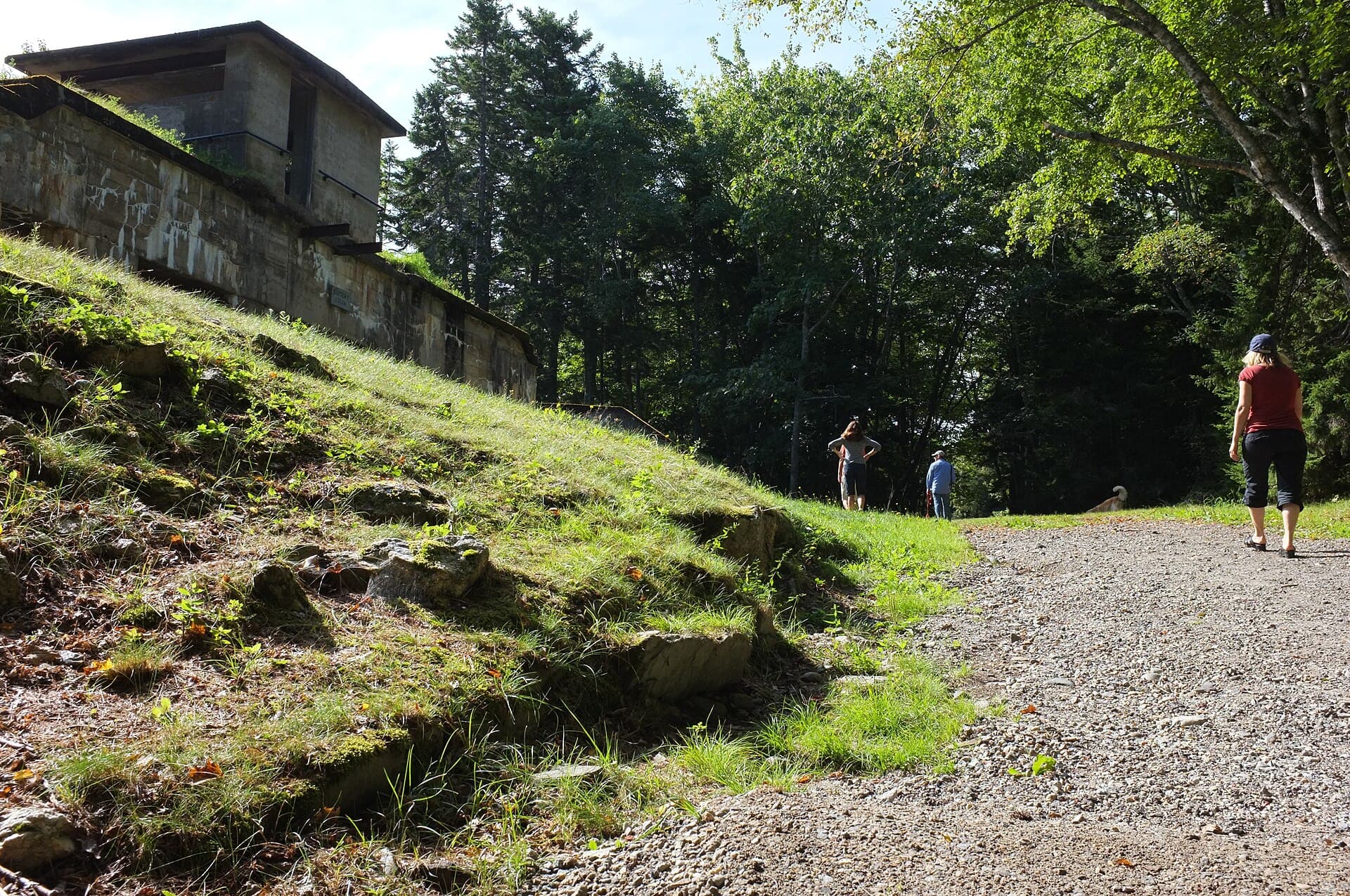
- the named batteries, especially Patrick Cogan, John Hardman, and Henry Hawley
- concrete and earthwork remains that show where the guns once sat
- the higher ground on Sabino Hill, which explains the fort’s placement
- views that connect the site to the Kennebec River and the broader harbor-defense system
Look for:
Why it pairs well with nearby Phippsburg history
Fort Baldwin is strongest when you think of it alongside Fort Popham and the mouth of the Kennebec. Both sites sit in the same coastal landscape, and together they show why Phippsburg was a military focal point for Maine’s shoreline defense planning. One site emphasizes stone fortification and older coastal defense, while Fort Baldwin shows the later, smaller artillery style that came with the early 20th century.
That contrast is part of the attraction. Fort Baldwin does not overwhelm you with size, and it does not require a full day. It gives you a compact route through a preserved fort site, a few specific names to remember, and a clear sense of how the Kennebec was guarded in the age of harbor defenses. For Sagadahoc County residents looking for a nearby destination with both fresh air and a built-in history lesson, it is one of the county’s most useful little walks.
This article was produced by Prism’s automated news system from verified source data, official records, and press releases, then run through automated quality and moderation checks before publishing. The system is built and supervised by the people who set the standards it runs under. Read our full AI policy.
Did this article answer your question?