Hamilton Audubon Sanctuary showcases Sagadahoc County’s coastal habitats
Hamilton Audubon Sanctuary folds forest, marsh, and shoreline into a free West Bath walk. The reward is peak coastal bird habitat in a compact Sagadahoc County loop.

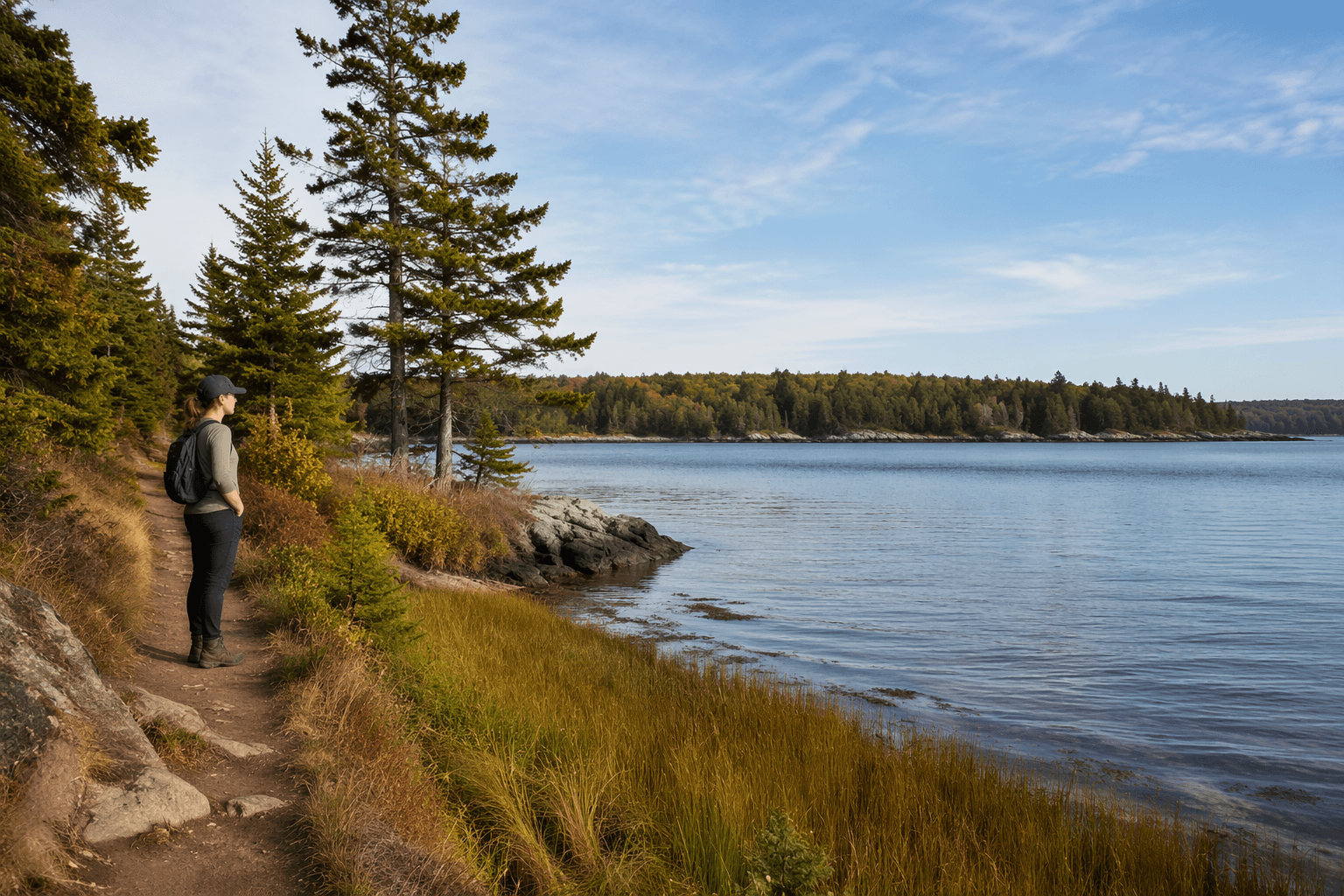
Hamilton Audubon Sanctuary gives Sagadahoc County one of its most efficient coastal walks, with pine, spruce, and fir giving way to salt marsh, mud flats, and open water in a single outing. The trail system is short enough for a morning stroll, but varied enough to feel like several different habitats stitched together on a peninsula in the New Meadows River. For anyone planning a weekend birding trip, it is the rare place where scenery and ecology line up on the same path.
A small preserve with a big shoreline footprint
Sources list Hamilton at either 86 or 93 acres, but both figures describe the same compact West Bath sanctuary with a disproportionately rich mix of habitats. Maine Audubon says the property was established in 1987 through the bequest of Millicent Hamilton, who made her home there from the 1940s until her death in 1986. Maine Trail Finder says a long community-based planning process followed, and the sanctuary opened to the public in the fall of 1998.
That timeline matters because Hamilton was not assembled as a showcase park first and a habitat second. It grew out of a private homestead and was later opened for public use, which helps explain why the place still feels intimate even as it serves as a public destination. The result is a sanctuary where the landscape still carries the shape of its former use, especially around the freshwater marsh that replaced an old ice pond.
How to walk it
The main trail network is marked by Red, Blue, Yellow, and Green routes, and the layout makes it easy to build a visit around the time you have. Benches are spaced along the way, so you can stop to watch the water or let the terrain slow the pace. The sanctuary is open dawn to dusk year-round, free to visit, and pets are not permitted.
If you want the clearest sample of the site without a long commitment, the Red Trail and Blue Trail do the most to explain Hamilton in a single loop. The Red Trail circles an open meadow and looks out over Back Cove’s marshes and clam flats. The Blue Trail crosses a brook and follows the peninsula’s eastern shore, giving you a tighter sense of the water edge and the wooded interior at the same time.
The Yellow Trail shifts the walk toward rocky outcroppings and freshwater marsh, which is where Hamilton shows the contrast that makes it special. The Green Trail adds about 1.25 miles around a peninsula to the east, extending the outing for anyone who wants a longer ramble without leaving the sanctuary. Together, the routes give you a compact tour of the places where tidal and freshwater systems meet.
What to look for on the trail
Hamilton supports birds that depend on both the marsh and the mudflats, and the species list reflects that range. Maine Audubon names American Oystercatcher, Bald Eagle, American Bittern, and Great Blue Heron among the birds that use the site, along with migrating warblers, sparrows, and flycatchers. Those are not random sightings: they point to a shoreline that offers feeding, cover, and stopover habitat in one place.
The best time to see that mix is during migration, when birds moving through coastal Maine can use the sanctuary as a rest stop. The marsh and mud flats matter because they concentrate food, while the forested sections provide shelter and nesting cover. For a local walk, that means the sanctuary can be productive in more than one season, not just on peak summer days.
Mammals are part of the picture too. Deer, fox, raccoon, and mink are all part of the ecological story here, and the shifting edge between woods, marsh, and water gives each of them room to move. That variety is one reason the preserve feels alive even on a quiet day: the landscape is small, but the transitions are constant.
Why the marsh matters in West Bath
Maine Trail Finder describes Hamilton as having some of Maine’s most valuable estuarine habitat, and that is the key to understanding why the sanctuary matters beyond West Bath. Estuarine land is where fresh and salt water influence the same landscape, and Hamilton shows that transition in a way visitors can actually walk through. The site’s overlooks make the pattern easy to see, with channels, marshes, mud flats, and open water all visible from the trail system.
That coastal mix gives the sanctuary its local importance. A preserve like this helps explain why Sagadahoc County is more than a line of shorefront on the map: it is part of a living tidal system that supports birds on the move and wildlife that depend on the marsh year-round. You do not need a long hike to see it, which is part of the appeal. In a county with many places to reach the water, Hamilton is one of the clearest examples of how habitat changes as the tide and terrain change together.
Stewardship keeps the place working
Hamilton is owned by Maine Audubon and managed as a site for environmental education programs and public enjoyment of nature. That public role shows up in the school naturalist-led programs held there, which expand the sanctuary’s reach beyond birders and hikers. It also shows up in the maintenance schedule, where trail work and other chores are a regular part of keeping the property open and usable.
Volunteer efforts are not an afterthought. Merrymeeting Audubon says help with trail work is always welcome and that four group work mornings are scheduled throughout the year. Recent Maine Audubon work has included new bog bridges on the Green Trail and a timber foot bridge to create a more sustainable crossing, a reminder that this is an actively managed landscape rather than a preserved area left on its own.
That ongoing care is what keeps the trails accessible while protecting the wet ground underneath them. For visitors, the practical takeaway is simple: stay on the marked paths, leave pets at home, and use the benches and overlooks instead of stepping into the marsh edge. Hamilton is worth the trip because it offers a short, free, dawn-to-dusk walk that makes the county’s tidal habitat visible in real time, and that combination is hard to match anywhere else in Sagadahoc County.
This article was produced by Prism’s automated news system from verified source data, official records, and press releases, then run through automated quality and moderation checks before publishing. The system is built and supervised by the people who set the standards it runs under. Read our full AI policy.
Did this article answer your question?