Patten Free Library explores Sagadahoc County’s nine towns and one city
Patten Free Library’s county guide ties Abenaki roots, Champlain’s maps, Bath’s shipbuilding, and the 1854 county line into one local identity map.
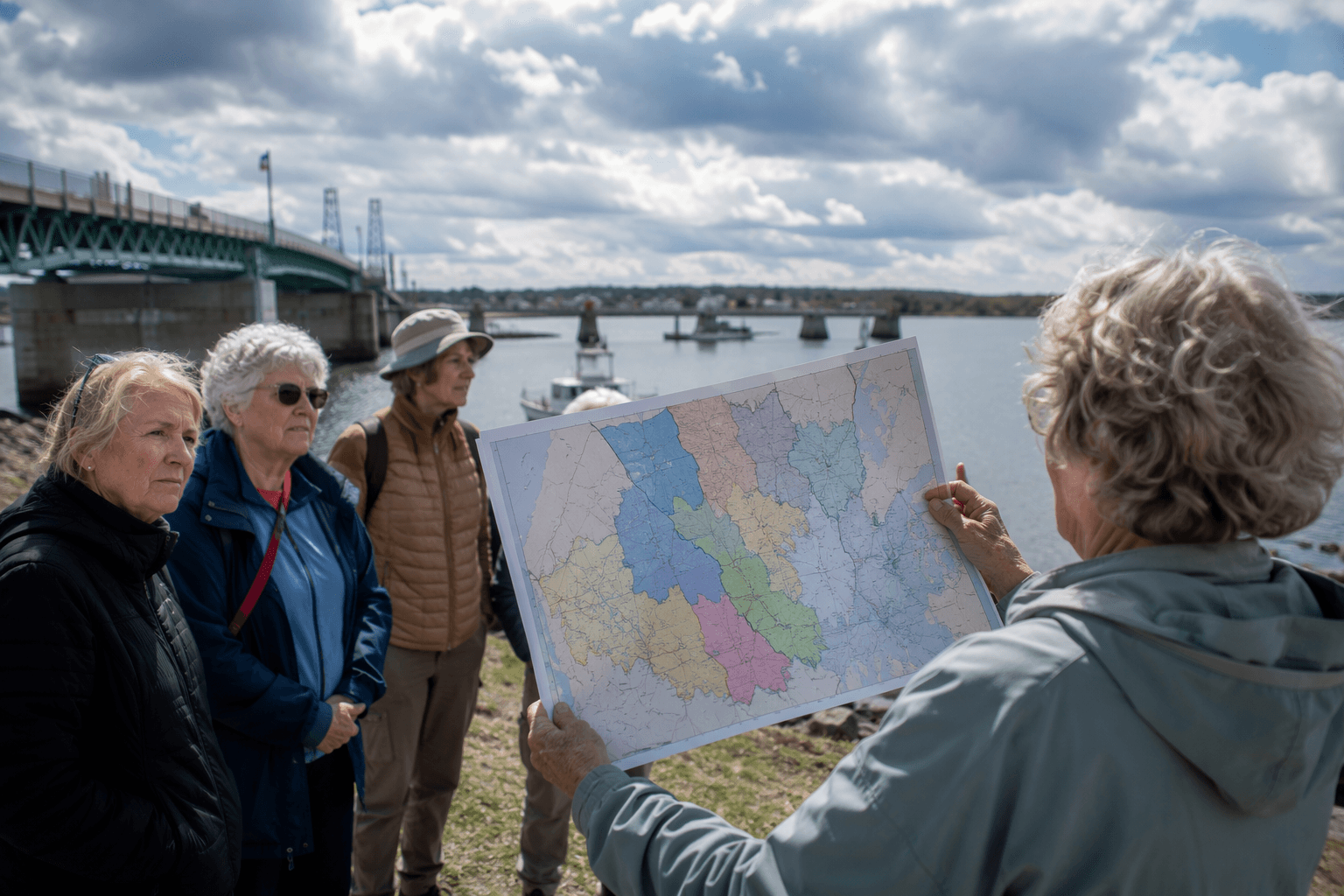
Sagadahoc County is a narrow stretch of Maine centered on the Kennebec River, Merrymeeting Bay, and the towns that grew around them. Its “nine towns and one city” read less like a list of municipalities than a shared map of water, work, and memory.
A county shaped first by water and people
The deepest layer of that map begins after the last ice sheet melted about 12,000 years ago, when the area now known as Sagadahoc County was inhabited by Native American tribes generally called the Abenaki. A Wabanaki source says Wabanaki people have lived in the Kennebec River region continuously for at least 13,000 years. Patten Free Library’s Indigenous history page marks November as Native American/Alaska Native Heritage Month, connecting that long presence to present-day remembrance.
The Kennebec River, its estuary, and the routes into Merrymeeting Bay explain why settlement clustered where it did, why towns grew close together, and why local history keeps returning to the water.
From Champlain’s maps to a county line
European written history enters the story in the early 17th century, when Samuel de Champlain mapped the Maine coast. His work is one of the earliest written records placing this shoreline into a wider Atlantic world, but it did not erase the older world already here. It marks the beginning of a second layer in Sagadahoc County’s identity, one shaped by exploration, trade, and eventually formal government.
The county itself was created on March 14, 1854, when it was formed from Lincoln County. The name Sagadahoc comes from an Indian word meaning “mouth of the big river.” Its principal towns include Topsham, with Bath at the center of a small but tightly connected set of communities.
Sagadahoc County is repeatedly described as Maine’s smallest by land area, at about 254 square miles. Another description puts it at roughly 250 square miles and made up of twelve communities. It is a compact county where town lines sit close together and daily life crosses them easily.
Bath, the city that gives the county its civic center
Bath anchors the county’s modern identity in a way no other place quite does. It became the county seat even though it had already been incorporated in 1847, seven years before Sagadahoc County was created. The city has been known for shipbuilding since the mid-18th century, and that heritage still shapes how the county is understood.
Bath is about 5 miles long and 1 mile wide, a narrow built-up strip tied to the river. That geography helped make the city a shipbuilding center and explains why the county’s civic and industrial life has long been concentrated there.
The Sagadahoc County Courthouse, built in Bath in 1869, was designed by Francis Henry Fassett in the Italianate style. It stands as a post-Civil War landmark in the county seat. Bath Iron Works remains another defining name in the city’s shipbuilding identity, linking the older maritime economy to the present.
How the “nine towns and one city” frame helps you read the county
The “nine towns and one city” frame makes Sagadahoc County legible as a community system rather than a set of isolated places. Bath may hold the courthouse and much of the shipbuilding story, but the county’s history also runs through Topsham and the other towns that share the same waterways, transport routes, and civic rhythms. The river connects them as much as any road does.
The Abenaki presence explains the deepest roots. Champlain’s maps show the first European descriptions of the coast. The 1854 county line tells when Sagadahoc became a distinct unit. Bath’s 1847 incorporation, its shipbuilding tradition, and the 1869 courthouse place the county seat at the center of that history.
This article was produced by Prism’s automated news system from verified source data, official records, and press releases, then run through automated quality and moderation checks before publishing. The system is built and supervised by the people who set the standards it runs under. Read our full AI policy.
Did this article answer your question?